14. Ferrari 360 vs. 2014 Corvette

Quartermile:
If you found $70k in a bag in an alley what could you buy?
1999-2005 Ferrari 360 vs. 2014 Corvette
Or you could buy both cars from the last comparison ! 2002 Viper and a 2012 Boss Mustang, that’s probably what I’d do, or 10 $7k cars, ask my friends.

http://www.carid.com/xo-wheels/barcelona-black-machined-15594934.html

On to the country club:

Here I am again bench racing what I’d buy if I suddenly was to come upon $70k.
I have settled upon two cars, a 1999-2005 Ferrari 360 or a 2014 Chevrolet Corvette. Lets see how these 2 incredible cars stack up to each other.
ferrari 360 48k miles $60k
First the Ferrari. This car was Ferrari’s bread and butter car in the years it was made. They about 16,000 samples of this car in those years (a lot for a Ferrari), nearly equally split between coupes and spyder (convertible) models.
http://www.ferrarichat.com/forum/ferrari-discussion-not-model-specific-sponsored-algar-ferrari/196388-ferrari-road-car-models-production-numbers.html

Here are the hard numbers on the Ferrari 360.
3.6L V8, 400 HP, 2844 lbs, quarter mile 12.8 seconds at 110 mph (Wikipedia)
The last time I checked on EbayMotors there were 6 Ferrari 360’s between $60,000 and $70,000 and they had between 22,000 and 50,000 miles.
For reference a 360 new was between $140,000 and $180,000 so a price drop of almost ½ is incredible! http://autos.aol.com/cars-Ferrari-360+Modena-2004/user-reviews/
Of course you need to shop around to get the best deal.
ferrari 360

2014 vette blue_light
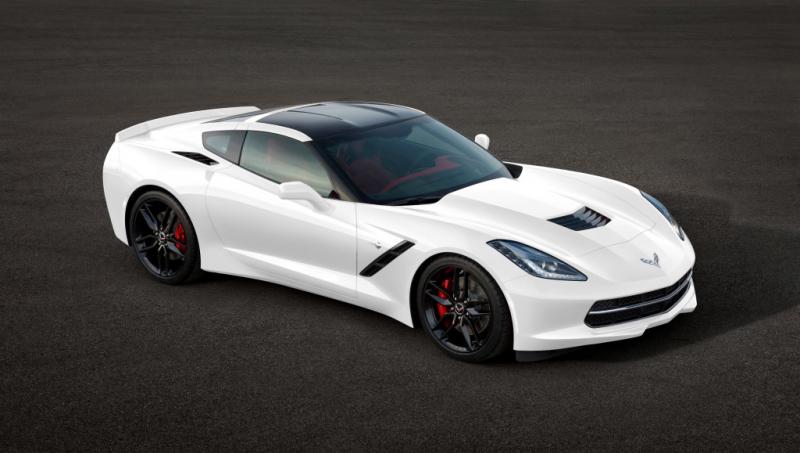
This brings us to the second car in our comparison. Incredibly, the beautifully redesigned for 2014 Corvette, can be bought for as little as $53,000 (or so tells me the Chevrolet website), or up to $65,000 for a LT3/Z51 model. Of course the Z06 and other faster models will be more but they will be out of the price/performance range of someone cross shopping with an older Ferrari. http://www.chevrolet.com/corvette-stingray/specs/trims.html

2014 Corvette

2014 Corvette

For a rough comparison on volumes, in 2013, that being the last year of the C6 there were approximately 14,000 corvettes sold.This is nearly as many in one year as all Ferrari 360’s for their whole production run.

Click to access 2013CorvetteStats.pdf

The 2014 C7 Corvette is one of the greatest performance vehicles ever offered, and doubly so when the price is taken into account!
455 Horsepower (55 more than the Ferrari), 12.2 seconds in the quarter mile at 117 mph(.6 seconds faster than the Ferrari). 3444 Lbs (a full 600 Lbs heavier than the Ferrari)
2014 Corvette
These are both beautiful vehicles. Which one you would buy depends on what you intend to do with it. If it were me, I’d buy the Corvette if I planned to drive the car hard. Being that it’s a new car it’s less likely to break than a used Ferrari and if it does being new it will be under warranty. It’s also a faster car in every aspect than the Ferrari. The new Corvette is also a very aggressive looking car. The new front, side skirts, and rear quarters are all sculpted to make it look ready to pounce at any moment.
On the other hand, the 360 Ferrari is, in my opinion, an extremely beautiful car. The body lines just flow and look “right”. While the Corvette is an attack on your eyeballs, the Ferrari is more inviting. It seduces you with its curves. It invites you to rev it’s 3.6L to the 8500 RPM redline (vs the 6600 of the new Corvette). As in the Viper/Mustang comparison in the other article, the both cars will turn heads, but you will see many many more 2014 Corvettes vs Ferrari 360’s. If I was buying a car to turn heads and get “the look” in I’d go for the Ferrari.

Which do you prefer? Would you buy another car if you came upon $70k?

As always please share this with like minded friends, like the My Wheel Life Facebook page, etc. And if you do happen to come upon a bag full of money let us know!

And don’t forget to Visit us on Facebook

13. What is drag racing?

What is drag racing and a little on how to attend your first drag race.

Awesome Barracuda pulling a wheelie at the drag strip.

Awesome Barracuda pulling a wheelie at the drag strip.

Quartermile:
Perhaps you’ve wondered why I use the term “quartermile” for my short synopsis at the beginning of my posts (above).
This term comes from drag racing, which is probably the quickest form of vehicular competition, hence why I use it for my short intros.
Drag racing is the original “go fast” sport.
The first drag race took place in 1900 between a Mercedes and a horse. The horse won.
Skip to the end for tips for your first track day if you don’t want to read everything, but I’d read it if I were you!
If your car is faster than 11.5 seconds in the quartermile
1. You probably shouldn’t start racing with that car!
2. You will need a roll cage (and a SNELL approved) race helmet or you will get kicked out…
Generally at slower speeds you don’t need a helmet up to a certain speed, that varies by track. It has to be SNELL approved also, ask ahead of race day.

The Flying Mile

2 Funny cars drag racing. Funny cars are purpose built drag cars that go very fast.

2 Funny cars drag racing.
Funny cars are purpose built drag cars that go very fast.

If you are reading this you are probably a car person and you probably enjoy driving your car fast. Unfortunately, Uncle Sam frowns on you going much about 70 in most of the country and often over 55 mph is a no-no. Luckily there is an option for you Speedy Gonzalez. Drag Racing!

Speedy Gonzales

Speedy Gonzales

There is so much to say about drag racing so I’ll just start. Drag racing is a race between 2 vehicles (usually). It measures how quickly each vehicle can cover a set distance (usually a quarter of a mile (1320 feet). You have probably been exposed to drag racing from the Fast and Furious movies, or just about any other car tv movie or show when people ask “What will she do?” She being the car. It’s sort of like the bench press of the automotive world. It’s a great number to impress people, but using a few simple tricks you can make a car a lot faster for the quartermile but that will make it less potent in other forms of racing. Drag slicks and skinnies aren’t really the best for autocross or other racing that doesn’t involve going straight! That being said, I like drag racing for this sole reason, it’s the easiest performance benchmark to replicate. You can pay $40 (or $70 or more) to go to a local drag strip, race your car a few times and you know how quick it is. Then you can compare it to friends. This is much harder in autocross unless you are at the same track, and often those tracks get changed each week also. Same for times around a larger set race track. So, drag racing it is.

woman prepping her husbands drag car. Does she have a granddaughter?

woman prepping her husbands drag car. Does she have a granddaughter?

The ultimate goal of drag racing is getting the car to cover the distance in the shortest time possible, because faster is better right? Drag racing sure sounds easy you are thinking right? Well yes and no. In principle yes, but have you tried accelerating fast and in control? In all likelihood, no, you haven’t, and definitely not with 300 or more horsepower. Everyone wants to do burnouts in their high horse power car, which look cool, but that is actually the opposite of what you want to do when drag racing. Burning out = no traction. Which means not moving forward which means you lose the race. Now you’re a loser. Bummer.

At the end of a drag race you will get a time slip which will show you the time it took you to cover 60 feet, 330 feet, ⅛ mile, and a quartermile. It will also tell you your MPH at the ⅛ and quartermile points on the track which is important. I will help you decipher all these numbers to help you go quicker below.

But first! How does a drag race start? A smoking hot girl throws a hankie in the air right? Not so fast Dom (inic Toretto, Fast and Furious reference for you uninitiated).20140426_151648
Before you start the drag race you have to do a few things. First, you should usually do a burnout. This will clean the debris off your tires. It will also make them warm and sticky. This will help you accelerate and not spin your tires off the line. Then drag race starts with the “Christmas tree”. It’s a set of 7 lights. The top 2 tell you when you are at the starting line (when you are staged).
Detail of Christmas Tree Lights
The top one will blink when you break a laser beam, and you will roll an inch or 2 forward and the second one will light up (from your tire breaking another beam). You are now ready to race! Once the other driver has also staged the 3 yellow lights (below the staging lights), will blink off in .5 second intervals (for normal racing, all at once for professionals). Then the green light will light up and you should start going now! Actually in all likelihood you or your car will not be as fast to react as you think, therefore the slower your car the sooner you should start engaging the clutch/removing your foot from the brake, and pushing the gas. If you leave from the line before the green light goes you will “break out” which means you have lost the race before you started, because you started too early. Not a big deal on your first day. On the other hand, the tree also measures your “reaction time” how close your car left the starting line in relation to the green light. Depending on what type of racing you are doing you might have to pay attention to this number. If you are just doing it to see what your car can do, that is fine, but if you are actually racing, the reaction time gets factored into your overall time. If you and the other car run the same time but his reaction time is .000 (perfect) and yours is .500 seconds you lose, even though your cars were equal. You can actually lose if you have a faster car even! If you run 14.00 with a .5 reaction time, and the other guy runs a 14.1 with a .000 R.T. you still lose.

Now that you know about starting, lets break down my time slip below and try to understand what all the numbers mean starting with the 60’ time which is one of the most important numbers in drag racing. This tells you how good your car is sticking to the ground and how much traction you are getting. If your 60’ time is high that means you are spinning your tires, which means you are going slow. See my time slip below.

1998 Super Taco vs 2007 Musatng

1998 Super Taco vs 2007 Musatng

This is my 2007 Mustang GT vs a 1998 Toyota Tacoma pickup (not a performance vehicle in most peoples mind!) Our Mph was the same at the end of the track (100Mph) but his 60’ times are better and his over all time is lower by .821 seconds! That’s huge in drag racing. Why is he faster? He sticks to the track and uses his power while I was taking off, spinning tires, sometimes getting “wheel hop” etc. Who wants to take their mustang to the track and get smoked by a Toyota Taco? No one! How do we fix this? It (should be) easy. Basically you want to take off slowly enough, roll on the throttle to prevent wheel spin. You can also let air out of your tires to get better traction. Finally if you can, install drag slicks on your car. There are tons of other, more involved suspension mods you can do if you get fast enough, but that’s not the aim of this article.

Next we will compare the times of 2 cars that I raced separately and copy pasted their times together for a comparison of what the sticking to the track will do for you.

Super Taco vs. Some burnout

Super Taco vs. Some burnout


Burnout vs. Super taco

Burnout vs. Super taco

You will notice on the right is our friend the fast Taco vs some burnout car that I didn’t bother to document. You see again the Taco had the faster overall quartermile time 13.567 seconds vs. 13.757 for the burnout. But wait! The taco has a slower MPH at both the 1/8th and quarter miles. How is that? If you look at the 60’ times you will see. The Burnout had a time of 2.174 seconds vs. the Speed Taco at 1.892 seconds. This is showing that the Taco was accelerating very good and converting all his power into forward momentum vs the Burnout was spinning tires or had a bad start. So that brings us to the MPH. How was Burnout going faster at the end and still lost? The Burnout definitely had a bad start, spinning tires etc, which put it way behind. You see at the 330’ marker the Speed Taco had a lead of .337 seconds. This was cut down to .19 seconds at the end of the race. Therefor the Burnout had more horsepower and was accelerating faster once it finally got hooked up (probably 2nd or 3rd gear) whereas the Taco was always hooked but not quite as much power. So while power is good being able to transfer that power to the ground is also extremely important for your times and your ego! Don’t get smoked in your new bazillion HP car by some guy who knows how to race! Do burnouts, don’t be a burnout!

1998 Speed Taco 13.5 seconds in the quarter mile. Super Taco!

1998 Speed Taco 13.5 seconds in the quarter mile. Super Taco!

A few quick tips for your first track day.
1. You will need to go through tech inspection before they will let you drag race. Make sure all loose stuff is out of your car! Maps, shoes, kleenex, empty pop cans, etc. You don’t want that stuff flying around your car when you take off.
2. They will check some simple things like if your battery is tied down. Make sure it’s secured by something, at least the stock battery tie down!
3. Start accelerating when the 3rd yellow light is on. If you wait til it’s green you are already behind.
4. Do a burnout, if you have an AWD car this probably doesn’t apply.

burnout before drag racing to clean tires, get them hot, and help you stick to the track

burnout before drag racing to clean tires, get them hot, and help you stick to the track

5. Take off slowly. Don’t try to launch your car at 5000 rpm the first time. Ease onto the throttle, see how your car sticks. If you stick good, then try a little more gas next time.
6. If you do eventually start spinning on take off let some air out of your tires. Maybe to about 10 PSI. This completely depends on what type of tire you have, how far from home you are, etc. Don’t let all the air out of your tires and then be mad at me when you can’t get home! But even down to 15 psi you can drive a little bit safely. Air your tires up again ASAP!
7. Talk with other racers! They will give you tons of help. They are generally a super helpful bunch, but maybe don’t ask the guy with a top fuel dragster to help you drive your stock 2000 Honda Civic… He’s probably pretty busy and has a lot of money tied up in his car and he’s probably pretty serious. Maybe ask the guy who’s just a few seconds faster.
8. If you want to start modding your car once you have the technique down, but don’t have any money, removing weight also makes your car faster. Remove the spare tire, passenger seat, rear seat (those are the 3 easiest things to remove. A general rule of thumb is every 100 lbs removed from your car = .1 second faster in the quartermile. Don’t forget you need to reinstall these things sometime…
9. Have FUN!

Now that you know all about drag racing how do you start? It’s pretty simple to drag race. You can literally drag race any vehicle. I’ve seen Dodge Caravans, pickup trucks, Buick Century’s as well as the normal car’s you’d expect like muscle cars, import tuners and purpose built drag cars. A normal one day of drag racing test and tune will cost you between $25 and $75 dollars to run as many runs as you can get in, base on how many people are there. So get to the track! What are you waiting for?!?!?!?

Per usual please share this if you enjoyed it! Like “My Wheel Life” on Facebook, etc.

Here’s a great (non-traditional) drag race staged by Motortrend magazine between a ton of cars!
Motortrend Greatest Drag race 2. This is my favorite of the 3 “worlds greatest drag race” videos.

12. Modern muscle vs. classic supercar

Quartermile:
Window shopping for cars is one of my favorite past times.
I have a diverse love of cars.
New (2012) cars often outperform, or at least equal, old (2002) “exotics” or supercars.
So for this article I’m only considering cars built basically 1998-2014

1995/6 Dodge Viper

1995/6 Dodge Viper

The Flying mile:
This article is dedicated to window shopping (or Ebay shopping). For the purposes of this exercise I’m going to assume your great uncle Alfred has died and left you $35k to buy a car. Lucky you! But sorry for your loss. 😦
My favorite place to look for a wide range of cars like this is Ebay because of it’s quick sort properties. I generally type the vehicle I want, then “Buy It now” then sort by “Lowest Price first” and that tells you the absolute bottom price you can pay for a car of that make. There are other ways to car shop, as I’ve talked about before, but this is definitely the quickest I’d say.

6. My Wheel Life – How to buy a vehicle

With $35k you could buy a LOT of different cars, but again for the sake of argument, lets say you are into american muscle cars. V8 (or V10 – Dodge Viper). What kinds of cars can you afford in the $35k price range? There are TONS of cars you can buy for that. Porsches, Toyota Supras, Skylines, Camaros, RX-7’s, Mercedes. So let’s say you are in the market for a newer American Muscle car. But do you want an “exotic” such as a classic Dodge Viper? or a more modern car like a Shelby or Boss Mustang? Let’s investigate the merits of each.

I’ve picked 3 cars below, an older (10+ years old) Dodge Viper, a 7 year old Shelby Mustang GT500 and a 2012 Boss Mustang. Seems like a pretty strange comparison of cars? Why not a New Dodge Challenger? Because I like the Mustangs, and the Viper, that’s why. Also, for the people who are extremely brand loyal I ask why? Any one engineer could end up working for any of the Big 3 (Ford, Chevrolet, Dodge) or any car manufacturer for that matter. They are all big companies and when it gets to these very fast cars everyone is on a pretty level playing field, despite what Brand Loyalists will argue. Perhaps in the future I’ll look at some more comparison. Anyway, onto the numbers.

The first car to consider is a 2nd generation Dodge Viper. I really love the style of this car, especially the coupe. There were approximately 10,000 Vipers made in this 6 year span. That low production,compared to 10,000 2007 Mustang GT500’s, puts the viper in the class of an exotic. Also that it was significantly more powerful than the “normal” muscle cars of the day, Camaros, Mustangs. It was in Lamborghini fast and powerful territory. What are the benefits of buying an exotic? For one exclusivity. How many will you see? From the production numbers, not many! What are the downsides of an exotic. Not as many people will be qualified to work on it and parts will be expensive. You see the Viper has taken quite a cost depreciation (for examples worth $35k vs it’s starting cost at the turn of the millennium. But there are also many selling for lots over the $35k mark. Despite being older the viper posts competitive performance numbers to the newer “common” car.

2002 Dodge Viper

2002 Dodge Viper


1996-2002 (2nd gen) Dodge Viper
Cost new: $70,000
450 Horsepower 8L Natural aspirated V10 engine
Quartermile 12.2-12.3 seconds
3420 Lbs (500lbs lighter than 2007 Mustang GT500)
Top Speed: 185 Mph
http://www.musclecargarage.com/dreamcar.html
http://www.cars.com/dodge/viper/1998/expert-reviews

2007 Shelby Mustang GT500

2007 Shelby Mustang GT500


The 2007 Mustang GT500 is the next car we will consider. Funny that it’s another snake (Viper vs Cobra).
Cobra vs. Viper

Cobra vs. Viper


It boasted 500 horsepower which puts it ahead of the older viper yet you see the quartermile time is slower. Part of this can have to do with track prep, vehicle prep, driver. You can see times vary by as much as .5 seconds on a vehicle based on those factors. You’ll see the same time slip discrepancies for a 2012 Boss below .6 seconds between different magazine tests. For reference once a vehicle goes 11.5 seconds in a quarter mile you need to install a roll cage. So for the average Joe the Viper is probably a little faster, based on the test numbers. Also the exclusivity of the Viper is a selling point. “Total production for 2007 GT500’s comes to 10,844 units with 8,150 of those being coupes and 2,694 being” – MotorAuthority. And that was only one year! same as 6 for the Viper.You will also not that the top speed of the GT500 is limited to 155 Mph this is pretty standard, unless a car is an exotic, like the Viper, but really when will you go that fast?
2007 Mustang GT500
Cost new: <$50k,000
500 HP 5.4L supercharged V8
Quartermile 12.7-12.9 seconds
3920 Lbs
Top Speed: Electronically limited to 155 Mph
http://www.motorauthority.com/news/1017481_official-2007-shelby-gt500-production-numbers

2012 Boss Mustang
The last car we will consider is a 2012 Boss Mustang. This “common” car is boasting 444 hp, almost as much as the 10+ year older Viper. The Boss went on a diet compared to it’s older brother the 2007 GT500. It also lost some horsepower, but you can see from the quartermile times that they are at least equal or some places measured the Boss as faster and equal to the 10 year older Viper which is a much higher class of vehicle. Again, this is based on a lot of factors such as track prep, driver, etc. This also goes to show what 10 years of technology will do for performance when this Mustang costs about 1/2 of what the Viper did 10 years earlier and is on the same performance level. For exclusivity there were approximately 4000 2012 Boss Mustang’s built in one year. You will see that the depreciation is not near what the Viper, being 10 years old, is, only a few thousand from the MSRP of $42k to our target of around $35k. Also you get the benefit of newer technology and with that reliability. I would say that a 2012 Boss will have more readily available and cheaper parts than a 2002 Dodge Viper.
2012 Boss Mustang
Cost New:$42,000
444 HP 5.0L Naturally aspirated V8
Quartermile 12.3-12.8 Seconds
3666 LBS
Top Speed: Electronically limited to 155 Mph

2012 Boss Mustang

2012 Boss Mustang


http://www.caranddriver.com/reviews/2012-ford-mustang-boss-302-test-review
http://www.motortrend.com/roadtests/coupes/1102_2012_ford_mustang_boss_302_test/specs_test_data.html

Based on the above synopsis, which vehicles would you buy? I am torn. All will be great vehicles down the road and will get many looks from passers-by. Do you want the raw power and exclusivity of a V10 Viper or the newer reliability and equal performance of the newer Boss or Shelby. Once you get to vehicles of this performance in competition, a lot of the performance falls on the driver as these are all more car than most people are ever exposed to. So which one would you buy? What other vehicles would you consider?

11. Hot Rod Power Tour 2014 – Part 3/3

Quartermile:
Skip to the end and read about the Jason’s if you dont want to read the whole article because those guys are cool! But I’d read the whole thing if you have time (or at least look at the pictures cuz there’s lots of cool stuff on HRPT!)
This was my experience of the 2014 Hot Rod Power Tour.
This article covers the last 2 days, Thursday in Bettendorf, IA and Friday in Wisconsin Dells, WI.
It’s probably the greatest moving car show in the world.
It’s a week long.
You need to do it!
Below are the links to my first 2 articles about days 1-5 and an article on the cost, it’s worth it!

8. My Wheel Life – Hot Rod Power Tour, Part 1

10. My Wheel Life – Hot Rod Power Tour 2014, Part 2 of 3

9. What does Hot Rod Power Tour cost? – Answer: It’s worth it!


20140614_081305
The Final Leg
The last two days of HRPT 2014 were probably the most fun for us. The big thing was our car was fixed! No more clunking or brake pads rubbing. That really makes for a much more relaxing drive when you aren’t thinking your car will shoot you off the side of a mountain.
We woke up Thursday June 12th in Crown Point, IN. The drive this day was to Bettendorf, IA. There was a lunch stop at Heidts at Lake Zurich, IL. http://www.heidts.com/
They design/manufacture suspension/chassis/brake parts for muscle and street cars. They gave a very interesting tour and had a free lunch for HPRT participants. They even pulled a few HPRT participants vehicles, who were having serious suspension issues, up on a lift and fixed ‘em up! Cool guys! Unfortunately I didn’t take many pictures there but I did get one of this HUGE Dodge truck (I’m 6’1” for reference).
20140612_120941
We continued on to Bettendorf. On the way in we parked a ways away and walked to the Isle Casino because we were told (via the HRPT facebook page) that the line was very long to get in. On that note it’s very useful to get info via the HRPT FB page during the tour! Per usual there were a ton of cool rides at the show. Here’s just a list of a few.

Cool drag race Mustang. This looks like a serious performance machine which distinguishes it from a pro-street style car, which are often built to look like they are fast but sometimes are, sometimes aren't.

Cool drag race Mustang. This looks like a serious performance machine which distinguishes it from a pro-street style car, which are often built to look like they are fast but sometimes are, sometimes aren’t.

A second cool fox body mustang with serious drag race rubber under the back.

A second cool fox body mustang with serious drag race rubber under the back.

One of my favorite cars that I’d been seeing most of the week was an old (Plymouth I’m assuming) sedan done up like a Richard Petty race car. I was finally able to snap a few pictures of it.

The awesome Richard Petty... Plymoth?

The awesome Richard Petty… Plymoth?

Another interesting car I saw was this (2007 ish) Mustang done up in a Mad Max style. (There’s a new Mad Max Movie coming out) http://bangshift.com/general-news/first-official-pictures-new-mad-max-cars-unveiled-semi-truck-whole-benz-cab-yes-please/

Mad Max mustang

Mad Max mustang

Another car I had seen earlier in the week was this pink Mercury Capri Pro-Street style car. It has a very distinctive late 1980’s/early 1990’s Pro-street style, denoted especially by the roll cage, and tubs to fit the wide tires. A few other clues that this is the older Pro-street style are the body color grill and the early 90’s style graphic on the lower door. Overall a very cool car that has been featured in Hot Rod (and many other) magazines.

Mercury Capri Pro-Street style car

Mercury Capri Pro-Street style car

One unfortunate thing we saw was this 1969 Chevelle/Malibu that had the top part of his cowl hood come off! In true HRPT fashion though they were making the best of it. They had put a few zip ties on to hold it down and kept driving it! A Roadkill sticker tops it off nicely. Nice looking car! (Easiest way to tell a 1969 from a 1969 is a 1969 has a 1 piece door window while a 1968 has a vent window at the front of the door)

Unfortunate cowl hood failure! They made the best of it tho!

Unfortunate cowl hood failure! They made the best of it tho!

20140612_182551
On our walk back to the car we stopped at a shop on the corner where some locals were encouraging burnouts. It was great! They even gave us a drink. We stayed about 15 minutes watching burnouts until the police put a stop to the fun. I was told this had been going on all day though.

Boo. Cops.

Boo. Cops.

This was at the corner station also.

Since I grew up on a farm AND work for JD I had to include the old 2 cylinders

Since I grew up on a farm AND work for JD I had to include the old 2 cylinders

My dad is a big fan of old Mack semi’s and has a few himself. I had to take a picture for him.

B-61 Mack tow truck

B-61 Mack tow truck

The final day (open to the public) was Friday 6-13-2014. We left Bettendorf, IA on our way to Wisconsin Dells, WI. We drove up 61 in Iowa passing through Maquoketa, Iowa. What a great little town! There was a man directing traffic (burnouts!) and a lot of locals watching from the sidewalk. There was even a gentleman from the town sitting in the back of an old pickup commenting (with speakers and a microphone!) on the cars coming by. This was one of the highlights of the trip! We stopped and watched for about 20 minutes, took a few pictures of awesome cars at the gas station, and then it was on our way.
20140613_112810

20140613_112758
We spotted another Richard Petty tribute car on the way.
20140613_121153
Upon arrival to Wisconsin Dells we were aware of a long back up, it was a 2 hour sit in traffic (1-3 pm) for us to get from the highway to the show. Once through, it was worth it! I was told that the resort was told to expect a much lower number of cars than showed up, so I guess thanks to them for letting us park on their golf course! Hopefully we didn’t tear it up too much. The show was very cool again! One cool 4×4 I saw was this 1970’s Ford!
20140613_160324
Another cool Ford was this cool GT40 (or replica?)

Assuming it's a new Ford GT and not an older GT40 by the stripe on the bottom of the door.

Assuming it’s a new Ford GT and not an older GT40 by the stripe on the bottom of the door.

And there was this also Mad Max style Dodge charger. I especially liked the sickle mower guards in/under the grill for teeth (I grew up on a farm).

Mad Max like Charger

Mad Max like Charger

20140613_181213
One of the coolest stories of Power Tour was the 2 Jason’s from Minnesota. They purchased this 1966 Ford pickup sight unseen from Craigslist, in Tennessee! They flew there, drove to Charlotte and Long Hauled it home! True Roadkill style. They did put new tires on the truck, and lots of duct tape to seal the windshield.
Jason (which one I’m not sure) told me that they had a few problems, a broken push rod, the fan ate the radiator because they were doing burnouts and probably broke a motor mount etc. They were considering selling it when they were done but the fanfare they got from everyone (including David Freiburger (David Freiburger is the editor-in-chief of Hot Rod magazine and Hot Rod Deluxe magazine and host of Roadkill. He’s the former editor of Car Craft, Rod & Custom, 4-Wheel & Off-Road, and Hot Rod Deluxe. Often seen and heard on Hot Rod TV. – Borrowed directly from his Facebook page) for those of you who don’t know who David Freiburger is, made them consider doing some upgrades and keeping the truck. We’ll see what they do next year!
20140613_162816

Jason and Jason's Road kill 1966 Ford pickup with a 460!

Jason and Jason’s Road kill 1966 Ford pickup with a 460!

Saturday was for Long Haulers only. We recieved our awesome tin signs showing we were Long Haulers. There was a group picture of all the HRPT Long Haulers, which we missed. Woops. We were able to get our picture in from of the Hot Rod motorhome thingy, so that was cool. That was the end of the HRPT 2014.
Next year HRPT SHOULD start in Wisconsin Dells. If you are anywhere near the start you should at least come for the first day. Do the long haul if you can! Hope you enjoyed reading about it. One thing I found interesting was the lack of general public knowledge of HRPT. Please share with your friends and help continue to make this one of the greatest car destinations ever!

Per usual please share with your friends, follow via email, like the FB page (to get daily links to cool stuff) like this

Cool Stuff for my Man-Cave


or this
http://forums.evolutionm.net/loft-evom-car-talk-corner/423729-i-got-beat-geo-prizm-pics.html

Thanks for reading. Keep the rubber side down and please Visit us on Facebook.

10. My Wheel Life – Hot Rod Power Tour 2014, Part 2 of 3

Quartermile
Continued coverage of HRPT 2014
The greatest road trip in America!
Check my Part 1 if you haven’t yet.

8. My Wheel Life – Hot Rod Power Tour, Part 1


Clean Chevelle (to show you all I'm not only about rat trucks!)

Clean Chevelle (to show you all I’m not only about rat trucks!)


The Full Mustang?

Tuesday June 10th 2014 Drive from Charleston, WV to Norwalk, OH
This day started by picking up the parts we had ordered the day before for the Mustang, lower a-arms and front struts. $600 and we were on the road with the rest of the tour.
We arrived at Summit Motorsports Park around 3 pm. This was one of the easiest venues to get into. I suppose because they had plenty of room and are set up to handle that many cars? We parked the Mustang by the GM rescue mechanics. As I mentioned before, if you are having serious problems and bring these guys parts and a broken car, they will fix it, no charge! This is my official “Thank You” to those guys!

GM mechanics saving our Ford! Great guys!

GM mechanics saving our Ford! Great guys!


They won’t swap your new cam in! But if your car has brakes fading away, clunky suspension (guilty) or other safety issues they will help in a heart beat. They also were helping some guys with rough running vehicles, etc once they got caught up on the safety stuff. I asked Robbie to watch the car get fixed while I went and got my Golden ticket for the Comp Cams drawing. I talked with quite a few folks while walking around in my Spartan outfit. Many people gave me thumbs up and took pictures. A few shook their heads, some asked if I lost a bet, all understandable.
HRPT golden ticket Spartan!

HRPT golden ticket Spartan!


One guy I talked to while walking around was David Brown. He had 2 vehicles on Power tour, a 1928 Ford and a 1964 Ford, both trucks.
David Brown, 1928 Ford

David Brown, 1928 Ford


David Brown 1964 Ford truck. Very cool shop truck style!

David Brown 1964 Ford truck. Very cool shop truck style!


Once our car got fixed and I received my Golden Ticket we walked around a little. We ran into the guys driving the Evil Atom. They have to at least be in the running for the toughest guys on power tour. This year was pretty nice weather, but the lack of any roof makes it even tougher to drive (through rain) than most rat rods, and this is something like these guys 6 HRPT.
http://evilatom.com/
Evil Atom (Screen shot stolen from the Evil Atom website)

Evil Atom (Screen shot stolen from the Evil Atom website)


That night we stayed at a small hotel and once again meet some cool folks there. Robert Brown (no relation to David) shared with us his 1973 Firebird. What a clean car!
Robert Brown's Firebird

Robert Brown’s Firebird


Don't drink the Kool-aid from the Firebird's radiator!

Don’t drink the Kool-aid from the Firebird’s radiator!


20140610_204339

Wednesday June 11th Norwalk, OH to Crown Point, IN
The next day we headed out and what a great drive that was! No clunking, our stuck brake pad had been replaced, the drive was quiet and we could actually enjoy it! Today’s drive included a stop at Lane Automotive. We choose to skip it, much to my angst now. I was told by fellow Power Tourer’s that it was a great stop! I guess the lesson here is “Never skip a lunch stop!”
We arrived at Lake County Fairgrounds in Crown Point, IN around 3 pm. This was a very cool stop! The fairgrounds was a very cool setting, it wasn’t rows of cars, they were parked in between trees, around a lake etc. It made for a nice walk. There were a ton of great cars this day (just like every other day).
I met Bobby from Sons of Anarchy! (Not actually, but sure looks similar!)
How serendipitous that I had my Sturgis Motorcycle Rally shirt on from last year.

Bobby! (almost)

Bobby! (almost)

Actually Bobby from SOA

Actually Bobby from SOA


After checking in we started walking around the pond. This was where we met a ton of cool Hot Rodders!

I had been seeing these “Laid-Back” stickers popping up on everyone’s cars. Shane was putting one on his 1966 Ford with the 7.3 diesel earlier in the week when I met him, and a ton of other vehicles had them on also. I finally took the chance to stop and say to these guys. I talked with Chris Barker at that booth. They had a couple cool woodie wagons there and Batavus scooter. I studied abroad in Holland and this particular model was made in Holland so I am a bit more partial to it than most people.

http://laidbackusa.com/

Laid Back scooter/motorcycle. I studied abroad in Holland and this particular model was made in Holland so I am a bit more partial to it than most people. The brand is Batavus.

Laid Back scooter/motorcycle. I studied abroad in Holland and this particular model was made in Holland so I am a bit more partial to it than most people. The brand is Batavus.


This car was a popular car at every stop. Didn’t get the guys name.
This was a very popular car at HRPT. It has a overhead cam Inline 6 cylinder Pontiac engine. Quite the unique power plant! The rest of the car was very unique also.

This was a very popular car at HRPT. It has a overhead cam Inline 6 cylinder Pontiac engine. Quite the unique power plant! The rest of the car was very unique also.

Here’s another vehicle I didn’t get much info on but I thought the rusty flames were pretty neat!
20140611_164741

cool rust flames!

cool rust flames!


The next vehicle I stopped at was the Ring Brothers party camper. These guys build incredible cars. Check out this custom Pantera they recently finished. On the HRPT they were just having fun, I didn’t see any vehicles, besides the party camper, which was pretty awesome!

https://ringbrothers.com/
http://www.autoblog.com/2013/11/06/ring-brothers-adrnln-pantera-sema-2013/

RingBrothers party camper. You see they let me brand their gas tank with a MyWheelLife.com decal. cool guys who build awesome vehicles! Check them out.

RingBrothers party camper. You see they let me brand their gas tank with a MyWheelLife.com decal. cool guys who build awesome vehicles! Check them out.

After them I walked past the dyno, which was at every stop on the power tour. It was a popular attraction every day.

Saleen Mustang on the traveling dyno

Saleen Mustang on the traveling dyno


Overlooking the dyno I talked with Ryan of Rusted Knuckles Garage. I was unable to find his website but I did find his youtube channel. Check out the pictures of his truck below. He was running Buick GN turbos from a 3.8 V6 but he had 2 of them on his SBC V8. He was nice enough to let me sit in his cool truck. It was awesome but a bit tight for me! The truck is named “Hands Full” because it’s a handful to control all that power when you hit the gas!


Crazy twin turbo small block Chevrolet rat truck. The turbos were from a Buick Grand National.

Crazy twin turbo small block Chevrolet rat truck. The turbos were from a Buick Grand National.


The Hands Full truck was a pretty tight fit. That's what happens when you channel a body over the frame.

The Hands Full truck was a pretty tight fit. That’s what happens when you channel a body over the frame.


Awesome front view of Hands Full!

Awesome front view of Hands Full!

After Ryan’s truck I ran into another rat. This one was built by Rich of the Hoosier Head Hunters. They were from pretty close by and had brought a few cars. Ryan’s was very cool. If you check out their FB page you can probably get in touch with Ryan. He said the truck was up for sale or trade if you are interested!
https://www.facebook.com/HoosierHeadhunters

Rich from Hoosier HeadHunters car club from Cedar Lake, IN.

Rich from Hoosier HeadHunters car club from Cedar Lake, IN.


There was one more awesome rat truck I took pictures of that day. Are you starting to feel a trend here? Is there something in the water in Indiana? If there is I hope I got some!

20140611_162802
20140611_162711
Later that night we stayed at Red Roof Inn and there were a TON of hot rodders there! Here’s a few pictures.

Cool HRPT parking lot!

Cool HRPT parking lot!


20140612_074005

One more vehicle that wasn’t a rat! Quite far from it! This just shows the variability of HPRT vehicles which is what makes it so great!

Cool Lotus on HRPT!

Cool Lotus on HRPT!


What were your favorite parts of Tuesday/Wednesday of Power Tour 2014 (Norwalk, OH and Crown Point, IN)?
What were your favorite cars?
Very nice 1969 or 1970 Mustang (to show you all I'm not only about rat trucks!)

Very nice 1969 or 1970 Mustang (to show you all I’m not only about rat trucks!)


Crazy Holden Ute from Australia? El Camino anyone?

Crazy Holden Ute from Australia? El Camino anyone?


What was the strangest car you saw on HRPT?
Did you meet as many cool people as I did?
Who was the most interesting person you met?
There are a lot more cool stories from HRPT, more cars, more people, more burnouts! So stay tuned! Subscribe, follow on FB, share with your friends, so you get to read the exciting final HRPT 2014 article (probably sometime in the next week or so).
As always, thanks for reading!
Here are all my pictures from HRPT 2014. They are on my FB page.
https://www.facebook.com/media/set/?set=a.285163794988893.1073741832.278105162361423&type=3
https://www.facebook.com/media/set/?set=a.285152084990064.1073741831.278105162361423&type=3

9. What does Hot Rod Power Tour cost? – Answer: It’s worth it!

Quartermile:
It’s definitely worth the cost!
But the Hot Rod Power Tour isn’t actually about the cost, it’s about the the cars, the comradery and the burnouts!
A lot of people are probably interested in what it would cost them, hence why I thought I’d write this up.
There is no price you can put on being a “Long Hauler”. You will get recognition and instant friendship with any other Long Haulers you meet up with at any car show.
Check out my daily logs of HRPT 2014 and all the cool people I met and all the awesome cars I saw!
https://mywheellife.com/2014/06/15/8-my-wheel-life-hot-rod-power-tour-part-1/
https://mywheellife.com/2014/06/19/10-my-wheel-life-hot-rod-power-tour-part-2-of-3/
https://mywheellife.com/2014/06/28/11-hot-rod-power-tour-2014-part-33/

Robbie and I, HRPT long haulers

Robbie and I, HRPT long haulers

The Full Monty
$1988.73. That is what I figure the raw cost was for me to be on HRPT this year. That takes into account all the food, snacks, gas, hotels, broken parts, registration, magazine renewals, t-shirts, etc. Some of this will be reduced when I split the hotels with my buddy, Robbie (watch for a bill in the mail). I’d definitely recommend doing power tour with at least one friend. This lets you talk to someone while driving, maybe I’m just a sentimental person like that. You also will have someone to split gas and hotels with, and you’ll have a navigator, which is very very helpful!

Cool HRPT parking lot!

Cool HRPT parking lot!

I spent $630.57 on parts and service by a shop on my car. So if you take that out my cost would have been $1358.26, which is not bad at all. That being said, power tour is a very demanding trip on cars and you should be ready to spend money on broken parts. Don’t be surprised! I was quoted $1400 to replace the struts and a-arms on my mustang, luckily the GM performance mechanics were able to replace the a-arms for a total of $0. This will be one place I take to say “Thank You” to those guys. They saved so many cars this year (and every year) for no charge. They are really great guys, super friendly, and obviously they kept me going and allowed me to finish the HRPT in one piece!

Mustang getting alignment

Mustang getting alignment

To break down the costs by what they were spent on:

Registration:
My registration was $93.50 because I registered the first day at zMax in Charlotte. Because I used a credit card it cost me an extra $3.50. If you registered early it was $80 instead of $90.
Really the registration is a deal. Your long hauler ticket gets you tons of free stuff from the aftermarket companies that have booths at HRPT. Magnets, the all important HRPT stickers!, posters, car polish, and tons of other goodies, and at the end if you complete the whole thing there is always a long hauler “prize”. This year was an awesome 20th anniversary tin sign, so while this seems like a lot of money up front, it’s really all paid back to you. This registration is per car, and you get 2 “punch cards” per registration.

Long hauler punch card, you get all kinds of free stuff with this!

Long hauler punch card, you get all kinds of free stuff with this!

HRPT 20th anniversary Long Hauler tin sign

HRPT 20th anniversary Long Hauler tin sign

All important HRPT year sticker. (also MyWheelLife.com sticker, available for your own car, email me)

All important HRPT year sticker. (also MyWheelLife.com sticker, available for your own car, email me)

Hotels:
7 Hotels cost me $570.28
To be fair Robbie, did pay for one night’s hotel which was not included.

Gas:
All the gas to drive from Iowa, to North Carolina, back to Wisconsin and back to Iowa cost me a total of $410.36. That’s not bad! to be fair here, I was driving a 2007 Mustang that got 25 mpg average.
The HRPT prescribed route was 1602.1 miles this year. Just to drive that with my mustang would have cost $225 (assuming $3.50/gallon gas).
If you are calculation costs for the tour you simply have to take the number of miles for you from your home to the start, the total mileage of HRPT (usually about 1500) and then the miles from the end back home, divide that by the mpg of your car, and then multiply by and average gas/gallon price (I’m using $3.50 for now)
So if you drove a total of 3000 miles with a car that got 10 mpg it would have cost you $1000. Still not that terrible.

Cool Camaro at Gas station

Cool Camaro at Gas station

Food
I spent $175.63 on food (at restaurants) this year. This was usually a fast lunch and a pretty good diner. Robbie paid for some of my diner’s and I paid for some of his so I believe this is a pretty good average.

To be fair my co-pilot (Robbie) bought us a lot of snacks/breakfast/donuts. We didn’t eat breakfast too many times.
I spent about $40 on snacks/drinks.

There are a ton of variable costs for power tour. There are a ton of great deals for shirts. Comp cams and Petty’s Garage were both selling $5 t-shirts.
I also renewed my Hot Rod and Car Craft magazine (for 3 years each) for a total of $52, and got a free t-shirt! Since that was something I would have done anyway, that was basically a freebie!
The HRPT shirts are a bit expensive, $20+ for a t-shirt (that’s expensive to me when Comp Cams is selling $5 shirts) but some of the HRPT t-shirts are very cool and I wouldn’t dissuade anyone from buying one.
I also spend $30 on supplies to make my Comp Cams drawing costume. The drawing was Friday at the last stop, Wisconsin Dells, WI and the winner got $10,000 in Comp Cams (and other companies they own) shopping spree. This year I got $100 to buy stuff from Comp Cams for my troubles, as a consolation prize. The Comp Cams guys are great and it was fun walking around talking to people so that was worth it to me.

HRPT golden ticket Spartan!

HRPT golden ticket Spartan!

Overall, the HRPT is really a pretty cheap vacation. Really if you wanted, your only costs could be gas, hotels and food, and you’d get to see a ton of cool cars. Probably the cheapest way to see the whole HRPT would be to drive a station wagon with 4 guys, stuff all 4 of you in one hotel room, split gas and then just a bit of food would be it. That would honestly be awesome! Let me know if anyone has done that!
But like I said at the beginning, HRPT isn’t about the cost. It’s about the cars, the comradery, the friendships and the memories, and you can’t put a price on any of that.
“It’s worth it!” – Axel Hoogland
So will you be making HRPT in the near future?
What’s your favorite car road trip besides HRPT?

Hope you all enjoyed this post. If you did please follow me via email so you don’t miss any future posts. Also like my Facebook page, share this post with your friends, etc.
Keep the wheels on the road!

Visit us on Facebook

8. My Wheel Life – Hot Rod Power Tour, Part 1

Quartermile:
Hot Rod Power tour is a 7 day traveling car show.
It changes it’s route every year.
It starts in Wisconsin Dells, Wisconsin, next year.
You need to attend at least one day, preferably more, if it comes through your town see it!

The Full Monty:

Robbie and I, HRPT long haulers

Robbie and I, HRPT long haulers


My college friend Robbie and I participated as “Long Haulers” in the Hot Rod Power Tour (HRPT) this year. What is HRPT you ask? It’s probably the largest touring car show in the world. The core group of hot rod cars are early “hot rods”, 1960’s and 1970’s muscle cars, and late model cars. Some people would argue that HRPT is only for muscle cars or hot rods, in reality just about any cars are welcome, gassers, hot rods, muscle cars (new and old), super cars, kit cars, trucks, rat rods, there are even a few imports. All cars are welcome and most guys on the tour are cool with all cars. The cars are the stars at HRPT but meeting thousands of other hot rodders, talking about what they did to their car, learning tricks and tips for your next build and forming friendships that will last the years, is what HRPT is all about!
Gasser Chevrolet Shoebox (1955 or 1956)

Gasser Chevrolet Shoebox (1955 or 1956)


This year HRPT took place from June 7th to June 14th. HRPT changes it’s route every year. There are approximately 1500-2000 “Long Haulers”, people who do every day of the show. There are also thousands of people who show up for one or two days locally wherever the show stops. The show takes a meandering route through the country, avoiding as many interstates and main roads (as possible, usually). This year HRPT started in Charlotte, NC at zMax Drageway-Charlotte Motor Speedway for the opening day. Sunday morning we left from there to Chillhowee Park in Knoxville, TN. From there Monday morning we drove to downtown charleston, WV. Tuesday – Summit motorsports Park, Norwalk, IA. Wednesday – Lake County fairgrounds, Crown Point, IN, Thursday – The Isle Casino, Bettendorf, IA and finally Friday June 13th at Chula Vista Resort in Wisconsin Dells, WI.
20140607_134033
http://www.familyevents.com/event/229
There was also a final long hauler only send off early Saturday, June 14th, which we left town by 9 am. I’ll be sharing about half of my trip in this post and half in another. Power tour is too big and awesome for one article!

Onto the show!
The first thing is to get to the start of the show. I left from Iowa early morning Friday June 6th and drove to Knoxville, TN and stayed there. Then I drove to Charlotte, morning Saturday, June 7th for the first day. You can register ahead of time or at the event, I choose at the event and it was $90. The first day was at zMax drag strip in Charlotte, NC. The drag strip was open and a lot of hot rodders were racing their cars. Walking back to my car I met Joe from 513 Motorsports out of Ohio. He had a very cool 1993 Dodge Dakota that is currently running a twin turbo setup and a Megasquirt 3 fuel management system, all built by himself. He said he hadn’t used a tig welder until he bought some pre-bent mandrel tubing and started making his headers. They turned out beautiful! Check Joe out at 513 Motorsports on FB.
20140607_164529

513 Motorsports twin turbo 1993 Dodge Dakota, runs 11's in the quarter mile. Sweet!!!!

513 Motorsports twin turbo 1993 Dodge Dakota, runs 11’s in the quarter mile. Sweet!!!!


Later that night I met up my friend Robbie at our hotel. Hotels are a great place to talk to other HRPT participants. The first guy I talked to was Rick Brooks of the Newberry Car Buffs club. He was driving his 1952 Chevrolet Deluxe. He had a very extensive restoration. He also performed an LT1 engine swap, a huge upgrade over the original I6 in power. This was a very beautiful car and nicely restored.
http://www.newberrycarbuffs.com/
1952 Chevrolet Deluxe, with LT1 (1990's version), by Rick Brooks, Newberry Car Buffs.

1952 Chevrolet Deluxe, with LT1 (1990’s version), by Rick Brooks, Newberry Car Buffs.

Sunday June 8th 2014
This was the first day driving, we left around 10 am and followed the recommended scenic route. The general daily drives are 200-300 miles. And can take up to 8 hours once you take into account stops, traffic jams (caused by 2000-3000 HRPT cars), lunch breaks and burnouts through small towns. The drive is an integral and fun part of HRPT, especially since there are thousands of cool cars all around you. We rolled into the show around 5 pm. At this show I met a fellow Iowan, Shane Sherman (shanesherman22@hotmail.com), who has his own shop, Honus Motorsports (Like on FB) in Williamsburg, IA. He was driving a very cool 1970’s Ford 2wd truck that he had swapped a 7.3L Ford diesel engine into. He had built that truck between Feb 2014 and June 2014!

Shane’s 1966 (I believe) Ford with a 7.3 diesel

Shane’s 1966 (I believe) Ford with a 7.3 diesel


This was also where I saw my favorite build of an 2002 (approximately) Camaro. I really like the side skirts and the “Remember the Buster”tribute to Paul Walker (Bryan Oçonnor – Fast and Furious movies) was also a nice touch.
2002 (ish) Camaro

2002 (ish) Camaro


R.I.P - Paul Walker

R.I.P – Paul Walker


A third great vehicle from this day was a late 80’s, early 90’s GMC S-15 that had a modern LS GM engine swapped in. These engine have been swapped into about 1 million vehicles, and a lot of them were on HRPT. It’s a great engine, makes good power, is reliable, good fuel economy and makes tons of power relatively easily.
GMC with LS V8

GMC with LS V8

Another great part of power tour is the hotels. You can meet up with tons of hot rodders in a closer environment, have more time to talk with each other etc. This night we met up with Chris from Oregon. He was driving an old Toyota 4×4 with his brother. It had a a small block Chevrolet V8 swapped in for power. In the same parking lot was a “rat” VW bug and a very new Nissan GTR (one of only a few “tuners/imports” on the HRPT. This just shows the variability of the tour! Great!

VW "rat rod"

VW “rat rod”


Nissan GTR

Nissan GTR


Monday June 9th 2014
This morning I took my car to a shop to have a lower a-arm bolt tightened. The day before going through the mountains, when braking hard there was a shudder in my steering wheel. That’s not good! We got a bolt tightened and it seemed to have stopped clunking for a while. I met a few hot rodders at the shop so that helped pass the time.
Our next drive was to Charleston, WV. The drive through the mountain was beautiful but part way the car started clunking again. I stopped at Appalachian tire service and spoke with the mechanic, Elvis. He was very gracious and put my car up on a lift and told me that my bushings on the a-arms were shot, so that as good to know so we could fix it.
At Elvis' shop

At Elvis’ shop


While at this stop we were also able to see a cool van, being driven by Rutledge Wood, auto racing analyst and Top Gear (US version) co-host.
Rutledge Wood's van

Rutledge Wood’s van


Again, we arrived later, 5 pm. I was told parking was difficult and some people had to walk miles to get to the street parking. I ended up having a “creative” parking spot and we were only 2 blocks from the main stage. We walked up and down the row of cars, got out long hauler tags punched and headed out. This night we ate and then drove to Walmart to get supplies. Comp Performance Group (Comp Cams, F.A.S.T. Racing Head Service, and others) has a giveaway each year, a shopping spree to their products. They choose 5 people a day who promote their products. I did it 2 years ago and wanted to get my name in the drawing again, 1/30 change at $10k of car parts I’m in!
Later that night we were able to get parts for the mustang to get it fixed the next day. I also ran into some really cool guys from Level 7 Motorsports. They had built a 1968 C10 (the C if for 2wd, a K is 4wd) truck with an LS engine. The truck had a great patina and I had seen it earlier in the week. I went to get stuff from my car late at night and ended up talking to Jesse and his crew in the parking lot for about an hour. Very cool guys! Check them out on FB at Level 7 Motorsports.
Level 7 1968 C10 with LS V8 swap

Level 7 1968 C10 with LS V8 swap

This was just the first few days of HRPT. Stay tuned for coverage through the end of the week. Lots of burnouts, more cool car people and more cars on the way!
Thanks for reading. Follow on FB, My Wheel Life, or follow via email at the top of the main page so you don’t miss a post!

All my pictures from HRPT 2014 are on my FB page.
https://www.facebook.com/media/set/?set=a.285163794988893.1073741832.278105162361423&type=3
https://www.facebook.com/media/set/?set=a.285152084990064.1073741831.278105162361423&type=3

7. My Wheel Life – How To: Why to install headers AND how to repaint rusted headers

A rat rod with long tube headers.

A rat rod with long tube headers.


Quartermile:
Headers let your engine breath better, thus increasing performance, speed, acceleration and fun factor!
Use rubber gloves when using paint to avoid paint on your hands and to avoid getting your hand oils on the headers after you have cleaned them, before painting.
Header wrap or High temp paint, or both can be used to protect headers.

The Full Monty
First, if you are newer to engines and modifying them, or if you are an old hand even, you should watch this video and hopefully you can get an idea of the basics of how an engine works. https://www.youtube.com/watch?v=60QX5RY_ohQ

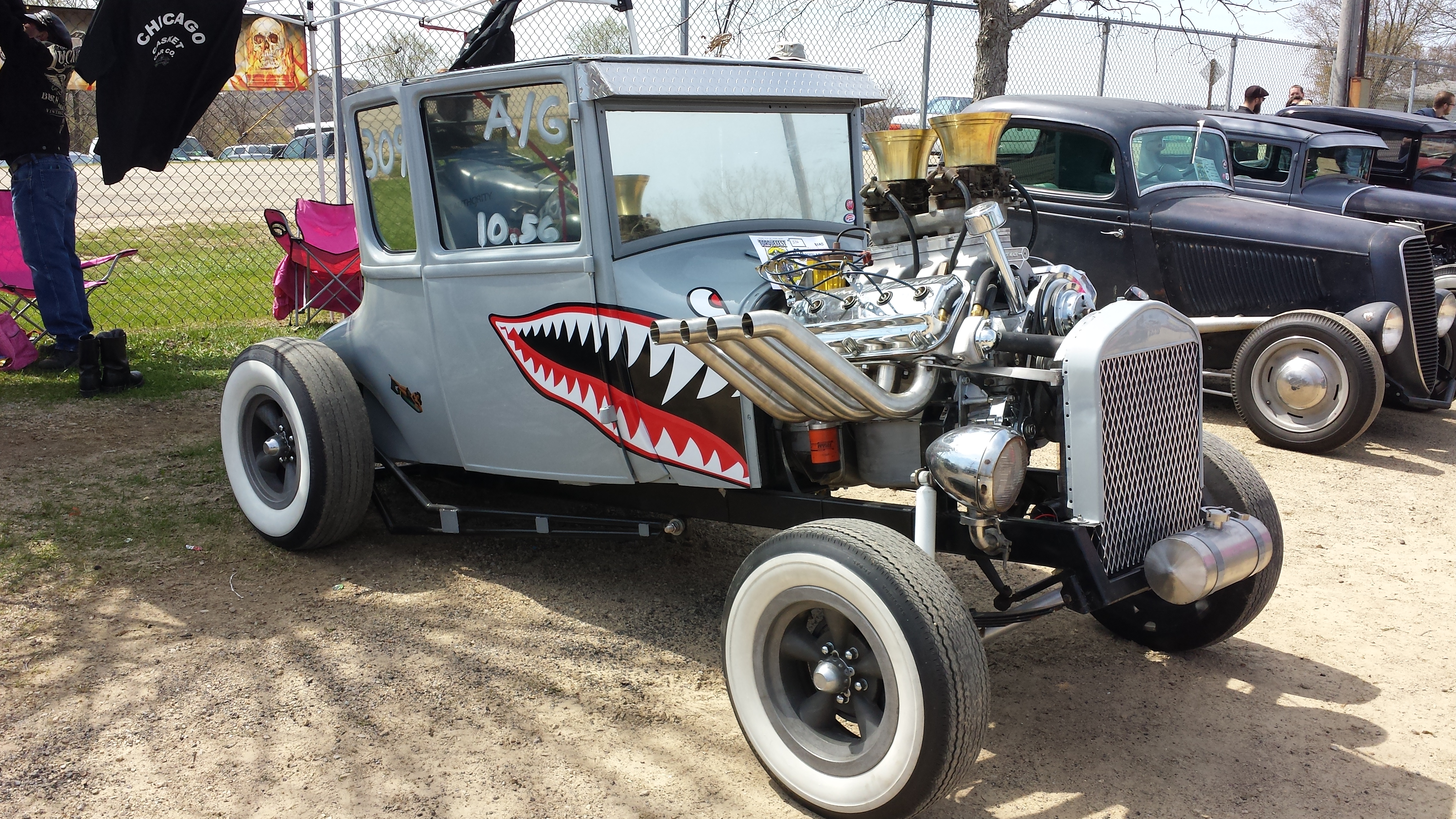
This Model T Ford is a mixture of Gasser and Rat Rod. It's mostly for fun, and not so much for actual performance. This engine has a straight pipe for each cylinder. They are actually about the best you can get for flow, unless you start dabbling in tuned length runners, etc. It's really an independent header for each cylinder.  I think it's awesome!

This Model T Ford is a mixture of Gasser and Rat Rod. It’s mostly for fun, and not so much for actual performance. This engine has a straight pipe for each cylinder. They are actually about the best you can get for flow, unless you start dabbling in tuned length runners, etc. It’s really an independent header for each cylinder. I think it’s awesome!

If you are reading this you just might be interested in making the engine perform better in your vehicle of choice. I will use the old old old old analogy, “The engine is an air pump.” If you can get more air (and a corresponding amount of fuel) into the combustion chamber, and ignited, you will make more power and go faster. An important part of the airflow of the engine is the exhaust. This removes the used A/F (air/fuel) mixture out of your combustion chamber and gets it ready for a new mixture. Efficiently removing this air allows more new mixture in, thus making more horsepower.

There are many parts to your exhaust. After the valve and the exhaust port, the exhaust manifolds are the first part of the exhaust making up the system of pipes that lead the exhaust to the back of your car. Usually the factory exhaust manifolds are heavy and ugly. Thus, replacing them with headers is both an appearance upgrade, a weight saving (performance) and makes your engine develop more horsepower (performance x2!).Headers are a popular first or second upgrade for any engine. The best analogy I can give is a water hose. The manifolds would represent squeezing the hose right at the end closest to the water source, if you let that expand, you flow more water. This is in essence what headers do. You see why headers are so great!

These are exhaust manifolds. They do the same job as headers, but they don't flow as good or make as much horsepower and often weight more because they are cast iron instead of steel tubes, which are thinner. Although headers could weight more because they are longer but they they make more horsepower.

These are exhaust manifolds. They do the same job as headers, but they don’t flow as good or make as much horsepower and often weight more because they are cast iron instead of steel tubes, which are thinner. Although headers could weight more because they are longer but they they make more horsepower.


There are a myriad of types of headers and I don’t have the space to write about all of them but I will give you the long and short of it, literally! The two most basic types of headers are called “Long Tube” and “Short Tube” headers. Gearheads like to keep it simple, so the names mean exactly what it sounds like, the physical tubes making up a long tube header are longer. See picture. Long tube headers generally make more peak horsepower, good for racing but they take up more underhood room as they are physically larger. Short tube headers generally are good for a street car because they are easier to install (smaller, less interference with other parts of the car) and they have good lower end torque (idle to ½ throttle) where you are typically driving a street car.

short tube headers

short tube headers


Long tube headers

Long tube headers

There are various ways to protect your headers from the elements. The easiest would be to buy stainless steel headers. They don’t rust since they have a high chromium content (>10.5% by mass). Another expensive solution is to have the headers chrome plated. These are very attractive but also expensive. A third solution is to apply your own high temp paint which I will chronicle my experience with below. This is definitely the most “cost effective” method, approximately $50 in materials, max.
One more way to protect your headers is to wrap them. When wrapping headers I would still recommend painting them. The header wrap could actually absorb water and hold it on the headers. Header wrap also will keep your under hood temperatures down and greatly reduce the risk of burning yourself. They are popular on motorcycles and race cars.

This is a Model A Ford Sedan with header wrap. It's barely visible behind the front tire, but it was the best picture I had, and again, sweet car. Picture is justified in my blog!

This is a Model A Ford Sedan with header wrap. It’s barely visible behind the front tire, but it was the best picture I had, and again, sweet car. Picture is justified in my blog!


How to paint headers:
If you read about My Monte in post #2 https://mywheellife.com/2014/05/20/my-wheel-life-my-monte/
you would have noticed that headers were the first performance upgrade I did. That was 5 years ago and they have become rusty despite the anti-rust coating applied to them by the manufacturer when I bought them. I recently had some starter issues with that car and had to take the headers off to get the starter off. I took that opportunity to re-rustproof the headers. Since headers are the hottest exposed part of the engine they need special paint or coating to protect them from rust, normal paint will burn off.

The first thing you need to do is to remove the rust off the headers. They need to be stripped to bare metal. I used a wire wheel and a 3M varnish/paint remover pad, both mounted on a ½” drill. This worked a lot better, faster, easier than using sand paper. There are a few other ways you could remove the rust and paint. You could use an acid paint/rust stripper. I have never done this but that stuff is definitely abrasive to the hands. You definitely want to use rubber gloves when using that. I have heard it does a very good job cleaning them though. Another way would be a sand blaster, but I believe the drill works fastest and easiest in this case and with the least exposure to chemicals! It took approximately 30 minutes – 1 hour per header.

Headers as they started in the car. Rusty, ugly. Eventually they could have rusted through and I could have had an exhaust leak. That's not good!

Headers as they started in the car. Rusty, ugly. Eventually they could have rusted through and I could have had an exhaust leak. That’s not good!


Passenger side. Rusty headers. These have been in the car since 2008 so they were possibly due to be recoated.

Passenger side. Rusty headers. These have been in the car since 2008 so they were possibly due to be recoated.

drill and wire wheels used to remove rust

drill and wire wheels used to remove rust

After the headers are cleaned of paint and rust to bare metal they need to have any grease removed before they can be painted. Carb cleaner, paint thinner or acetone are good cleaners for grease. There are also specific grease removers for this. I used carb cleaner and and a new clean shop rag. After that, you can prime the bare metal headers. VHT sells a primer specifically for use with their paint. VHT Flame Proof is the specific brand they use for 1200-2000 degrees F. This is header specific coating. They also have lower temp paints for engine blocks and brake calipers or drums. I followed the directions on the can to apply 2 light coats 10 minutes apart and a medium coat. This makes it so all coats are tacky and you don’t have to sand in between them. Holding anything when painting it is difficult. I hung the parts from a nail on the wall, as seen in the picture. Wire from a rafter or cherry picker (engine lift) works also. Make sure to not get overspray on anything when painting! After the primer stage let dry for 24 hours at least. I lightly sanded the headers with 200 grit sandpaper then sprayed 3 coats of VHT Flame Proof paint. The VHT website is a bit confusing as they say there is not VHT Flame Proof primer, but the can specifically says use a VHT Flameproof primer, and I was able to buy VHT Flame Proof primer. The name primer was only on the bar code. It’s not on the label anywhere else. I’ll have to get in touch with VHT on this. Anyway, after VHT Flame Proof paint is applied, it needs to be cured. First it has to dry for at least 24 hours. After that it needs to be headed to cure. This can be done in an oven or on the engine with light running, letting the headers cool, and later a harder run to get them hotter.
http://www.speco.com.au/vht_faq.html

Headers hanging on the wall being painted. 3 coats seemed to be about right. I also had 2 coats of VHT primer.

Headers hanging on the wall being painted. 3 coats seemed to be about right. I also had 2 coats of VHT primer.


Headers after they have been cleaned and repainted, and re-installed. Don't they look so much nicer? Also they should not rust away for some time! Disregard the dirty charcoal canister, radiator, inner fender wells and valve covers.

Headers after they have been cleaned and repainted, and re-installed. Don’t they look so much nicer? Also they should not rust away for some time! Disregard the dirty charcoal canister, radiator, inner fender wells and valve covers.


Well, hopefully you’ve learned a few things about headers in this article, and why you should buy them for your car, immediately.
Do you have a car with headers?
What was the first performance upgrade you did to your car if it wasn’t headers?
Keep the rubber side down! (Don’t forget to follow my blog (upper right, just type in your email and be sure to confirm once you get an email) so you don’t miss a new post!)
Also if you enjoy this, please share with your friends, on Facebook or in person even!

6. My Wheel Life – How to buy a vehicle

How to buy a vehicle and look as happy as this guy!

My friend on the 1982 Virago 920 he just purchased. It was his first motorcycle. Bought from the 2nd owner who had owned it since 1984.

My friend on the 1982 Virago 920 he just purchased. It was his first motorcycle. Bought from the 2nd owner who had owned it since 1984.


Quartermile:
Have an agreed upon way to transfer money between you and the seller.
Bring a blank Bill of Sale to fill out to show you have ownership of the vehicle. (just google “bill of sale or use this link http://www.jogero.com/wp-content/uploads/2011/11/Car-Bill-of-Sale.jpg )
Do a bit of research on the vehicle you are considering buying for price and common failure modes of the vehicle (weak points, ex: this engine had a tendency to blow head gaskets, or the paint was bad on X year of this vehicle)

The Full Monty

While watching racing or walking through a car show is fun, there is nothing like having your own pride and joy to ride, drive, race, modify or show off. That being established, I’d like to share some of the things I’ve learned from buying cars with my father, from my own experiences or guiding friends as they buy their first toys. To be clear most vehicles I buy are toys but most of the points in this article can be applied to toys or to basic transportation vehicles or even lawn mowers or tractors.

Often the first thing you will need to identify is how much money you are willing or able to spend.This will depend on the year of vehicle you are buying and your access to credit. I have been lucky to be buying vehicles less than 10 years old lately so I have had access to credit. If you are buying a car more than 10 years old or an ATV/dirtbike you will likely have to come up with the cash. When calculating what you are willing to spend on a vehicle remember there are usually a lot more costs than just the purchase price. You will have to transfer the title to your name. That will cost somewhere between $20-$100 (rough guess). When you transfer the title you will then have to pay a “road use tax” at least in Iowa. This is basically “the Man” getting you for sales tax. You will also have to pay for insurance within a certain number of days. I like my current insurance company because all my vehicles are covered through them so any new vehicles are automatically umbrella’ed under my coverage when I buy it, so when I drive it home I am already covered. Lastly, if you are like me you will likely want to immediately modify your vehicle in some way to make it yours. You should keep in mind any maintenance you will have to perform immediately. New tires? $400. Oil change? $30-40. New wipers? $10. Fixing a leaky rear window that you forgot to ask the previous owner about because that seems like a silly question to have to ask? Turns out that cost me about $50 and a days work. More on that in a later post.

Where to find a vehicle?
The easiest place to find vehicles these days is Craigslist. It breaks the whole country down into areas that you shouldn’t have to drive more than an hour to find something you want. Browsing craigslist is tons of fun since there is new stuff everyday. If you are looking for a specific vehicle make/model you can become a CL power user and search via SearchTempest.

About the funniest Craigslist ad I've ever read.

About the funniest Craigslist ad I’ve ever read.


http://www.searchtempest.com/
Another way to find a certain make or model is to look on a forum for that vehicle. Most specialty vehicles have a dedicated forum and usually there is a thread for vehicles for sale. Often these vehicles are well taken care of as the previous owner took enough time to look at the vehicle specific forum. Ebay Motors is also another good place to look for vehicles. My personal preference is to know what a vehicle will cost, so on Ebay Motors I prefer to search for “buy it now” vehicles only. Often Ebay Motors listings will include contact information outside of Ebay. I am not condoning or condemning that practice. I will leave that up to your judgement.
http://www.ebay.com/motors

This is a 2001 Dodge Viper I found for sale on EbayMotors for $31k. The MSRP on this car new would have been anywhere between $65k-$75k. It has 15k miles which basically is a new car. For window shopping purposes, you can buy this Viper or a brand new V8 Camaro or Mustang for the same price. The Dodge will probably cost more for insurance and replacement parts. The upside of car like this is there will be thousands of other Camaros and Mustangs. How many Dodge Vipers will you see on the road? Not many.

This is a 2001 Dodge Viper I found for sale on EbayMotors for $31k. The MSRP on this car new would have been anywhere between $65k-$75k. It has 15k miles which basically is a new car. For window shopping purposes, you can buy this Viper or a brand new V8 Camaro or Mustang for the same price. The Dodge will probably cost more for insurance and replacement parts. The upside of a car like this is there will be thousands of other Camaros and Mustangs. How many Dodge Vipers will you see on the road? Not many.

It’s a great practice to bring at least one friend when vehicle shopping. Often you can get caught up in the excitement of buying a new vehicle and you can look over any problems the vehicle has. Review the following questions with your friend, bring someone you trust and enjoy the car buying experience.

Once you have found a vehicle and set up a meeting there are a myriad of questions that you should ask.
Does the seller have the title? If not why?
How long will it take to get the title? Will they hold the vehicle until they get the title for you?
Does the vehicle have a clean title?!? If not why?
Is the vehicle still under a loan? (In Iowa the bank holds the title until the loan is paid off.)
How long has the seller owned this vehicle? If it’s been a short time it’s ok to be a bit suspicious and ask a few more questions about that.
What is the primary reason for selling this vehicle?
What problems are there with the vehicle?

Then you should check the vehicle over for a few things:
Do you see any rust?

The bad spots on this car were a bit more apparent than on some cars. Floors and quarter panels, and around windows are good places to look for rust

The bad spots on this car were a bit more apparent than on some cars. Floors and quarter panels, and around windows are good places to look for rust


Do you see any dents or dings? If so where did they come from?
Take the vehicle for a drive. You should actually drive the vehicle a little “hard” during a test drive, at least I think so. You should probably ask the seller and be clear that if you break it you don’t buy it. I’m not saying hard as in reckless, but accelerate, brake, turn sharply a little, obviously safely. Note any strange noises, slow accelerations or hick ups etc.

The topic of cash is an interesting one all by itself. Do you really want to pay for an $8000 vehicle in cash? Will the person selling the car be willing to take a check? The last vehicle I helped a friend purchase, a pristine 1982 Yamaha Virago 920, we had to make an atm run the day before and the morning of, because he had hit his daily limit for withdrawing cash. If you don’t have a physical bank in your area, just getting a large amount of cash can be difficult! One time a friend of mine paid the seller via paypal. The important thing here is to establish with the seller before you show up how you will pay them, and have the money ready when you get there.

What to pay? The negotiation.
If you decide you are ready to buy the car the next thing to discuss is the price. Here you should always do your homework before you go. Kelly Bluebook is always a good place to start at least. It will get you in some sort of neighborhood if you have no clue what you should pay.
http://www.kbb.com

Hemmings Motor news, ebay, and craigslist are all good places to baseline similar vehicles too.
The most important thing when negotiating is that you never pay what seller is asking because he undoubtedly inflated that number because he was sure some donkey like you was going to come along and lowball him, and he was right. Ok that is a joke, but normally, in my opinion, people are willing to come down a few hundred to maybe even a few thousand, depending on exactly what you are buying. If you don’t ask you will never know. One thing though, often I will not enter a negotiation unless I’ve already decided to pay the asking price and I am mostly looking for a good deal. I’m not saying that’s the only way to do it, maybe you really won’t buy it unless the seller comes down $500 on a $10k car, but really, if you are that interested is $500 really worth you not having the car you really want? Sometimes the extra time you’d get driving the car will be worth the little extra money. Also you need to consider the time and money you are investing driving to look at all these vehicles. Gas isn’t free and neither is my time (maybe your’s is). In case anyone is interested in hiring me for anything my time starts at $100/hour, but I can be negotiated with also….

Once you have sealed the deal on your new beauty you are almost ready to take it home. You should always bring a blank bill of sale to get signed. This is always good to cover your butt. It is a document both you and the seller sign with all the relevant vehicle information and it is a legal document. You can use it in lieu of a title for 30 days (at least in Iowa). It also is something you can show the police officer when you get pulled over on your way home testing the limits in your new pride and joy.

The last vehicle I purchased (April 2014).

The last vehicle I purchased (April 2014).

I’ll share a quick story of when I bought my crotch rocket. I was cruising back to my home, it was about 60 miles away. As soon as i got on the freeway I thought “lets open it up and see what she does!” then i had a 2nd thought that said, “That’s too stereotypical crotch rocket guy I’ll just cruise” and not 1 minute later there was a cop camped between the 2 lanes. I was so happy that i had not gunned it because I probably would have ended up with a ticket and it probably would have been fast enough to lose my license! So let that be a lesson to you all!

Keep the rubber side down and go out and buy something!
Do you think I missed something? Let me know! The best thing about the internet is I can always edit it away!
What was the last (preferably fun) vehicle you bought?

5. My Wheel Life – Car spotters guide to the galaxy (1920’s to 1960’s) (Part 1)

Quartermile:
There are a TON of different ways to build a car.
You can build the same car in multiple different styles.
One car can sometimes mix and match from various styles. This can turn out good or bad depending on the builder.
This guide will tell you about all (that I could think of) different “styles” in which people around the world build up their cars.
Often these are regional since different cars were sold in different places around the world.

Lets Ride:

The first installment of car spotters guide to the galaxy will cover styles of cars that can be built off cars that were originally made between 1920 and ending about 1960. These dates are by no means concrete, but are to give you a general idea.

Restored – This is any type of car restored to stock. This can be applied to vintage cars (1930’s), muscle cars, old exotics or any other car. The process can become so intensive that the restorer will replicate the overspray and other mistakes that were present on many factory original cars from the era the car was new.
http://www.mafca.com/
restored car
Traditional hot rods – These are recreations of hot rods in a style that would have been seen in a specific era. Early hot rods replaced original 4 cylinder engines with the newer and larger early V8’s and straight 6 and 8 cylinders. This style is often strict on using parts that were only available in the year they are trying to emulate. For example, a classic hot rod built in a 1930’s style could have used a flathead ford engine (introduced in 1932) but not a small block Chevrolet engine (introduced in 1955).

Rat rods – These are an evolution of Traditional hot rods. Rat Rods will use parts from any era. Often they can use large engines and different engines are appreciated here. The rule for rat rods is to stand out. They often reflect their owners. Diesel engines, turbochargers, wild exhaust systems, bomber seats and large shifters are the norm for rat rods. The interior of a rat rod has very few requirements. Comfort is definitely not a priority for most rat rods. Rat Rods are often art cars and they generally are not representative of real cars ever made in previous eras. Rat rods are often based on car bodies built between 1920 and 1950 but the rat rod style can be applied to any body style. Flat black and rust are 2 popular finishes for the bodies of rat rod vehicles. .To the untrained eye rat rods can appear to be traditional rods, but if you look closer and can identify newer parts or generally “rough” appearance or any parts that were not available between 1930 and 1960 you probably have a rat rod.

http://www.olskoolrodz.com/

This Model T Ford is a mixture of Gasser and Rat Rod. It's mostly for fun, and not so much for actual performance. This engine has a straight pipe for each cylinder. They are actually about the best you can get for flow, unless you start dabbling in tuned length runners, etc. It's really an independent header for each cylinder.  I think it's awesome!

This Model T Ford is a mixture of Gasser and Rat Rod. It’s mostly for fun, and not so much for actual performance. This engine has a straight pipe for each cylinder. They are actually about the best you can get for flow, unless you start dabbling in tuned length runners, etc. It’s really an independent header for each cylinder. I think it’s awesome!

Rat Rod truck

Rat Rod truck

The rust surface finish, few mufflers on the exhaust headers and Punisher spray painted in the grill are clues that this car is all about fun and is a rat rod

The rust surface finish, few mufflers on the exhaust headers and Punisher spray painted in the grill are clues that this car is all about fun and is a rat rod

If you look closely you can see the super charger does not actually have a belt driving it, thus making the super charger non-functional. The rust finish and general cartoon-like appearance allude to the fact that this car is definitely a rat rod. - I love this car. It demands attention, which is the goal of a rat rod.

If you look closely you can see the super charger does not actually have a belt driving it, thus making the super charger non-functional. The rust finish and general cartoon-like appearance allude to the fact that this car is definitely a rat rod. – I love this car. It demands attention, which is the goal of a rat rod.

Street rods – Street Rods are generally build on cars made between 1920 and 1950. They are sometimes called Billet rods. Billet refers to a part that has been machined from a large piece of aluminum. For street rods billet can be used for rims, shifters and any smaller parts on the engine. Billet parts were not extremely popular until the 1980’s and later. Billet is often frowned upon by traditional hot rod purists. These cars are often nicely restored. They have nice paint jobs, nice interiors and clean suspensions. These cars have lately become somewhat less popular as rat rods have risen in popularity in the last few years.
http://www.streetrodderweb.com/

This street rod is easily identified as such by the bright paint and chrome rims. The chrome side mirrors and recessed head lights and general "clean" and "smooth" appearance also are all dead giveaways that this is a street rod.

This street rod is easily identified as such by the bright paint and chrome rims. The chrome side mirrors and recessed head lights and general “clean” and “smooth” appearance also are all dead giveaways that this is a street rod.

The nice paint, clean engine with a lot of chrome and billet rims give this car away as a street rod.

The nice paint, clean engine with a lot of chrome and billet rims give this car away as a street rod.

Custom – Customs are cars that were modified for looks rather than speed. Often these are based on bars built from the 1940’s to 1960’s. These cars are often long and low. Coils were cut or heated to lower these cars originally. These days, cars can often use air bags to give the car a low stance but all it to be raised to a comfortable and safe height for driving. These cars often have nice finished interiors and lots of chrome on the engine.
http://www.streetrodderweb.com/

This custom is identifies by it's lack of billet rims and clean paint.

This custom is identifies by it’s lack of billet rims and clean paint.

This car is a custom. It is identified as such because it is based on a 1950's car and has clean paint, is lowered and has a clean interior but does not have billet rims.

This car is a custom. It is identified as such because it is based on a 1950’s car and has clean paint, is lowered and has a clean interior but does not have billet rims.

Gasser – Often streetcar styles are based on race cars. Gassers are one of those styles. A gasser is based off drag racing technology and classes that started in the 1950’s and continued through the 1970’s. These were generally based on cars built between the 1930’s-1960’s and were usually American 2 door cars. The front of a gasser is lifted and usually rides on a straight axle. Slicks are an important part of the drag racing vibe also. Gassers sit high in the front. The stance was for better weight transfer to launch the drag car off the line.

This car is easily identified as a gasser because of it's "nose high" stance and slicks. The name, "Wicked" also is a nod to vintage race cars often being named. The hood scoop and lack of billet rims are also both good indicators that this is a gasser.

This car is easily identified as a gasser because of it’s “nose high” stance and slicks. The name, “Wicked” also is a nod to vintage race cars often being named. The hood scoop and lack of billet rims are also both good indicators that this is a gasser.

This gasser is easily identified as such by it's high stance (relationship of body to wheels). The front is much higher than a stock car. Also the lack of inner fender wells and the fact that it has fender well headers and the vintage appearing sponsor lettering point that this is a gasser, and a very nicely done one at that.

This gasser is easily identified as such by it’s high stance (relationship of body to wheels). The front is much higher than a stock car. Also the lack of inner fender wells and the fact that it has fender well headers and the vintage appearing sponsor lettering point that this is a gasser, and a very nicely done one at that.

I hope you enjoyed the first installment of car spotters guide to the galaxy. Stay tuned for future posts that show you how to identify various styles of muscle cars, trucks, imports and more!

Visit us on Facebook