I attended the Monday May 18th, 2026 Cedar Falls City Council meeting to make a statement on bitcoin mining.
You can view the full video here. This is linked directly to the timestamp of my statement. You only get 5 mintues to make comments.
Below is the response to many false claims from the March and April Planning and Zoning committee meetings as well as some proposals about what we should focus on writing into a common sense city code for regulations for any business.
I ended up being quoted on the local news (without my knowledge!)
Simple mining Held an open house the 5-20-2026 where I also spoke to KCRG about zoning rules that would make sense for any business. .
Setting the Record Straight on Bitcoin Mining in Cedar Falls
I attended the April 22nd planning and zoning committee meeting and heard a number of claims about Bitcoin mining that deserve a factual response — and a more constructive conversation about what regulation should actually look like.
I am neither for nor against Simple Mining locating here. If Cedar Falls residents decide they don’t want miners in our city, we should not have them. But decisions should be made on accurate information. I’m a mechanical engineer and financial advisor , and I’ve given three public educational talks on Bitcoin at the Cedar Falls and Waterloo libraries. I’ve done extensive research on the grid through owning an electric car and following Bitcoin mining closely. I have no affiliation with Simple Mining or any cryptocurrency company. I’ve previously been involved in local charities including the Job Foundation, providing financial education to children, and Cedar Valley Gearheads, providing cars for people who can’t afford them. I mention this because Bitcoin is something I’ve determined is genuinely beneficial to the world — enough to speak up about in a public forum where it’s currently a minority view.
What follows is my attempt to correct the factual record — and then offer what I think a productive regulatory conversation actually looks like.
Part One: Claims That Don’t Hold Up
“Bitcoin mining causes extensive e-waste”
Annually, roughly 62 million metric tons of e-waste are generated globally. Bitcoin accounts for approximately 30,700 metric tons — about 0.05% of the total, or one two-thousandth of global e-waste. That’s a real number, but it needs to be kept in proportion. Global E-Waste Monitor 2024: https://ewastemonitor.info/the-global-e-waste-monitor-2024/ — Bitcoin E-Waste Monitor: https://digiconomist.net/bitcoin-electronic-waste-monitor/
“Bitcoin mining is making personal computers more expensive”
Bitcoin miners use ASICs — application-specific integrated circuits purpose-built for mining — not the general-purpose GPUs or chips found in consumer computers. There are roughly 5–6 million Bitcoin miners globally, a negligible share of annual chip production. The claim that they’re competing with your next laptop purchase doesn’t hold up. Source: https://research.grayscale.com/reports/the-power-of-bitcoin-mining
“Bitcoin miners will pollute our water”
The cooling solution referenced at the meeting was described as a biodegradable, corn-based liquid with no EPA reporting requirements for spills. That claim is worth verifying with the applicant — but that’s normal zoning due diligence, not evidence that Bitcoin mining is uniquely dangerous. City code can simply require EPA-approved coolants for any industrial operation without singling out mining.
“Bitcoin mining causes cancer and air pollution”
Bitcoin miners are computers. They run on electricity. They do not combust anything, produce exhaust, or emit particulate matter. There is no direct air pollution from the hardware itself. Iowa generates approximately 63% of its electricity from wind — the highest wind share of any state in the country. If you’re concerned about emissions from electricity generation, the argument belongs at the power plant, not at the mining computers. And if that concern is genuine, Iowa is actually one of the best places in the world to host a miner. Globally, 52.4% of Bitcoin mining already runs on sustainable energy sources, and coal’s share of Bitcoin mining has fallen from 36.6% to just 8.9% in recent years. Source: Cambridge Centre for Alternative Finance: https://www.jbs.cam.ac.uk/2025/cambridge-study-sustainable-energy-rising-in-bitcoin-mining/
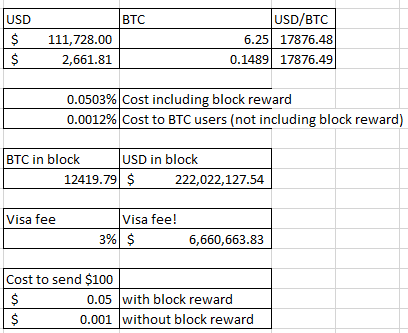
“A single Bitcoin transaction uses as much energy as six homes”
This is a misleading framing. Bitcoin doesn’t settle one transaction at a time — the energy secures the entire network and every transaction batched into each block. A better comparison is gold: the gold mining industry consumed 132 TWh of energy in 2023. Bitcoin’s estimated annual consumption is approximately 138 TWh — roughly equivalent — yet gold is never asked to justify its energy use on a per-transaction basis. Gold energy source: https://www.sciencedirect.com/science/article/abs/pii/S2405851324000254 — Bitcoin energy source: https://www.jbs.cam.ac.uk/2025/cambridge-study-sustainable-energy-rising-in-bitcoin-mining/
“Bitcoin mining strains local power supplies and raises electricity costs”
This is the opposite of how these arrangements typically work. Large miners operate on interruptible contracts — they’re required to curtail operations during peak demand periods, which actually relieves grid pressure when it matters most. A stable, predictable industrial baseload like a mining operation helps subsidize the grid infrastructure that all ratepayers benefit from — including the capacity to run peaker plants like the new CFU facility when they’re genuinely needed. CFU stated at the last meeting that flexible industrial loads like these can help lower average electricity costs by reducing purchases during expensive peak periods. As Cedar Falls purchases more power collectively, we also gain negotiating leverage that benefits everyone on the rate.
One more thing that rarely gets mentioned: Bitcoin can actually reduce emissions
Some Bitcoin mining operations are deployed specifically to capture methane from oil fields, landfills, and agricultural waste that would otherwise be flared or vented into the atmosphere. Methane is roughly 80 times more potent than CO₂ as a greenhouse gas over a 20-year period. By combusting that waste gas to power mining instead of letting it vent or burn off uncontrolled, these operations actively reduce overall warming impact. The White House Office of Science and Technology Policy acknowledged in a 2022 report that certain crypto mining operations using vented methane may, in some cases, produce positive climate outcomes. Source: https://bidenwhitehouse.archives.gov/wp-content/uploads/2022/09/09-2022-Crypto-Assets-and-Climate-Report.pdf
“Bitcoin creates no value — it’s just gambling”
Whether you personally value Bitcoin as an asset is one question. Whether it creates real-world value is a different one — and the answer is clearly yes.
In Virunga National Park in the Democratic Republic of Congo — Africa’s oldest national park — excess electricity from hydroelectric plants powers a Bitcoin mine. Revenue from that operation funds park infrastructure, conservation efforts, and staff salaries. Source: https://www.weforum.org/videos/bitcoin-mine-power/
Gridless, a company operating across rural Africa, partners with small hydro and renewable mini-grids to subsidize local electrification by purchasing excess power when community demand is low — making those projects economically viable. Source: https://gridlesscompute.com/ — Additional reporting: https://crypto.news/how-a-shipping-container-and-bitcoin-saved-a-struggling-african-hydro-project/
The Human Rights Foundation, a nonpartisan organization supporting dissidents worldwide, has made Bitcoin central to its financial freedom work. In authoritarian regimes — Venezuela, Nigeria, Russia, China — Bitcoin provides a way for activists to receive donations, pay staff, and operate without funds being frozen or confiscated by governments. That is not a fringe argument. It is documented, peer-reviewed, and real. Source: https://hrf.org/program/financial-freedom/bitcoin-development-fund/
Part Two: What We Should Actually Regulate
Noise concerns are legitimate zoning concerns and should be evaluated seriously — but that’s a separate question from whether Bitcoin itself is uniquely harmful. Consider the “no engine brakes” signs posted around many cities. The goal isn’t to ban engine brakes — it’s to control the noise they produce. An engine brake can be made quiet. The law should target the outcome, not the technology. The same principle applies here. Write standards that any business must meet, make the consequences clear, and let engineering solve the rest.
Audible noise
Set a specific decibel limit measured at the property boundary or at a defined distance from the facility. Don’t write an impossible standard, but a reasonable and enforceable threshold applies equally to any future occupant of the site — not just miners.
Infrasound
Sound below 20 Hz isn’t captured by standard decibel meters but can be felt as vibration at high intensities. Large cooling fans can produce it. Standard noise ordinances don’t cover this — city code should specifically address infrasound limits if this is a concern, because it won’t be regulated otherwise.
Visual screening
Concerns about visual impact — equipment, shipping containers, signage — are normal zoning considerations addressable through screening requirements, setback rules, and landscaping buffers. Nothing unique to mining here.
Water and coolant use
Mining operations typically run closed-loop cooling systems with minimal water discharge. Code can require EPA-approved coolants for any industrial operation and mandate closed-loop systems. Ask the applicant for the exact product specification — that’s a standard engineering question, not a scandal.