The $2K Stimulus, the 50-Year Mortgage, and the Fiat Trap

Why Americans Deserve Better — and Why Bitcoin May Be the Only Way Out

President Trump recently proposed a $2,000 payment to every American, excluding “high-income individuals.” The idea sounds generous, but it’s also a symptom of a much deeper disease: a government that spends money it doesn’t have—causing inflation in the process and actually hurting the very people who receive the payment.


The Math Behind the Madness

In 2024 alone, the U.S. government ran a $1.8 trillion deficit.
Let’s put that in perspective:

  • There are 128 million households in the United States.
  • There are 340 million individuals.

If we divided that $1.8 trillion evenly, that’s $14,000 per household or $5,294 per person.

So when politicians talk about sending you a one-time $2,000 check, remember — they’re already spending about 2.5 times that amount per person every single year.
If the government simply stopped wasting and borrowing, you’d already be thousands of dollars richer annually — without a single new program or “stimulus.”

That’s money our government already spent—above and beyond the taxes you and I pay. It wasn’t earned. It was created out of thin air by the Treasury and the Federal Reserve. Every time that happens, the dollars in your wallet become worth a little less. That’s why groceries, cars, and homes cost more every year, no matter how hard you work.


The Mirage of the 50-Year Mortgage

Now the U.S. housing authorities are exploring 50-year mortgages, following the path of Japan and even some European countries.
Japan went so far as to experiment with 100-year mortgages, often passed from parents to children. Did that make homes more affordable? No—it made them more expensive.

When you stretch the loan term, monthly payments drop slightly, but total debt rises massively. Sellers raise prices to match what buyers can “afford” on paper. The result: higher prices, higher leverage, and lifelong debt servitude.

The 50-year mortgage is not a solution. It’s an illusion. It’s another way to avoid facing the real issue: our monetary system rewards debt and punishes saving.


Where Does the Money Go?

When we spend $1.8 trillion more than we take in, where does it all go?

  • To foreign wars and endless “operations” that rarely make Americans safer.
  • To subsidies and bailouts for politically favored industries.
  • To bloated bureaucracies that exist to perpetuate themselves.
  • To interest payments on the national debt—now one of the largest single line items in the federal budget.

Meanwhile, our manufacturing jobs were shipped overseas, first to Mexico and China, now to Vietnam and India. Communities that once built real wealth are hollowed out. Young people drown in debt while imported goods fill our stores. The average American is left with higher prices, lower stability, and fewer ways to build lasting capital.

Why does this keep happening? It’s not just bad policy — it’s baked into the structure of the global financial system.
Because the U.S. dollar is the world’s reserve currency, foreign countries must hold dollars to trade internationally. That means America must constantly send dollars abroad — through trade deficits and offshored production — to supply the world with liquidity.

This is known as the Triffin Dilemma: to maintain the dollar’s global dominance, the U.S. has to export jobs, import goods, and print money. It’s a system that benefits global finance, not the American worker.


A Balanced Budget Is Not Just Accounting — It’s Freedom

If the U.S. government lived within its means, you’d instantly gain purchasing power. Prices would stabilize, wages would go further, and the value of your savings would stop eroding.
You wouldn’t need a $2,000 stimulus check—because your dollar would already be strong.

The truth is simple: either we live within our means voluntarily, or reality will force us to.

Now, to be fair, we probably can’t slash spending overnight without causing serious shock to the economy. But we don’t have to.
What if we simply froze federal spending at 2025 levels and let tax revenue grow naturally with the economy? Within a few short years, the budget would balance itself—no chaos, no default, just discipline.

That’s not austerity. That’s responsibility.
And it’s the only peaceful way to restore faith in the dollar while keeping it as the world’s reserve currency.
The other option—the one emerging whether Washington likes it or not—is Bitcoin.


Bitcoin and the End of Fiat Illusion

“I don’t believe we shall ever have a good money again before we take the thing out of the hands of government, that is, we can’t take it violently out of the hands of government, all we can do is by some sly roundabout way introduce something that they can’t stop.”
— F.A. Hayek

Some believe there’s only one peaceful way out of this cycle: a return to sound money—money that cannot be printed at will.

That’s what Bitcoin represents.
It’s not a speculative token or a tech fad—it’s a monetary rebellion against endless inflation, debt-based growth, and political manipulation of money. In a Bitcoin world, politicians can’t quietly steal your savings through inflation. They must tax you honestly or spend less.

That’s accountability.
That’s discipline.
That’s freedom.

Even some in government see this potential. Senator Cynthia Lummis has proposed that the United States create a strategic Bitcoin reserve, allowing America to hold a real, non-inflationary asset on its balance sheet.
That move alone could begin rebuilding trust in the U.S. financial system—and might be the only peaceful way out of this mess.


My Message to Congress

If you truly want to help Americans:

  • Stop using debt as a crutch for broken policy.
  • Reject gimmicks like 50-year mortgages that only inflate prices.
  • Commit to a balanced budget and an honest monetary system.
  • Bring back real production, not financial engineering.
  • End foreign interventions that waste our treasure and divide the world.
  • Support sound money legislation like Senator Lummis’ Bitcoin reserve proposal.

Let the American worker, saver, and builder rise again—on a foundation of real value, not printed promises.


My Message to Every American

Don’t wait for Washington to fix this.
I urge you to learn about the problems with fiat money—how inflation quietly steals your time, labor, and savings—and to understand why Bitcoin solves these problems at their root.

The path forward is clear: either reform the dollar through fiscal discipline, or transition to a world built on honest, decentralized money.
The choice is ours—but the clock is ticking.


Send This Letter to Your Representatives

If this message resonates with you, copy the following text and send it to your senators and congressperson. You can find their contact info at https://www.congress.gov/members.


Subject: Support Fiscal Responsibility and Sound Money

Dear Senator/Representative,

I’m writing to express my concern about the growing national debt, inflation, and the policies that continue to devalue the U.S. dollar. In 2024, the federal deficit was $1.8 trillion—equal to roughly $14,000 per household. Instead of one-time stimulus checks, we need a long-term commitment to balanced budgets and sound money.

Please support policies that:

  • Freeze federal spending at 2025 levels until tax revenue naturally balances the budget.
  • End inflationary monetary expansion that hurts working Americans.
  • Reject 50-year mortgages and other short-term “fixes” that only inflate asset prices.
  • Support legislation like Senator Cynthia Lummis’s proposal for a Bitcoin strategic reserve, ensuring the United States has a sound, non-inflationary store of value.

Fiscal responsibility and sound money aren’t partisan issues—they’re American values.

Sincerely,
[Your Name]
[Your City, State]


Spain’s Silver, Japan’s Bonds, America’s Deficits: Why Easy Money Kills Real Work And Hollows Out The Middle Class


(inspired by this episode of Bitcoin for Millennials)

Big idea: Spain found a mountain of silver in Bolivia, spent like crazy, stopped building real industries—and the bill came due. The same thing is happening today, just with money printers instead of mines.


1) The mountain

In 1545, Spanish explorers struck the richest silver deposit in history: Cerro Rico, “the rich mountain,” in what’s now Bolivia.
A city called Potosí exploded out of the rock. At its height, it was larger than London or Paris.
For two centuries, roughly two-thirds of the world’s silver came from that one mountain. Spain looked unstoppable.


2) Easy money, hard problems

So much silver poured into Europe that prices began rising year after year.
For nearly a thousand years, prices in Europe had been flat. Then suddenly, everything—from bread to rent—started costing more.
Historians call it the Price Revolution.

Spain thought it was getting richer. In reality, its silver was just buying less and less.


3) The addiction loop

Spain borrowed against future silver shipments, funded endless wars, and built palaces to show off its power.
Sound familiar? Borrowing against your future is exactly what modern governments do when they run deficits every single year—financing today’s comfort with tomorrow’s labor and taxes.
And those “endless wars”? Spain fought them across Europe. The U.S. fights them across the globe. Different century, same playbook.


4) “Free” silver, “free” money

The silver was basically free to Spain—mined with forced labor that cost almost nothing.
That “free” flow of money metal fueled reckless spending and inflation.

Today, printing money is even freer. No mines, no ships, no workers—just a digital entry at the central bank.
But the result is the same: more money chasing the same goods, rising prices, and wealth concentrating in financial assets instead of productive work.


5) The wage spiral

When silver poured into Spain, mining and trade paid far more than farming or manufacturing.
Workers chased the high wages, and everyone else demanded raises to keep up.
That wage inflation pushed up local costs across the board.

It soon became cheaper to buy foreign goods than to make them at home.
English and Dutch craftsmen could undersell Spanish products even after shipping them across the sea.
Local factories and farms couldn’t compete. Spain’s economy drifted from production to consumption—spending instead of building.

You can see the same thing happening today.
Money printing and easy credit inflate salaries in finance, tech, and government while driving up housing, energy, and labor costs everywhere else.
Manufacturing can’t keep up, so we import the difference.
The result? A strong currency, cheap goods, and a shrinking middle class.


6) The next chapter — Japan

What if the next Spain isn’t America yet—but Japan?
As this interview with macro analyst Roberto Rios explains, Japan is further down the same path:
zero interest rates, quantitative easing, and government debt so large that the central bank must choose between saving its currency or saving its bond market.

For decades, Japan has printed money to prop up its financial system, even buying stocks outright to keep prices from falling.
That free liquidity created an illusion of stability—until inflation returned and the yen began collapsing.
Now Japan faces the impossible choice every over-leveraged empire eventually faces:
protect the currency and crash the system, or print the money and destroy the currency.

It’s the same dilemma America is approaching, just delayed by our global reserve-currency privilege.
The “free silver” of the 1500s became “free paper” in the 1900s and “free digital dollars” in the 2000s. The pattern never changed—only the technology did.


7) The simple lesson

Resources aren’t wealth. Printing money isn’t wealth. Making things is wealth.
When prosperity feels “free,” it’s usually borrowed from the future.


8) Today’s echo

Easy credit. Quantitative easing. Deficit spending.
Each promises painless prosperity—more liquidity, more growth, no trade-offs.
But it’s the same story Spain wrote 500 years ago: short-term abundance, long-term decay.

Spain’s “free” silver built an empire that rotted from within.
Japan’s “free” money is imploding quietly.
And America’s “free” dollar is next in line—just with better branding and digital ink instead of metal.


9) Bitcoin and the Dollar Endgame

What if Japan’s collapsing bond market isn’t just a regional crisis but a preview of America’s financial future?

In the Bitcoin for Millennials episode, host Bram talks with macro analyst Roberto Rios (“Peruvian Bool”), who has been tracking this “dollar endgame” for years.
While most people fixate on Bitcoin’s short-term price swings, Rios zooms out to the structural problem: every central bank is trapped between saving its currency or saving its bond market. Japan is simply the first to hit the wall.

He calls this dynamic financial gravity—the idea that once debt and money creation expand far enough, gravity pulls everything toward a neutral asset that can’t be printed.

Rios’s core argument:

  • The global monetary system has reached a point where debt can never shrink; it can only be monetized.
  • Central banks will print until confidence breaks.
  • When trust in both sides of the fiat balance sheet—bonds and currencies—collapses, capital will flee into something outside the system entirely.

That’s where Bitcoin enters the picture.

While central banks and institutions still view gold as the “neutral” reserve, Rios argues Bitcoin is the superior version of gold:

  • Fixed supply, instantly verifiable, infinitely divisible.
  • Borderless and digital—no vaults, shipping, or intermediaries.
  • Immune to political capture or forced demand (“fiat” in the literal let-there-be sense).

As he puts it, the Japanese bond crisis could actually trigger the biggest Bitcoin bull run ever.
Once Japan’s carry trade unwinds and the yen weakens further, global liquidity shocks will push central banks to print again—reviving the same inflation loop that began with Spain’s silver.
Each cycle of monetary rescue drives more people to seek an exit from the system itself.

From silver to paper to code:
Spain’s “free” silver created Europe’s first inflation.
Japan’s “free” money is collapsing under its own weight.
Bitcoin is the gravity well everything eventually falls into.


What to Buy in 2025? My Thoughts on Global Investing

Quick Take:
International markets are finally outperforming the U.S. in 2025, with VXUS up 25% versus the S&P 500’s 13%. But much of that gain is tied to a weakening dollar and global money printing — not just fundamentals. I also see potential in small-cap value stocks and India as a long-term growth story. – Not financial advice!

I was replying with a long comment to a YouTube video about investing, and it turned into something worth sharing here. I’ve cleaned it up a bit to make it flow like a proper post — but the ideas are the same: how I’m thinking about markets right now and where opportunities might lie.

When people ask me what to buy, I always start with one key principle:
focus on total return, not dividends.

Dividends are nice, but they’re just one piece of the puzzle. What really matters is total return — the combination of price growth plus dividends. That’s what grows your wealth over time.


International Markets Are Finally Waking Up

In November 2024 a friend told me what a dog his internationl stocks were and said he was going to sell them adn buy all S&P 500 I mentioned to him the idea of reversion to the mean While I was rewarded quickly, after years of underperformance, international markets have been on an absolute tear in 2025.

  • VXUS — the total international ETF (about 25% emerging markets) — is up roughly 25% year to date.
  • VWO, which tracks only emerging markets, is up around 21%.
  • Meanwhile, the S&P 500 (VOO) is up just 13% this year.

It’s been a long time since we’ve seen this kind of outperformance from non-U.S. stocks. But before we get too excited, it’s worth asking why.


Factors Driving International Resurgence

Several factors have driven the recent resurgence in international markets.
Concerns about the U.S. trade war and tariffs have pushed investor attention abroad, while a weaker U.S. dollar has amplified gains for dollar-based investors holding foreign assets.

The U.S. Dollar Index has declined roughly 9% this year, giving a lift to unhedged international equities.

That currency impact is easy to see when comparing VXUS to hedged strategies.
For example:

  • Xtrackers MSCI EAFE Hedged Equity ETF (DBEF) and
  • iShares Currency Hedged MSCI EAFE ETF (HEFA)

are both up about 11.4% this year — solid returns, but well below the 25% gains seen in unhedged funds like VXUS.

In other words, a large portion of the international rally is being driven by the decline in the U.S. dollar, not just by improving fundamentals abroad.

👉 You can read more about this dynamic in a recent ETF.com article here:
“VXUS Tops $100B as ETF Investors Embrace International Stocks”


Inflation, Money Printing, and “Bigger” Returns

I suspect that in the future, the stock market’s returns might look higher than historical averages — not necessarily because companies are more productive, but because money printing and inflation are inflating nominal returns.

Historically, the S&P 500 returned about 11% per year, with maybe 3% of that driven by inflation and monetary expansion.
If we enter a world where inflation runs closer to 7%, then even if the real return stays about the same (around 8%), the headline number could look like 15% annual returns.

Obviously, that’s not guaranteed — just a thought experiment. But it’s a good reminder that higher nominal returns don’t always mean higher real returns.

Be Greedy When Others Are Fearful

Warren Buffett’s old rule still applies:

“Be fearful when others are greedy, and greedy when others are fearful.”

So what are investors fearful of right now?
Small-cap stocks.

  • VIOV (small-cap value ETF) is up only 2% this year.
  • VB (small-cap blend) is up around 6.5% year to date, and about 52% over the past 5 years.
  • The S&P 500, by comparison, is up 90% over that same period.

Historically, small caps have outperformed large caps over the long term — and markets tend to revert to the mean. That doesn’t mean small caps will outperform next year, but it might be time to start paying attention to them again.


A Closer Look at India

One specific market I’ve been watching is India, through the INDA ETF. I’ve personally allocated about 1% of my portfolio there. While it is actually -1% for the year that adds to it’s intregue! As I noted you want to consider buying the losers as they will likely revert to their mean higher returns.

I’ve traveled to India and work with suppliers there who produce castings and tubing. The country reminds me a lot of where China was a couple of decades ago — rapid growth, huge labor pool, and rising industrial capacity.

Here’s a quick comparison:

  • Average income in India: about $2,000 per year
  • Average income in China: about $15,000 per year

India also has another advantage — it’s a democracy, politically more aligned with the U.S., and open to global capital and trade. That combination of low base income (meaning huge growth potential) and political stability makes India a fascinating market to watch over the next decade.


Wrapping It Up

So, what should you buy?
That depends on your goals — but here are the themes I’m watching:

  • International markets, especially emerging economies
  • Small-cap value stocks that have been left behind
  • And long-term growth plays like India

Just remember — higher returns on paper may reflect inflation, not real productivity. Always think in terms of real value creation, not just nominal gains.

And, of course, this isn’t financial advice — just my perspective on how I’m thinking about global investing in 2025.

What do you think? Are you adding international exposure or doubling down on U.S. stocks?
Share your thoughts below — I love reading different perspectives on where people see opportunity.


My Bitcoin Presentation


Here’s an AI summary of the bitcoin presentaiton I’ve given 2x now and am set to give agian in the future. You can find the video here.

1. The Problem: Broken Money

  • Money is supposed to store value from your labor, but inflation erodes that value over time.
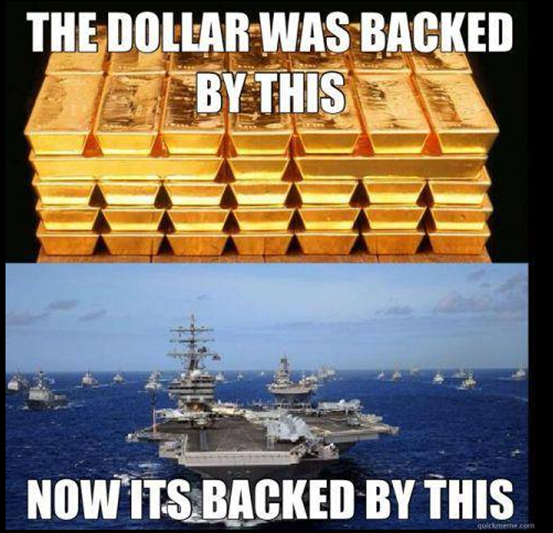
  • Fiat money used to be backed by gold until 1971; now it’s backed by government trust and military power (“money backed by bombs”).
  • Governments print trillions, causing inflation and currency devaluation.
  • Inflation isn’t caused by parties or policies — it’s caused by money printing.
  • History (Roman Empire, etc.) shows debasing currency leads to collapse.

2. The Solution: Bitcoin

  • Fixed supply: 21 million coins — no one can print more.
  • Divisible: Each Bitcoin has 100 million satoshis (smallest unit).
  • Scarcity = preserved value.
  • Blockchain: Decentralized public ledger validating transactions without banks.
  • Mining: Miners verify transactions, earn fees, and newly unlocked Bitcoin (currently 3.125 BTC every ~10 minutes).

3. Why Bitcoin Is Unique

  • Fair launch: No pre-mine or early insider advantage; Satoshi mined alongside others.
  • Other coins (altcoins): Often pre-mined, centrally controlled, and solve fake problems — more like unregistered securities.
  • Bitcoin solves one problem — store of value.

4. How to Buy Bitcoin

  • Easiest: Through Bitcoin ETFs on Fidelity, Schwab (not Vanguard).
  • Direct ownership: Strike, River, or Cash App (low fees, only Bitcoin).
  • Avoid: Apps like Robinhood, PayPal, Coinbase — too many distracting altcoins.

5. Future Potential & Valuation

  • Total global assets ≈ $750 trillion; “monetary premium” (store-of-value demand) ≈ $273 trillion.
  • If Bitcoin absorbs that, price = ~$13 million per BTC.
  • At $100,000 today, even small investments could have massive upside (e.g., $10k → $1.3M).
  • Volatile, but long-term risk/reward is asymmetric.

6. Adoption Trends

  • Governments adopting: El Salvador (legal tender), Bhutan, Pakistan, some U.S. states (Texas, NH, Arizona).
  • Companies holding Bitcoin: Strategy (formerly MicroStrategy), Tesla, Block, Marathon, Coinbase, etc.
  • U.S. forming a “Bitcoin strategic reserve.”

7. Final Takeaways

  • Fiat money causes many global problems; Bitcoin fixes the root issue — sound money.
  • Start small, invest what you can afford to lose.
  • Learn more and grow your understanding — treat dips as opportunities.
  • Key message: Broken money → broken world. Bitcoin → fixed money → potential for a better system.

Is Bitcoin a Ponzi Scheme?

People often ask me that question when I’m giving a bitcoin presentation or just talking about it one on one. The comparison comes up because Bitcoin is new, people don’t understand it, it has gone up a lot in value, and skeptics assume that must mean someone is being tricked. But to answer it clearly, we need to define what a Ponzi actually is.

A Ponzi scheme is a fraud where early participants are paid “returns” using money from later participants. There’s no productive asset behind it—just cash shuffling from newcomers to old-timers until the inflows slow down and the scheme collapses. Hallmarks of a Ponzi are:

  • Promised guaranteed returns regardless of the market.
  • No underlying value creation.
  • Dependence on new entrants to keep funding old ones.

By that definition, Bitcoin simply doesn’t fit. Bitcoin doesn’t promise anyone a return. It doesn’t pay holders just for owning it. There is no central operator taking money from new buyers to pay old ones. Instead, Bitcoin is an open, neutral monetary network. Its value is set transparently by the market. People buy it because they believe in its properties—scarcity, portability, censorship resistance—not because they’re promised payouts.

Ironically, the system that does mirror a Ponzi structure is Social Security. Today’s workers don’t have their contributions saved for their own retirement. Their payroll taxes are immediately used to pay current retirees. The system only holds up as long as new workers keep entering to fund those already drawing benefits. In other words:

  • New entrants (workers) pay.
  • Old entrants (retirees) benefit.

That is the definition of a Ponzi-like structure. And unlike Bitcoin, which can run indefinitely on code and math, Social Security’s days are limited. Demographics are shifting—fewer young workers, more retirees—and that math simply doesn’t work forever. The only thing keeping it afloat today is government borrowing and taxation authority.

👉 Bottom line: Bitcoin is not a Ponzi. It’s voluntary, transparent, and sustainable. Social Security, on the other hand, is the true Ponzi—and its expiration date is nearing!

Bitcoin, Deflation, and the Myth of “Useless Money” – (People Won’t Spend Bitcoin Because it’s TOO Valuable????)

A common fear I hear about Bitcoin goes something like this: “If it becomes so valuable in the future, people will never spend it. They’ll just hoard it forever — and that means it can’t work as money.”

But let’s pause. That argument assumes that money needs to lose value in order to be useful — that people will only spend if their savings are constantly melting. Does that really make sense?

People Already Save

In reality, people save no matter what. Even with inflationary dollars, households and businesses don’t spend every cent. They put money aside — but because the dollar steadily loses value, they are forced to search for other stores of value:

  • Stocks
  • Bonds
  • Real estate
  • Gold
  • Collectibles

This isn’t a feature. It’s a problem. The constant need to escape a leaky dollar creates bubbles, misallocates capital, and makes financial life complicated for everyone.

Take housing, for example. When money loses value, homes become more than shelter — they turn into financial assets. People don’t just buy houses to live in them; they buy them as inflation hedges. That means families looking for a roof over their heads end up competing with investors and savers desperate to preserve wealth. Prices get bid up far beyond the utility value of the home, making affordability worse and turning what should be a basic necessity into a speculative storehouse for capital.

Deflationary Money Doesn’t Paralyze Spending

Critics imagine that if money gains value over time, nobody will use it. But people already spend under deflationary conditions — technology proves this. Everyone knows next year’s phone or TV will be cheaper and better, yet they still buy today. Why? Because they value the use and enjoyment now, not just later.

The same applies to Bitcoin. Once mature, it will likely appreciate at roughly the rate of productivity growth (similar to a low-yield bond). People will hold it to store value — and still spend it when a purchase is worth more than waiting.

Flipping the Narrative

Inflationary money forces people into risky, complex alternatives just to save. Hard money that holds or grows its value removes those distortions. Contrary to the fear, deflationary money won’t break the economy — it may actually fix many of the problems caused by inflationary systems.

And here’s the real irony: many critics already suspect Bitcoin could become extremely valuable — that’s why they worry no one will spend it. But at the same time, they refuse to buy any today. They recognize the upside, but fear keeps them paralyzed on the sidelines.

Conclusion

In a Bitcoin world, homes could go back to being homes, not savings accounts. People could save without speculation, spend without fear of losing purchasing power, and invest in businesses for growth rather than sheltering from inflation. That’s not “useless money.” That’s money finally doing its job.

From 3% to 10%: STRC and STRD Show How Bitcoin-Backed Preferreds Beat High-Yield Accounts

Money market funds have quietly become a $7.7 trillion behemoth. They’re the go-to “safe yield” for investors and savers alike. But with the Federal Reserve now in an easing cycle, those yields — currently around 3.5%–4% — are headed lower.

That’s where Strategy’s Bitcoin-backed perpetual preferreds come in. While most people know Strategy (MSTR) as the largest corporate holder of Bitcoin, fewer realize that it has built a full yield curve of preferred instruments, each engineered for different investors.


Where These Instruments Sit in the Capital Stack

Most senior → Debt (convertible notes)STRF (Strife)STRC (Stretch)STRK (Strike)STRD (Stride)Common (MSTR) → most junior / volatile.


The Rationale: Building a Bitcoin Yield Curve

  • STRF (Strife): Senior, cumulative, fixed dividend, long-duration. Currently yielding about 9%.
  • STRC (Stretch): Senior to STRD and STRK. Variable monthly dividend, engineered to trade around $99–$101, currently yielding about 10.25%.
  • STRK (Strike): Convertible hybrid with both dividend and equity-conversion features. Not my focus here, but it’s an important part of the structure.
  • STRD (Stride): Junior high-yield, fixed 10% dividend, currently yielding about 12.7% due to market pricing in more perceived risk. Functionally similar to STRF, except dividends are non-cumulative (can technically be skipped). That said, I believe skipping would be highly unlikely, as it would damage trust and Strategy’s ability to raise future capital. Dividends are paid quarterly.

Visualizing the Yields

Here’s how these instruments compare against traditional money markets:

  • Money Market (green): conservative baseline at ~3.5–4%.
  • STRF (orange): senior, stable preferred with ~9%.
  • STRC (orange): short, steady instrument at ~10.25%, engineered to trade near $100.
  • STRD (orange): dynamic junior instrument at ~12.7%.

Why I Prefer STRC and STRD

I’m drawn most to STRC and STRD.

  • STRC is designed to be the least volatile of the group, with a monthly payout and mechanisms (ATM issuance, variable rate, call option) that help stabilize its price.
  • STRD is the high-yield gear, juiced by its junior position in the stack. While the market demands extra yield for perceived risk, I personally think that risk is overstated given Strategy’s Bitcoin reserves and incentives to maintain dividend trust.

Together, they cover two ends of the spectrum: steady monthly yield vs. higher-octane quarterly yield.


A Practical Emergency Fund Example

Suppose you have a $10,000 emergency fund.

  • All in Money Market: $10,000 × 4% ≈ $400/year.
  • Blend with STRC: Keep $7,500 in money markets (=$300/year) and put $2,500 into STRC (=$256/year).
    • Total = $556/year — a 39% boost without overcommitting.

I wouldn’t put my entire emergency fund into a new instrument like STRC — safety and liquidity should come first. But even a modest allocation can noticeably lift your yield while still keeping most reserves conservative.


Closing Thought

Strategy is essentially pioneering a new financial system built on Bitcoin collateral. If they can consistently pay these dividends — even through Bitcoin downturns — it would be revolutionary. It would prove that Bitcoin isn’t just “digital gold,” but the foundation for a new class of yield-bearing, creditworthy instruments.

Here are 2 videos of when STRC and STRD were initially offered. They offer a lot of information about how these work. 

Strategy’s Stride STRD Perpetual Preferred Stock IPO Backed by Bitcoin | Michael Saylor and Phong Le

Strategy’s Stretch STRC Perpetual Preferred Stock IPO Backed by Bitcoin | Michael Saylor & Phong Le

Bitcoin, Deflation, and the Myth of “Useless Money” – Why would people spend bitcoin if it keeps gaining value?

Bitcoin, Deflation, and the Myth of “Useless Money”

A common fear I hear about Bitcoin goes something like this: “If it becomes so valuable in the future, people will never spend it. They’ll just hoard it forever — and that means it can’t work as money.”

But let’s pause. That argument assumes that money needs to lose value in order to be useful — that people will only spend if their savings are constantly melting. Does that really make sense?

People Already Save

In reality, people save no matter what. Even with inflationary dollars, households and businesses don’t spend every cent. They put money aside — but because the dollar steadily loses value, they are forced to search for other stores of value:

  • Stocks
  • Bonds
  • Real estate
  • Gold
  • Collectibles

This isn’t a feature. It’s a problem. The constant need to escape a leaky dollar creates bubbles, misallocates capital, and makes financial life complicated for everyone.

Take housing, for example. When money loses value, homes become more than shelter — they turn into financial assets. People don’t just buy houses to live in them; they buy them as inflation hedges. That means families looking for a roof over their heads end up competing with investors and savers desperate to preserve wealth. Prices get bid up far beyond the utility value of the home, making affordability worse and turning what should be a basic necessity into a speculative storehouse for capital.

Deflationary Money Doesn’t Paralyze Spending

Critics imagine that if money gains value over time, nobody will use it. But people already spend under deflationary conditions — technology proves this. Everyone knows next year’s phone or TV will be cheaper and better, yet they still buy today. Why? Because they value the use and enjoyment now, not just later.

The same applies to Bitcoin. Once mature, it will likely appreciate at roughly the rate of productivity growth (similar to a low-yield bond). People will hold it to store value — and still spend it when a purchase is worth more than waiting.

Flipping the Narrative

Inflationary money forces people into risky, complex alternatives just to save. Hard money that holds or grows its value removes those distortions. Contrary to the fear, deflationary money won’t break the economy — it may actually fix many of the problems caused by inflationary systems.

And here’s the real irony: many critics already suspect Bitcoin could become extremely valuable — that’s why they worry no one will spend it. But at the same time, they refuse to buy any today. They recognize the upside, but fear keeps them paralyzed on the sidelines.

Conclusion

In a Bitcoin world, homes could go back to being homes, not savings accounts. People could save without speculation, spend without fear of losing purchasing power, and invest in businesses for growth rather than sheltering from inflation. That’s not “useless money.” That’s money finally doing its job.

For further reading on this read The Price of Tomorrow: Why Deflation is the Key to an Abundant Future – Jeff Booth


Bitcoin and the Triffin Dilemma: Why Wages Would Adjust Fairly Under a Neutral Money

Most people don’t realize that many of the economic problems facing Americans today trace back to something called the Triffin dilemma. Politicians like Trump rage about trade deficits or promise to bring back jobs, but they rarely understand the underlying monetary system that makes those promises impossible to keep. And because they don’t understand it, millions of middle-aged workers in the U.S. are left angry and disillusioned.

But here’s the good news: the problem is solvable. And Bitcoin, combined with Buckminster Fuller’s vision of a “world accounting system,” offers a way forward.


The Triffin Dilemma in Plain English

Robert Triffin pointed out a paradox in the 1960s: if one country’s currency becomes the world’s reserve currency, that country must constantly supply it to the rest of the world. For the U.S., that means running trade deficits and flooding the globe with dollars.

The catch is that what looks good globally causes pain domestically. To meet the world’s demand for dollars, the U.S. must run deficits, borrow more, and tolerate an overvalued dollar. That makes American exports less competitive, hollows out manufacturing, and weakens wage growth.


The Cost of Supplying the World with Dollars

To keep the global economy running on dollars, the U.S. has to keep sending them out. There are only two main ways that happens: by running trade deficits (importing more than we export) or by borrowing (issuing Treasuries that foreigners buy with their surplus dollars). Both of these mechanisms keep the world awash in dollar liquidity — but they impose heavy costs on American workers.

  • Persistent deficits mean more borrowing. Every trade deficit eventually gets financed with U.S. debt. Foreign governments and investors recycle the dollars they earn back into U.S. Treasuries. The system keeps spinning, but America’s national debt climbs ever higher.
  • Global demand keeps the dollar strong. Because the world needs dollars, our currency stays overvalued compared to others. A strong dollar makes imports cheap (which feels good for consumers at Walmart) but makes American exports expensive (which is brutal for manufacturers trying to compete abroad).
  • Manufacturing gets hollowed out. When American goods are too expensive, factories lose business. Over time, companies either shut down or relocate production overseas. Entire industries migrate abroad, leaving behind shuttered plants and devastated communities.

Take steel as a concrete example. In the late 20th century, global demand for dollars, combined with cheaper steel production in Asia, kept the U.S. dollar strong and U.S. steel prices uncompetitive. By the 1980s and 1990s, iconic steel towns in Pennsylvania and Ohio watched mills close. Workers who once earned solid middle-class wages saw their jobs vanish, and many never found work at the same pay level again.

  • Wages stagnate. With fewer competitive industries at home, American workers lose bargaining power. They’re forced to compete against cheaper labor abroad, and wage growth flatlines. Meanwhile, the cost of living — housing, healthcare, education — keeps climbing. The result is the frustration many middle-aged Americans feel today: they’ve worked hard their whole lives, yet the system seems rigged against them.

In short: to supply the world with dollars, America borrows, tolerates an overvalued currency, and sacrifices its own competitiveness. The global dollar system helps keep international trade flowing, but it extracts its pound of flesh from U.S. workers.


Figure 1: Global demand for dollars keeps the dollar strong, which makes imports cheap but exports uncompetitive — hollowing out U.S. manufacturing and holding down wages.

Why Trump (and Most Politicians) Miss the Point

Trump recognizes that something is broken — but his diagnosis is shallow. He blames foreign countries, bad trade deals, and weak leaders. His answer is tariffs and protectionism.

But the deeper issue is that America can’t stop running deficits without undermining the very system that makes the dollar the global reserve. The Triffin dilemma locks us in. Protectionism only papers over the problem temporarily.


How Wages Would “Automatically Adjust” Under Bitcoin

Now imagine a world where global trade is denominated in Bitcoin, a money no government can print or devalue.

  1. High Productivity Raises Wages Locally
    If Country A is extremely productive, it earns more Bitcoin. Workers there see higher wages in BTC terms.
  2. Prices Rise in the Productive Country
    With higher wages, local goods get more expensive relative to other countries.
  3. Trade Shifts
    Other countries stop buying from Country A and look to Country B or C, where wages are lower and goods are cheaper.
  4. Jobs Move, Wages Rebalance
    Jobs flow out of the high-wage country into lower-wage ones. Wages in the expensive country stabilize or even fall, while wages in cheaper countries rise.

The result: wages “automatically” adjust across borders to reflect real productivity, not the games governments play with currency printing or manipulation.


Figure 2: Under a Bitcoin-based system, wages and trade flows automatically rebalance. High wages make exports more expensive, shifting jobs abroad until global wages reflect true productivity.

Why Fiat Prevents This Natural Balance

In today’s fiat system, governments intervene to block this natural adjustment. They devalue their currencies to keep exports cheap, trapping workers in low wages and preventing global wage convergence.

Meanwhile, American workers face the opposite problem: a strong dollar that prices them out of global competition. The Triffin dilemma ensures the imbalance persists.


“Isn’t It Just Greedy Companies Suppressing Wages?”

A common belief is that big U.S. companies are the real villains — trillion-dollar firms posting record profits while holding wages flat, outsourcing jobs, or using H1B visas to bring in cheaper labor. There’s truth in that frustration, and yes, there is abuse in how the visa system is used.

Consider this example: if an American worker expects $80,000 but a skilled H1B worker is willing to accept $50,000, the company has a clear incentive to hire the cheaper worker. To Americans, this feels like wage suppression. But for the H1B worker, it’s a huge win. That $50,000 U.S. salary might translate into the equivalent of $150,000 back home, especially if they can send $10,000 to family abroad where the cost of living is far lower.

So while it looks like companies are simply greedy, they’re really responding to the incentives of a distorted global money system. With the dollar overvalued and global trade imbalances baked in, U.S. labor is structurally overpriced compared to the rest of the world. Companies are not the root cause — they’re just playing the game according to the rules we’ve set.

In a Bitcoin-based system, the game changes. Wages would adjust across borders automatically, not through currency manipulation or immigration loopholes. Companies would still seek efficiency, but the playing field would be leveled: wages in every country would reflect true productivity, not fiat distortions.

Figure 3: Under fiat money, companies are incentivized to outsource, use H1B labor, and suppress wages. Under Bitcoin, wages converge globally based on real productivity, not manipulated exchange rates.

Fuller’s Dream of a World Accounting System

Buckminster Fuller envisioned a future where humanity had a scientific, global accounting system that measured real wealth and resources instead of manipulating national ledgers.

Bitcoin is a step in that direction. It’s transparent, borderless, and immune to political distortion. A Bitcoin-based world economy would essentially run on Fuller’s “world accounting system,” with wages, trade, and prices reflecting true productivity instead of central bank policy.


The Takeaway

The middle-aged frustration in America isn’t just about lost jobs or bad politicians. It’s about being trapped inside the Triffin dilemma — a system where the U.S. must sacrifice its workers to supply the world with dollars.

Bitcoin offers a way out: a neutral, global money where wages naturally rebalance, trade adjusts fairly, and no single country bears the impossible burden of being the world’s reserve.

It’s not just a monetary upgrade — it’s the foundation for a more honest accounting system for the entire world.

How Long Can You Ignore Bitcoin?

Bitcoin doesn’t need you. But maybe—just maybe—you need Bitcoin.

Every cycle, new people show up thinking they’ve discovered something revolutionary—whether it’s questioning Bitcoin’s energy use, proposing faster payment layers, or trying to “fix” volatility. But every idea you’ve had about Bitcoin… has already been debated, attacked, memed, improved, or discarded years ago. The Bitcoin rabbit hole is deep, and it’s been dug for over 15 years by some of the most paranoid, visionary, and relentless minds on the planet.

Bitcoin isn’t some niche internet plaything anymore. It’s now held on balance sheets, integrated into national energy grids, and embedded in the financial strategies of countries and corporations alike. And yet, most people still ignore it—until they can’t.

How long can you ignore a monetary network that’s eating inflation, resisting censorship, and refusing to die?

Bitcoin doesn’t wait. It doesn’t care if you “believe” in it. It just keeps producing blocks every 10 minutes, no matter what. The longer you delay engaging with it, the more ground you lose—not just financially, but intellectually. Because by the time you show up with your “fresh” take, there’s already a thousand-page thread archived on Bitcointalk dismantling it.

Bitcoin doesn’t need you. But maybe—just maybe—you need Bitcoin.


🧠 Common Questions (Yes, They’ve Already Been Answered)

Before you leave a comment or dismiss Bitcoin entirely, check below—your question has probably been asked, answered, and refined for years. But if it hasn’t, ask! The Bitcoin rabbit hole only gets deeper when you engage.

🔒 1. What about quantum computing?

Won’t it break Bitcoin?


⚡ 2. Why is Bitcoin so slow and expensive?

Visa is faster. Why would I use this?


🌱 3. Isn’t Bitcoin bad for the environment?

It uses more energy than countries!


📉 4. Isn’t Bitcoin too volatile to be money?

I can’t buy groceries with it!


🪙 5. Can’t someone just make a better Bitcoin?

Isn’t tech supposed to improve over time?


🧠 6. Isn’t this all just speculative gambling?

Feels like tulips and meme coins.


💬 Got More Questions?

Drop them in the comments or send me a message—I’m always open to honest discussion. But I strongly encourage you to do a little digging first. Chances are, someone’s already asked your exact question… and the answer is better than you’d expect.

Start here. Stay curious. See where it leads. 🟠