Quartermile:
Kit Cars – What are they?
Think of a Lego set, but for a car!
Why kit cars?
They are a car focused on performance or style. Imagine a Ferrari or Shelby Cobra for the price of a new Ford Focus!
Lets put it together!
I’ve written a few articles about buying cheaper used supercars or
newer muscle cars and I’ve told you about a few different styles of cars such as street rods and muscle cars. But buying a car assembled by a major manufacture isn’t the only way to get a car. If you are the handy type or just want to break the mold, you can build a car yourself! Of course, building a car by yourself, from nothing is a pretty difficult task, and that’s not what I’m proposing, although that has been done also! Check it out here. If you’re not as hard-core as Ken, but still want something different you are in luck! You can build a kit car!
So what is a kit car? A kit car is a car that you purchase in pieces and assemble yourself, it’s basically like a Lego set, or buying a table from IKEA. Why would anyone want to do this you might ask? Well there are a few reasons.
1. You can get a kit car that looks and performs like a much more expensive car than it is.
2. You can build a car that never existed.
3. You can build a car that did exist but is way too rare to buy an original. (Think Shelby Cobra).
Why would a company want to design a kit car instead of a production car? There are a few reasons for that also!
1. It is (much much) cheaper for a company to design and sell a kit can than it is for Ford, or other major manufacturers. Often kit cars source a reliable engine from the major manufacturers. The body and suspension are the major contributions by the designers.
2. This is because a kit car doesn’t have to pass all the safety standards a new car does. They also aren’t held to the same standards for NVH and other considerations. That being said, that doesn’t mean that they are (all) unsafe, or harsh. Many companies put a lot of work into the kits to make them great cars.
Let’s look at the different types of kit cars available.
The first are replicas of current or older cars that you can build yourself. One example of this is the Factory Five Roadster . It is basically a recreation of a Shelby Cobra from the 1960’s. Why not just buy an original Cobra you ask?
Check Hemmings Motor news http://www.hemmings.com/ . An original Shelby Cobra is rare, and therefore expensive (think $100k+) where as a Factory Five Roadster can be assembled for $30k if you do it the right way. You also have the benefit of putting a variety of engines and upgrades suspension, electronics and just about everything else that has progressed in the automotive world in the last 50 years.
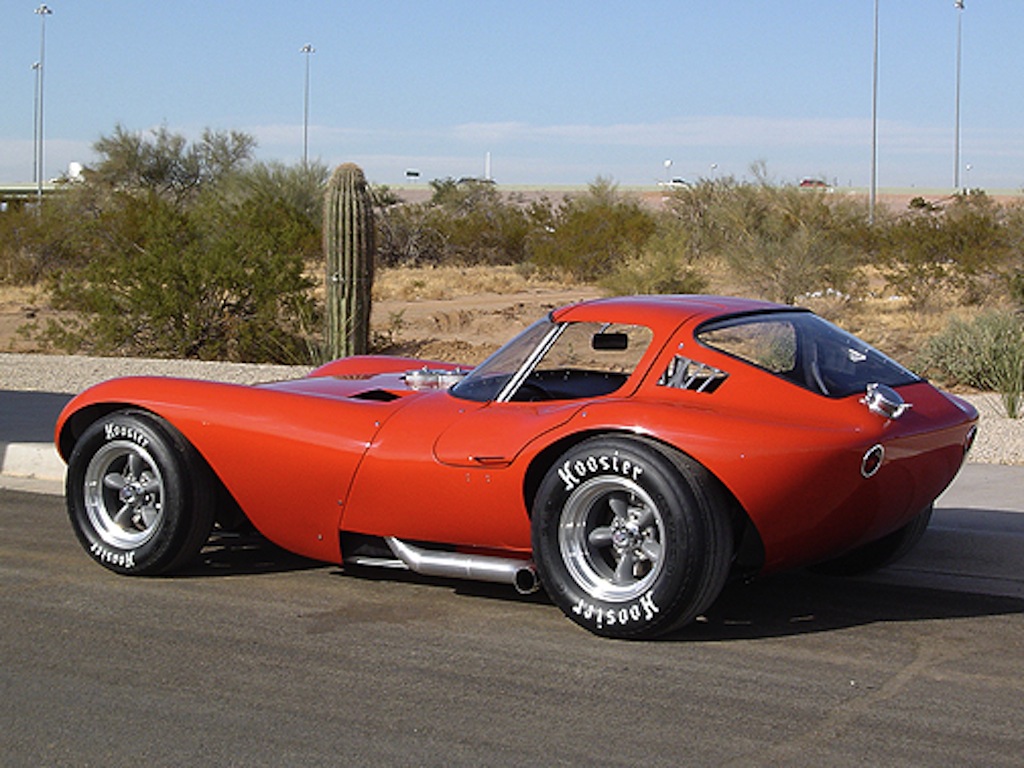
Another that is one of my favorites is a Chevrolet Cheetah kit car. What is a Chevrolet Cheetah you ask? It was a car made to beat the Shelby Cobra in it’s day. Unfortunately tragedy befell the company and only 19 (or so) were ever made. The good news is you can buy the beautiful Cheetah as a kit and put it together yourself!
Lamborghini’s and Ferrari’s are other vehicles that are popular in this type of “build cheaper than you can buy” category.
The second type of kit car is a car that never was made. Factory Five has one of these available also. Is called the Factory Five GTM supercar. It’s a “generic” supercar being that it is low, wide and good looking. That being said, it is also a lot more ‘’cost effective” than a Ferrari or Lambo, and if you were to damage it, you know you could always rebuild it! Here are 2 other supercar kits. The Superlite (at beginning of article) is the first, and here’s a quote from their site
“Q. How easy is it to build, really? –
A. The Superlite SLC was designed to be built in your garage, using basic hand tools. You don’t need to do any welding, or machining, or have fancy tools.”
Sounds pretty great to me!
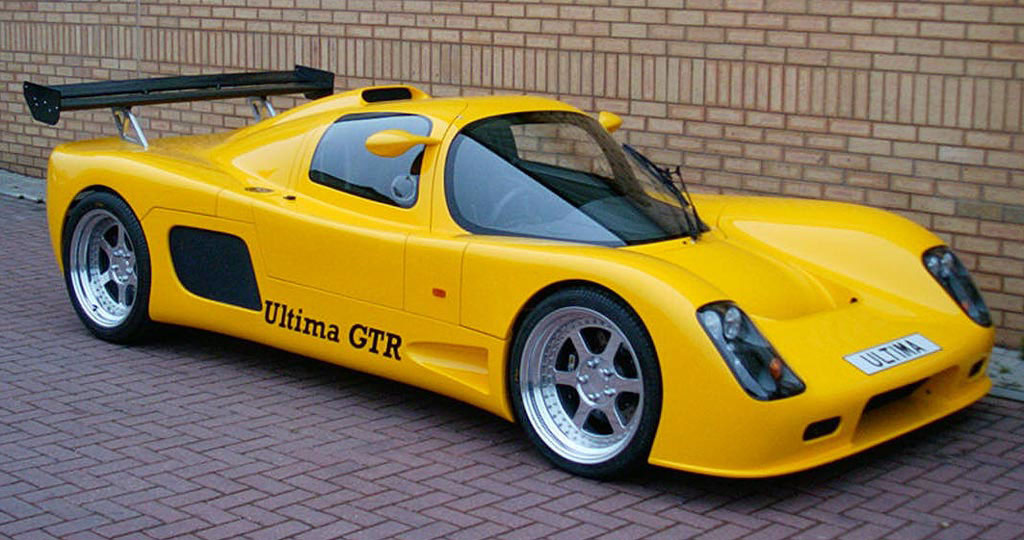
And here’s another supercar/racecar kit, the Ultima GTR, made in England.
And here’s a final one, the K1 Attack, made in the Czech Republic.
There is also a third type of kit car. It’s not a complete kit like the cars talked about before, but it’s a massive redesign of an existing car but also bought in kit form. Pontiac Fieros are popular cars for this as they were rear engine like many supercars. Often they get made into Lamborghini’s.
There is also this car, build from a 1990’s Ford Thunderbird.
So as you can see the kit car industry is far reaching, covering many different styles of cars. They are actually relatively affordable, if you are in the market for a performance car. There are often different levels of each kit available. Often you can buy just a body and source all the other parts yourself, such as the brakes, seats, wheels and tires. There are also kit cars that the factories will in fact build for you! There are even some that will let you help them build your car!
Here is a site with a very long list of kit car manufacturers if you are looking for something different. There is a car for everyone!
So has this gotten your creative juices flowing? Are you rip roaring ready to get down in the garage and build your own car? Or would you rather buy a production car? Have you ever seen a kit car on the street or at a car show?
What is drag racing and a little on how to attend your first drag race.
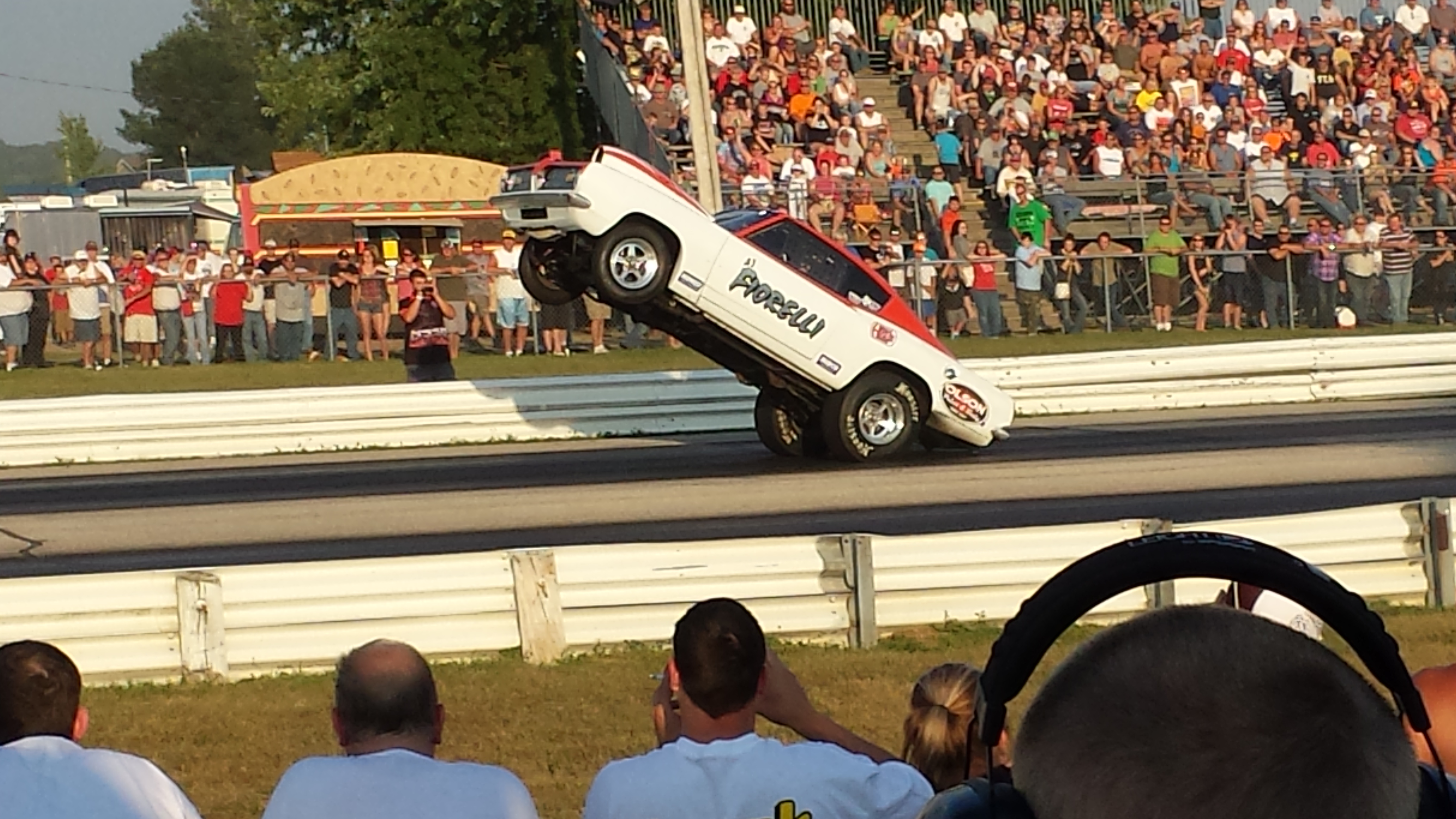
Awesome Barracuda pulling a wheelie at the drag strip.
Quartermile:
Perhaps you’ve wondered why I use the term “quartermile” for my short synopsis at the beginning of my posts (above).
This term comes from drag racing, which is probably the quickest form of vehicular competition, hence why I use it for my short intros.
Drag racing is the original “go fast” sport.
The first drag race took place in 1900 between a Mercedes and a horse. The horse won.
Skip to the end for tips for your first track day if you don’t want to read everything, but I’d read it if I were you!
If your car is faster than 11.5 seconds in the quartermile
1. You probably shouldn’t start racing with that car!
2. You will need a roll cage (and a SNELL approved) race helmet or you will get kicked out…
Generally at slower speeds you don’t need a helmet up to a certain speed, that varies by track. It has to be SNELL approved also, ask ahead of race day.
The Flying Mile
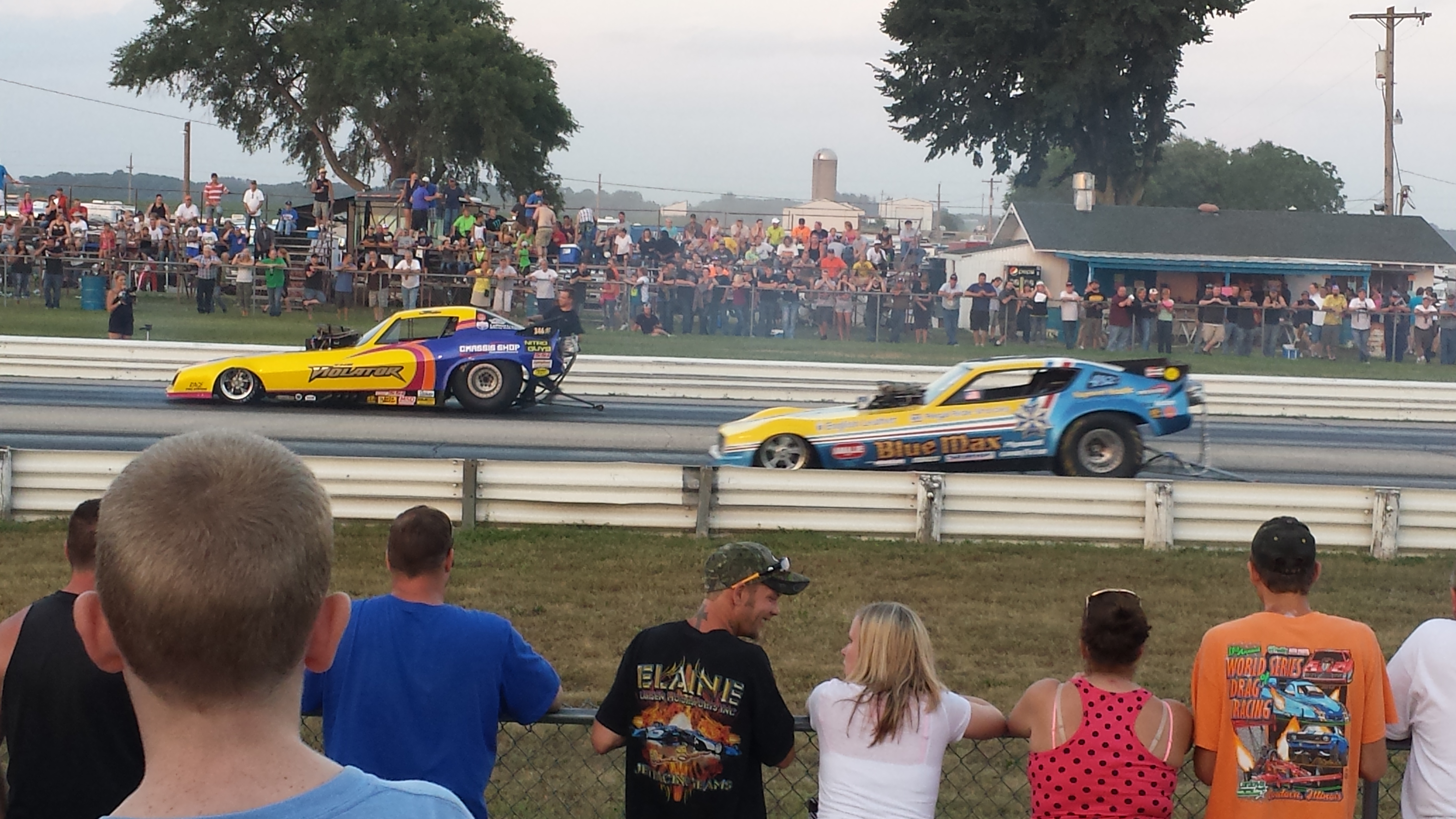
2 Funny cars drag racing. Funny cars are purpose built drag cars that go very fast.
If you are reading this you are probably a car person and you probably enjoy driving your car fast. Unfortunately, Uncle Sam frowns on you going much about 70 in most of the country and often over 55 mph is a no-no. Luckily there is an option for you Speedy Gonzalez. Drag Racing!
Speedy Gonzales
There is so much to say about drag racing so I’ll just start. Drag racing is a race between 2 vehicles (usually). It measures how quickly each vehicle can cover a set distance (usually a quarter of a mile (1320 feet). You have probably been exposed to drag racing from the Fast and Furious movies, or just about any other car tv movie or show when people ask “What will she do?” She being the car. It’s sort of like the bench press of the automotive world. It’s a great number to impress people, but using a few simple tricks you can make a car a lot faster for the quartermile but that will make it less potent in other forms of racing. Drag slicks and skinnies aren’t really the best for autocross or other racing that doesn’t involve going straight! That being said, I like drag racing for this sole reason, it’s the easiest performance benchmark to replicate. You can pay $40 (or $70 or more) to go to a local drag strip, race your car a few times and you know how quick it is. Then you can compare it to friends. This is much harder in autocross unless you are at the same track, and often those tracks get changed each week also. Same for times around a larger set race track. So, drag racing it is.
woman prepping her husbands drag car. Does she have a granddaughter?
The ultimate goal of drag racing is getting the car to cover the distance in the shortest time possible, because faster is better right? Drag racing sure sounds easy you are thinking right? Well yes and no. In principle yes, but have you tried accelerating fast and in control? In all likelihood, no, you haven’t, and definitely not with 300 or more horsepower. Everyone wants to do burnouts in their high horse power car, which look cool, but that is actually the opposite of what you want to do when drag racing. Burning out = no traction. Which means not moving forward which means you lose the race. Now you’re a loser. Bummer.
At the end of a drag race you will get a time slip which will show you the time it took you to cover 60 feet, 330 feet, ⅛ mile, and a quartermile. It will also tell you your MPH at the ⅛ and quartermile points on the track which is important. I will help you decipher all these numbers to help you go quicker below.
But first! How does a drag race start? A smoking hot girl throws a hankie in the air right? Not so fast Dom (inic Toretto, Fast and Furious reference for you uninitiated).
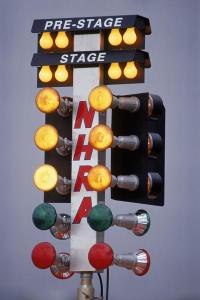
Before you start the drag race you have to do a few things. First, you should usually do a burnout. This will clean the debris off your tires. It will also make them warm and sticky. This will help you accelerate and not spin your tires off the line. Then drag race starts with the “Christmas tree”. It’s a set of 7 lights. The top 2 tell you when you are at the starting line (when you are staged).
The top one will blink when you break a laser beam, and you will roll an inch or 2 forward and the second one will light up (from your tire breaking another beam). You are now ready to race! Once the other driver has also staged the 3 yellow lights (below the staging lights), will blink off in .5 second intervals (for normal racing, all at once for professionals). Then the green light will light up and you should start going now! Actually in all likelihood you or your car will not be as fast to react as you think, therefore the slower your car the sooner you should start engaging the clutch/removing your foot from the brake, and pushing the gas. If you leave from the line before the green light goes you will “break out” which means you have lost the race before you started, because you started too early. Not a big deal on your first day. On the other hand, the tree also measures your “reaction time” how close your car left the starting line in relation to the green light. Depending on what type of racing you are doing you might have to pay attention to this number. If you are just doing it to see what your car can do, that is fine, but if you are actually racing, the reaction time gets factored into your overall time. If you and the other car run the same time but his reaction time is .000 (perfect) and yours is .500 seconds you lose, even though your cars were equal. You can actually lose if you have a faster car even! If you run 14.00 with a .5 reaction time, and the other guy runs a 14.1 with a .000 R.T. you still lose.
Now that you know about starting, lets break down my time slip below and try to understand what all the numbers mean starting with the 60’ time which is one of the most important numbers in drag racing. This tells you how good your car is sticking to the ground and how much traction you are getting. If your 60’ time is high that means you are spinning your tires, which means you are going slow. See my time slip below.
1998 Super Taco vs 2007 Musatng
This is my 2007 Mustang GT vs a 1998 Toyota Tacoma pickup (not a performance vehicle in most peoples mind!) Our Mph was the same at the end of the track (100Mph) but his 60’ times are better and his over all time is lower by .821 seconds! That’s huge in drag racing. Why is he faster? He sticks to the track and uses his power while I was taking off, spinning tires, sometimes getting “wheel hop” etc. Who wants to take their mustang to the track and get smoked by a Toyota Taco? No one! How do we fix this? It (should be) easy. Basically you want to take off slowly enough, roll on the throttle to prevent wheel spin. You can also let air out of your tires to get better traction. Finally if you can, install drag slicks on your car. There are tons of other, more involved suspension mods you can do if you get fast enough, but that’s not the aim of this article.
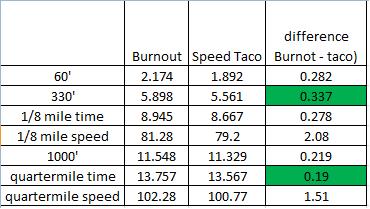
Next we will compare the times of 2 cars that I raced separately and copy pasted their times together for a comparison of what the sticking to the track will do for you.
Super Taco vs. Some burnout
Burnout vs. Super taco
You will notice on the right is our friend the fast Taco vs some burnout car that I didn’t bother to document. You see again the Taco had the faster overall quartermile time 13.567 seconds vs. 13.757 for the burnout. But wait! The taco has a slower MPH at both the 1/8th and quarter miles. How is that? If you look at the 60’ times you will see. The Burnout had a time of 2.174 seconds vs. the Speed Taco at 1.892 seconds. This is showing that the Taco was accelerating very good and converting all his power into forward momentum vs the Burnout was spinning tires or had a bad start. So that brings us to the MPH. How was Burnout going faster at the end and still lost? The Burnout definitely had a bad start, spinning tires etc, which put it way behind. You see at the 330’ marker the Speed Taco had a lead of .337 seconds. This was cut down to .19 seconds at the end of the race. Therefor the Burnout had more horsepower and was accelerating faster once it finally got hooked up (probably 2nd or 3rd gear) whereas the Taco was always hooked but not quite as much power. So while power is good being able to transfer that power to the ground is also extremely important for your times and your ego! Don’t get smoked in your new bazillion HP car by some guy who knows how to race! Do burnouts, don’t be a burnout!
1998 Speed Taco 13.5 seconds in the quarter mile. Super Taco!
A few quick tips for your first track day.
1. You will need to go through tech inspection before they will let you drag race. Make sure all loose stuff is out of your car! Maps, shoes, kleenex, empty pop cans, etc. You don’t want that stuff flying around your car when you take off.
2. They will check some simple things like if your battery is tied down. Make sure it’s secured by something, at least the stock battery tie down!
3. Start accelerating when the 3rd yellow light is on. If you wait til it’s green you are already behind.
4. Do a burnout, if you have an AWD car this probably doesn’t apply.
burnout before drag racing to clean tires, get them hot, and help you stick to the track
5. Take off slowly. Don’t try to launch your car at 5000 rpm the first time. Ease onto the throttle, see how your car sticks. If you stick good, then try a little more gas next time.
6. If you do eventually start spinning on take off let some air out of your tires. Maybe to about 10 PSI. This completely depends on what type of tire you have, how far from home you are, etc. Don’t let all the air out of your tires and then be mad at me when you can’t get home! But even down to 15 psi you can drive a little bit safely. Air your tires up again ASAP!
7. Talk with other racers! They will give you tons of help. They are generally a super helpful bunch, but maybe don’t ask the guy with a top fuel dragster to help you drive your stock 2000 Honda Civic… He’s probably pretty busy and has a lot of money tied up in his car and he’s probably pretty serious. Maybe ask the guy who’s just a few seconds faster.
8. If you want to start modding your car once you have the technique down, but don’t have any money, removing weight also makes your car faster. Remove the spare tire, passenger seat, rear seat (those are the 3 easiest things to remove. A general rule of thumb is every 100 lbs removed from your car = .1 second faster in the quartermile. Don’t forget you need to reinstall these things sometime…
9. Have FUN!
Now that you know all about drag racing how do you start? It’s pretty simple to drag race. You can literally drag race any vehicle. I’ve seen Dodge Caravans, pickup trucks, Buick Century’s as well as the normal car’s you’d expect like muscle cars, import tuners and purpose built drag cars. A normal one day of drag racing test and tune will cost you between $25 and $75 dollars to run as many runs as you can get in, base on how many people are there. So get to the track! What are you waiting for?!?!?!?
Per usual please share this if you enjoyed it! Like “My Wheel Life” on Facebook, etc.
Here’s a great (non-traditional) drag race staged by Motortrend magazine between a ton of cars!
Motortrend Greatest Drag race 2. This is my favorite of the 3 “worlds greatest drag race” videos.
Quartermile:
Window shopping for cars is one of my favorite past times.
I have a diverse love of cars.
New (2012) cars often outperform, or at least equal, old (2002) “exotics” or supercars.
So for this article I’m only considering cars built basically 1998-2014
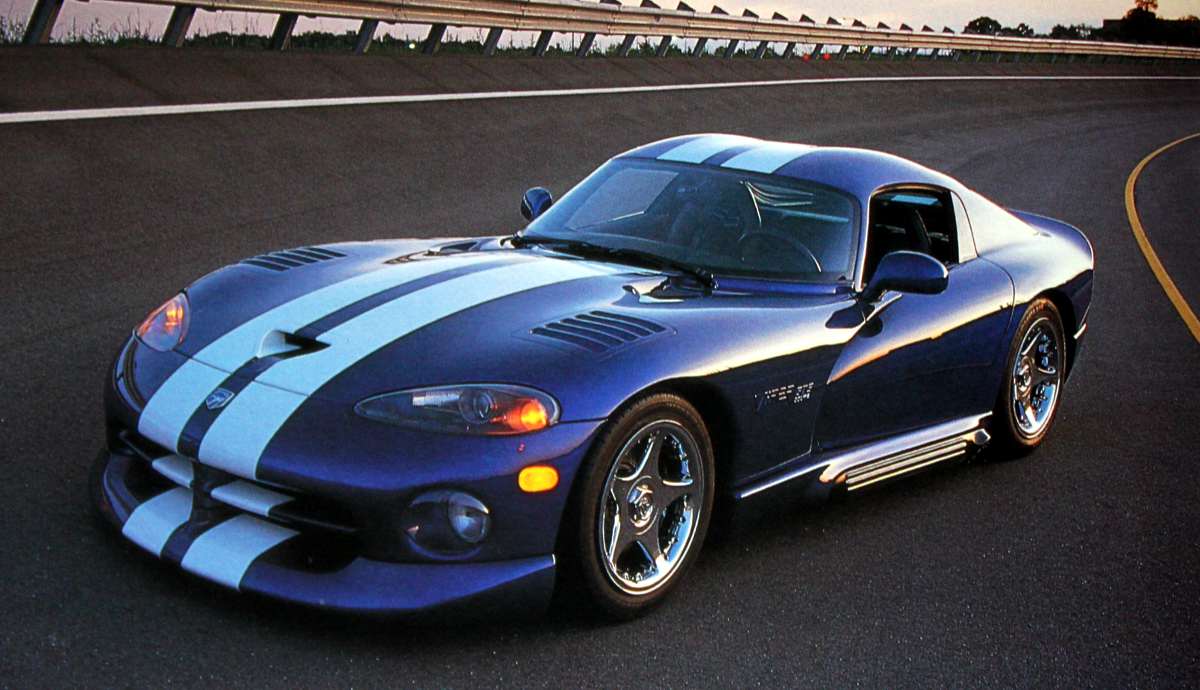
1995/6 Dodge Viper
The Flying mile:
This article is dedicated to window shopping (or Ebay shopping). For the purposes of this exercise I’m going to assume your great uncle Alfred has died and left you $35k to buy a car. Lucky you! But sorry for your loss. 😦
My favorite place to look for a wide range of cars like this is Ebay because of it’s quick sort properties. I generally type the vehicle I want, then “Buy It now” then sort by “Lowest Price first” and that tells you the absolute bottom price you can pay for a car of that make. There are other ways to car shop, as I’ve talked about before, but this is definitely the quickest I’d say.
With $35k you could buy a LOT of different cars, but again for the sake of argument, lets say you are into american muscle cars. V8 (or V10 – Dodge Viper). What kinds of cars can you afford in the $35k price range? There are TONS of cars you can buy for that. Porsches, Toyota Supras, Skylines, Camaros, RX-7’s, Mercedes. So let’s say you are in the market for a newer American Muscle car. But do you want an “exotic” such as a classic Dodge Viper? or a more modern car like a Shelby or Boss Mustang? Let’s investigate the merits of each.
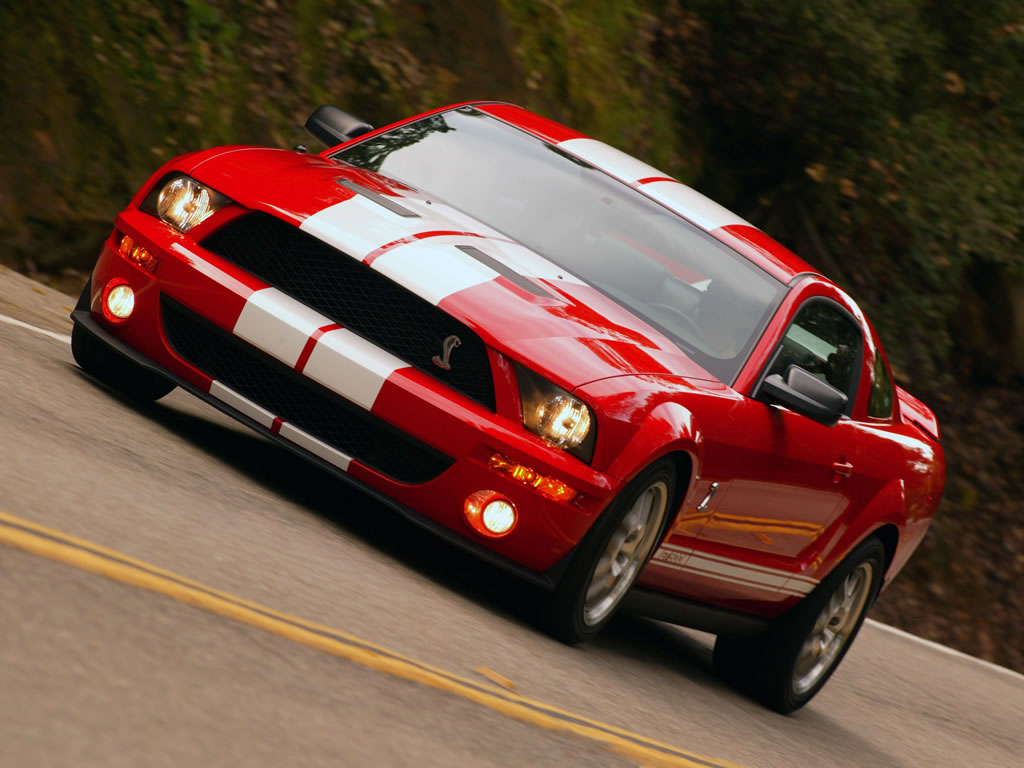
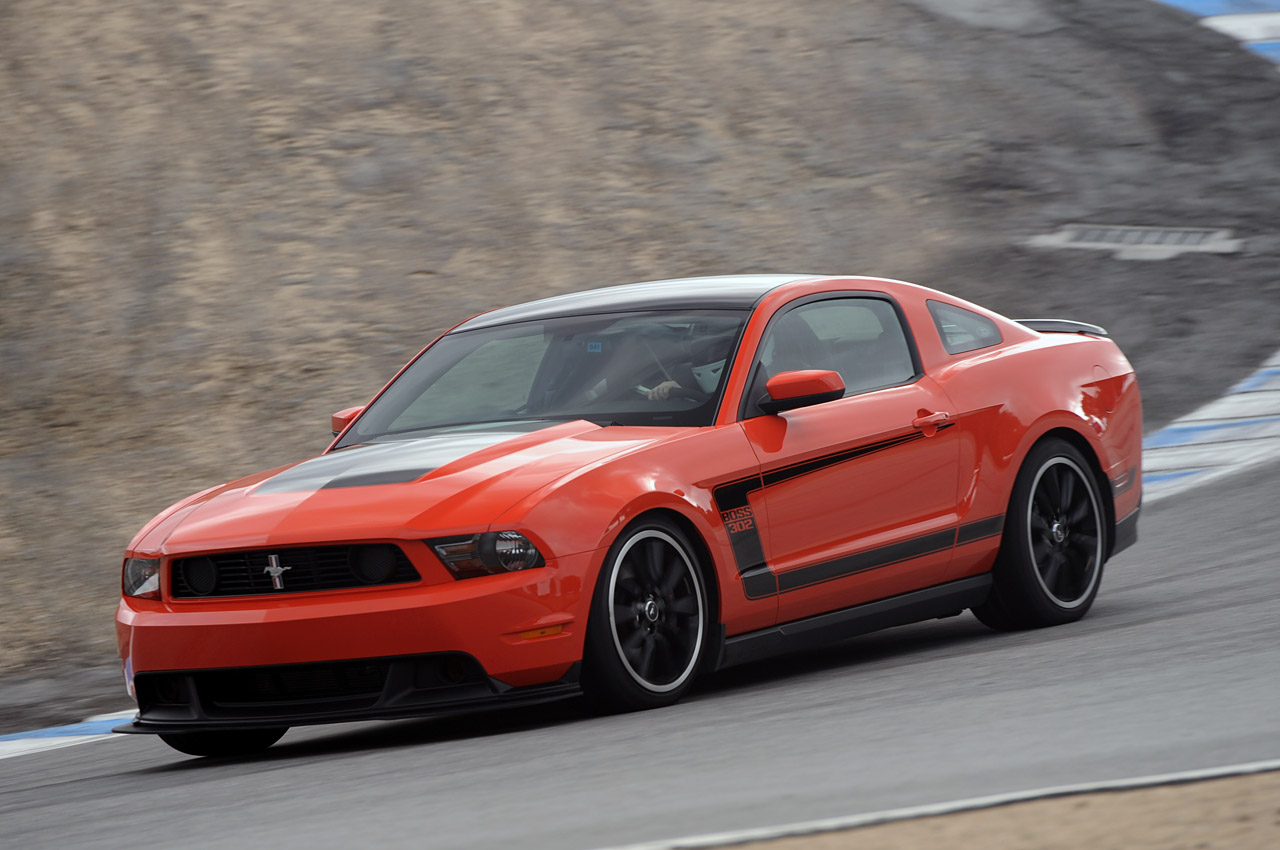
I’ve picked 3 cars below, an older (10+ years old) Dodge Viper, a 7 year old Shelby Mustang GT500 and a 2012 Boss Mustang. Seems like a pretty strange comparison of cars? Why not a New Dodge Challenger? Because I like the Mustangs, and the Viper, that’s why. Also, for the people who are extremely brand loyal I ask why? Any one engineer could end up working for any of the Big 3 (Ford, Chevrolet, Dodge) or any car manufacturer for that matter. They are all big companies and when it gets to these very fast cars everyone is on a pretty level playing field, despite what Brand Loyalists will argue. Perhaps in the future I’ll look at some more comparison. Anyway, onto the numbers.
The first car to consider is a 2nd generation Dodge Viper. I really love the style of this car, especially the coupe. There were approximately 10,000 Vipers made in this 6 year span. That low production,compared to 10,000 2007 Mustang GT500’s, puts the viper in the class of an exotic. Also that it was significantly more powerful than the “normal” muscle cars of the day, Camaros, Mustangs. It was in Lamborghini fast and powerful territory. What are the benefits of buying an exotic? For one exclusivity. How many will you see? From the production numbers, not many! What are the downsides of an exotic. Not as many people will be qualified to work on it and parts will be expensive. You see the Viper has taken quite a cost depreciation (for examples worth $35k vs it’s starting cost at the turn of the millennium. But there are also many selling for lots over the $35k mark. Despite being older the viper posts competitive performance numbers to the newer “common” car.
The 2007 Mustang GT500 is the next car we will consider. Funny that it’s another snake (Viper vs Cobra).
Cobra vs. Viper
It boasted 500 horsepower which puts it ahead of the older viper yet you see the quartermile time is slower. Part of this can have to do with track prep, vehicle prep, driver. You can see times vary by as much as .5 seconds on a vehicle based on those factors. You’ll see the same time slip discrepancies for a 2012 Boss below .6 seconds between different magazine tests. For reference once a vehicle goes 11.5 seconds in a quarter mile you need to install a roll cage. So for the average Joe the Viper is probably a little faster, based on the test numbers. Also the exclusivity of the Viper is a selling point. “Total production for 2007 GT500’s comes to 10,844 units with 8,150 of those being coupes and 2,694 being” – MotorAuthority. And that was only one year! same as 6 for the Viper.You will also not that the top speed of the GT500 is limited to 155 Mph this is pretty standard, unless a car is an exotic, like the Viper, but really when will you go that fast?
2007 Mustang GT500
Cost new: <$50k,000
500 HP 5.4L supercharged V8
Quartermile 12.7-12.9 seconds
3920 Lbs
Top Speed: Electronically limited to 155 Mph http://www.motorauthority.com/news/1017481_official-2007-shelby-gt500-production-numbers
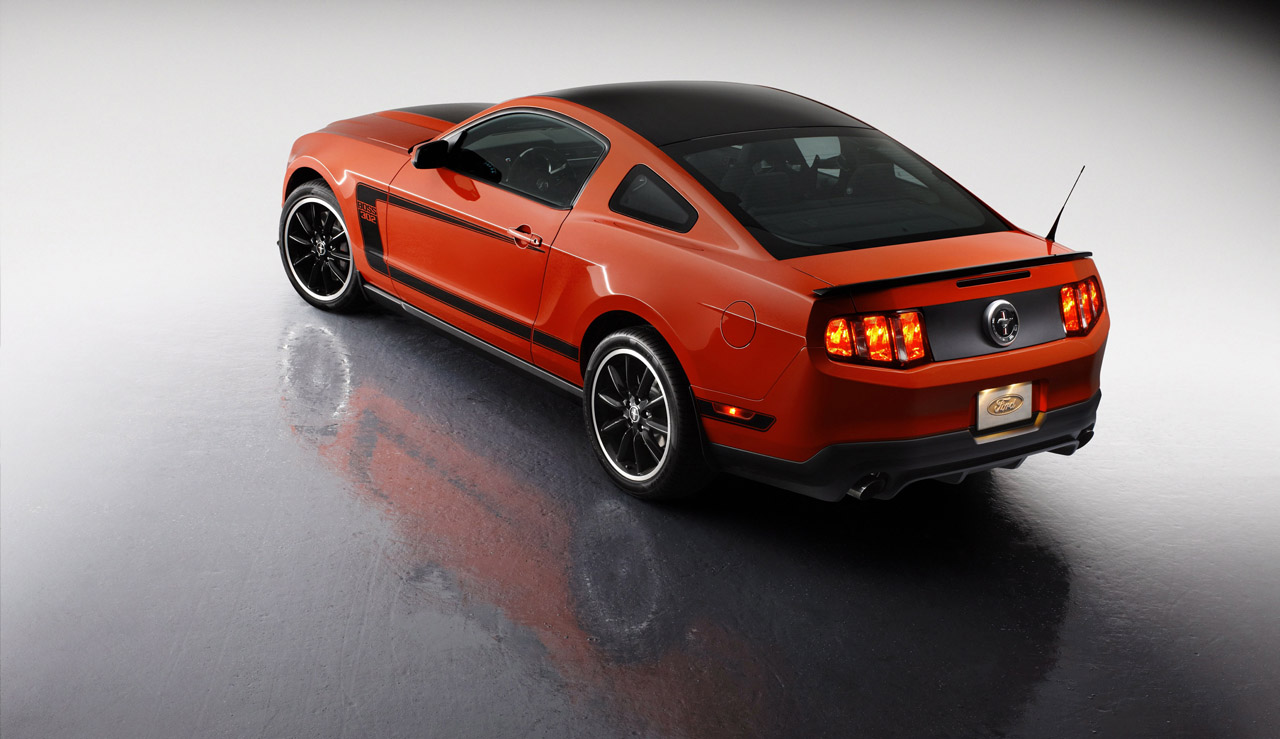
The last car we will consider is a 2012 Boss Mustang. This “common” car is boasting 444 hp, almost as much as the 10+ year older Viper. The Boss went on a diet compared to it’s older brother the 2007 GT500. It also lost some horsepower, but you can see from the quartermile times that they are at least equal or some places measured the Boss as faster and equal to the 10 year older Viper which is a much higher class of vehicle. Again, this is based on a lot of factors such as track prep, driver, etc. This also goes to show what 10 years of technology will do for performance when this Mustang costs about 1/2 of what the Viper did 10 years earlier and is on the same performance level. For exclusivity there were approximately 4000 2012 Boss Mustang’s built in one year. You will see that the depreciation is not near what the Viper, being 10 years old, is, only a few thousand from the MSRP of $42k to our target of around $35k. Also you get the benefit of newer technology and with that reliability. I would say that a 2012 Boss will have more readily available and cheaper parts than a 2002 Dodge Viper.
2012 Boss Mustang
Cost New:$42,000
444 HP 5.0L Naturally aspirated V8
Quartermile 12.3-12.8 Seconds
3666 LBS
Top Speed: Electronically limited to 155 Mph
Based on the above synopsis, which vehicles would you buy? I am torn. All will be great vehicles down the road and will get many looks from passers-by. Do you want the raw power and exclusivity of a V10 Viper or the newer reliability and equal performance of the newer Boss or Shelby. Once you get to vehicles of this performance in competition, a lot of the performance falls on the driver as these are all more car than most people are ever exposed to. So which one would you buy? What other vehicles would you consider?
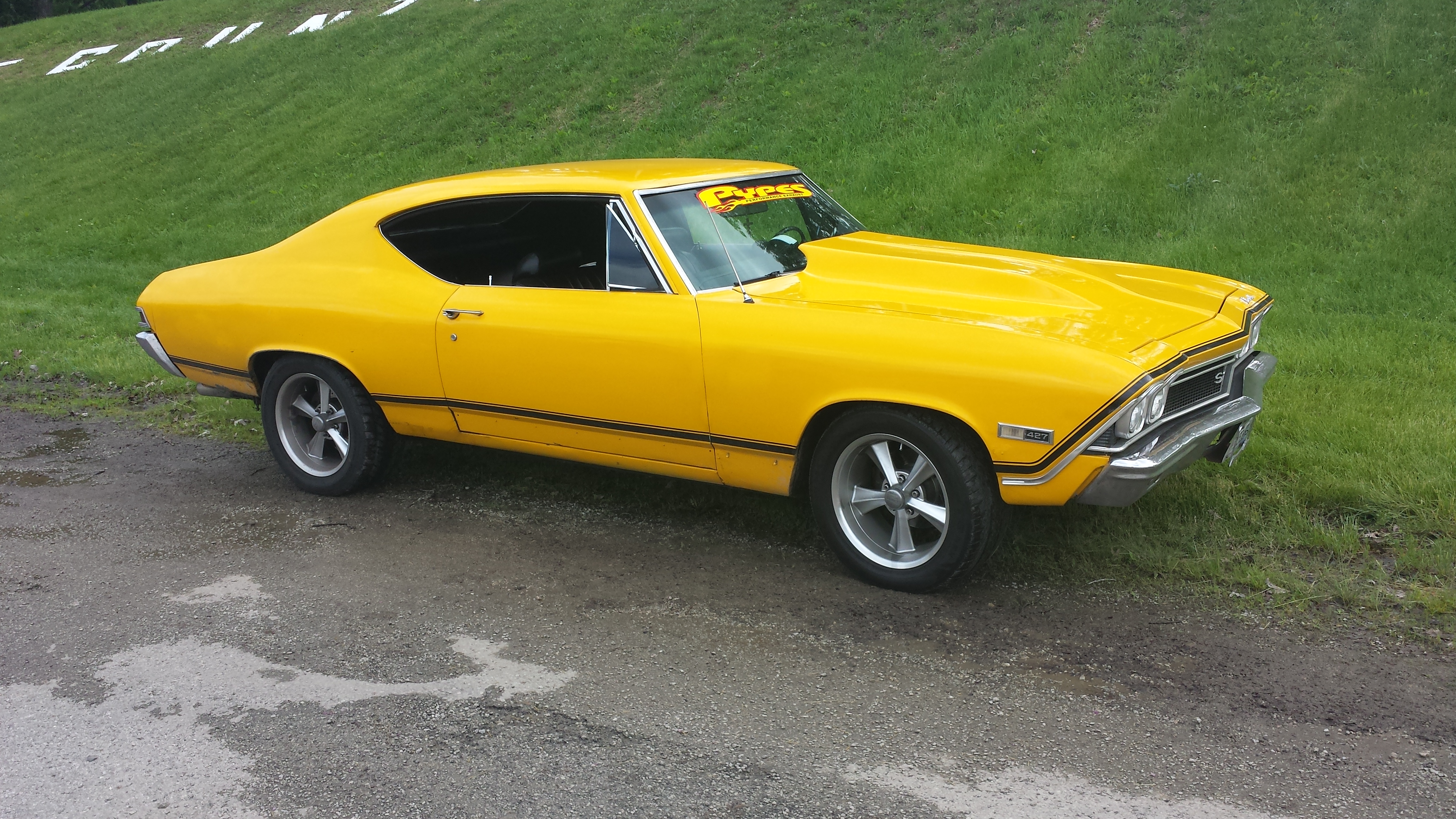
Clean Chevelle (to show you all I’m not only about rat trucks!)
The Full Mustang?
Tuesday June 10th 2014 Drive from Charleston, WV to Norwalk, OH
This day started by picking up the parts we had ordered the day before for the Mustang, lower a-arms and front struts. $600 and we were on the road with the rest of the tour.
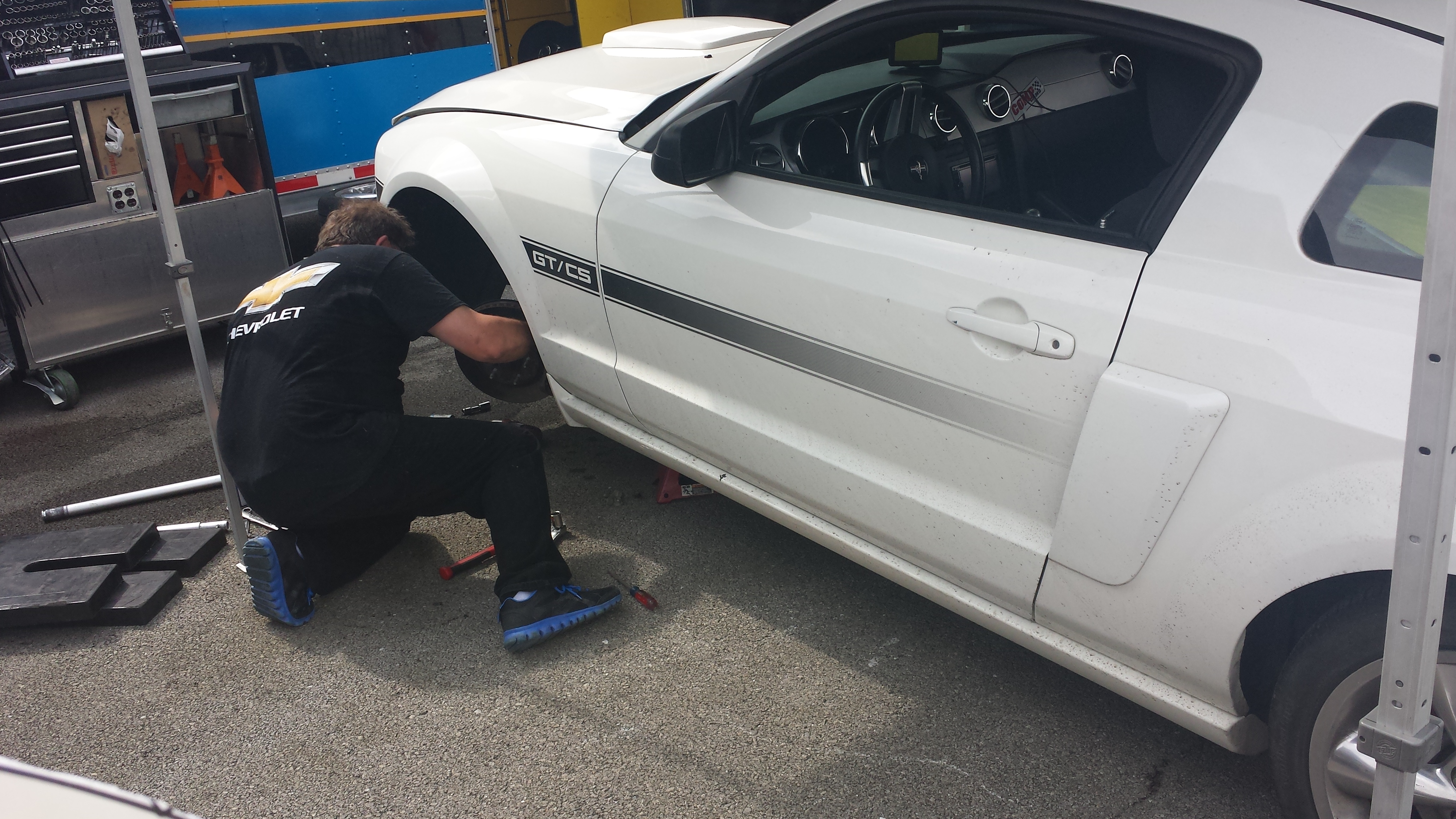
We arrived at Summit Motorsports Park around 3 pm. This was one of the easiest venues to get into. I suppose because they had plenty of room and are set up to handle that many cars? We parked the Mustang by the GM rescue mechanics. As I mentioned before, if you are having serious problems and bring these guys parts and a broken car, they will fix it, no charge! This is my official “Thank You” to those guys!
GM mechanics saving our Ford! Great guys!
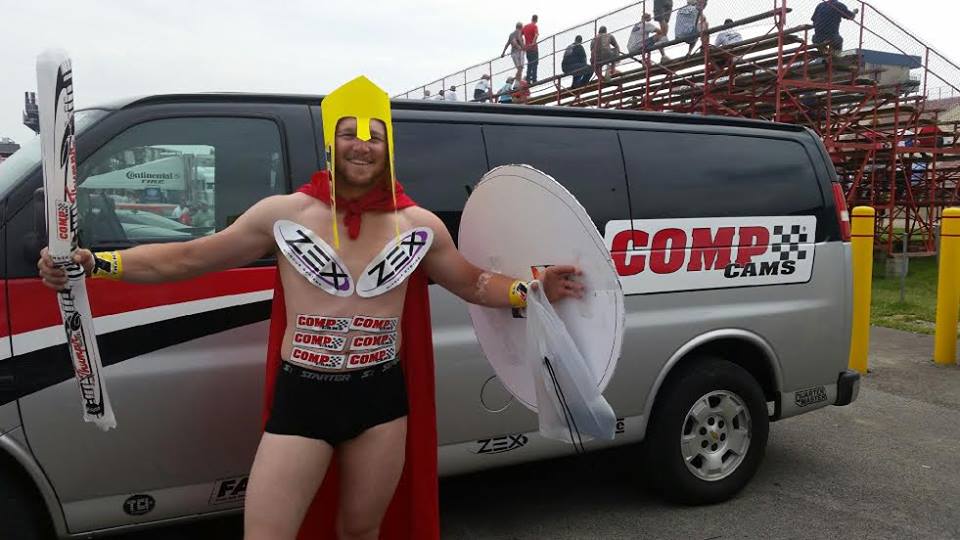
They won’t swap your new cam in! But if your car has brakes fading away, clunky suspension (guilty) or other safety issues they will help in a heart beat. They also were helping some guys with rough running vehicles, etc once they got caught up on the safety stuff. I asked Robbie to watch the car get fixed while I went and got my Golden ticket for the Comp Cams drawing. I talked with quite a few folks while walking around in my Spartan outfit. Many people gave me thumbs up and took pictures. A few shook their heads, some asked if I lost a bet, all understandable.
HRPT golden ticket Spartan!
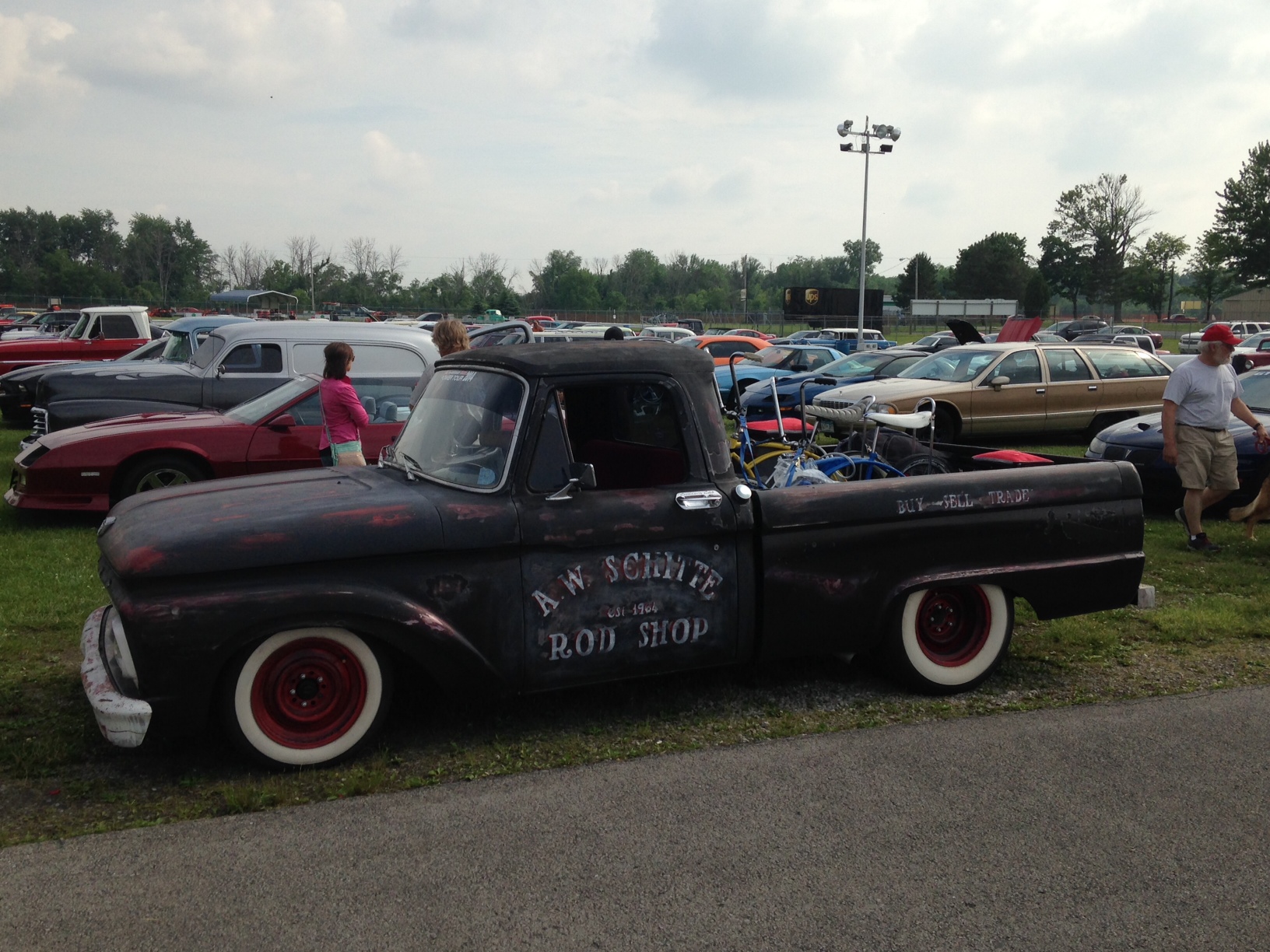
One guy I talked to while walking around was David Brown. He had 2 vehicles on Power tour, a 1928 Ford and a 1964 Ford, both trucks.
David Brown, 1928 Ford
David Brown 1964 Ford truck. Very cool shop truck style!
Once our car got fixed and I received my Golden Ticket we walked around a little. We ran into the guys driving the Evil Atom. They have to at least be in the running for the toughest guys on power tour. This year was pretty nice weather, but the lack of any roof makes it even tougher to drive (through rain) than most rat rods, and this is something like these guys 6 HRPT. http://evilatom.com/
Evil Atom (Screen shot stolen from the Evil Atom website)
That night we stayed at a small hotel and once again meet some cool folks there. Robert Brown (no relation to David) shared with us his 1973 Firebird. What a clean car!
Robert Brown’s Firebird
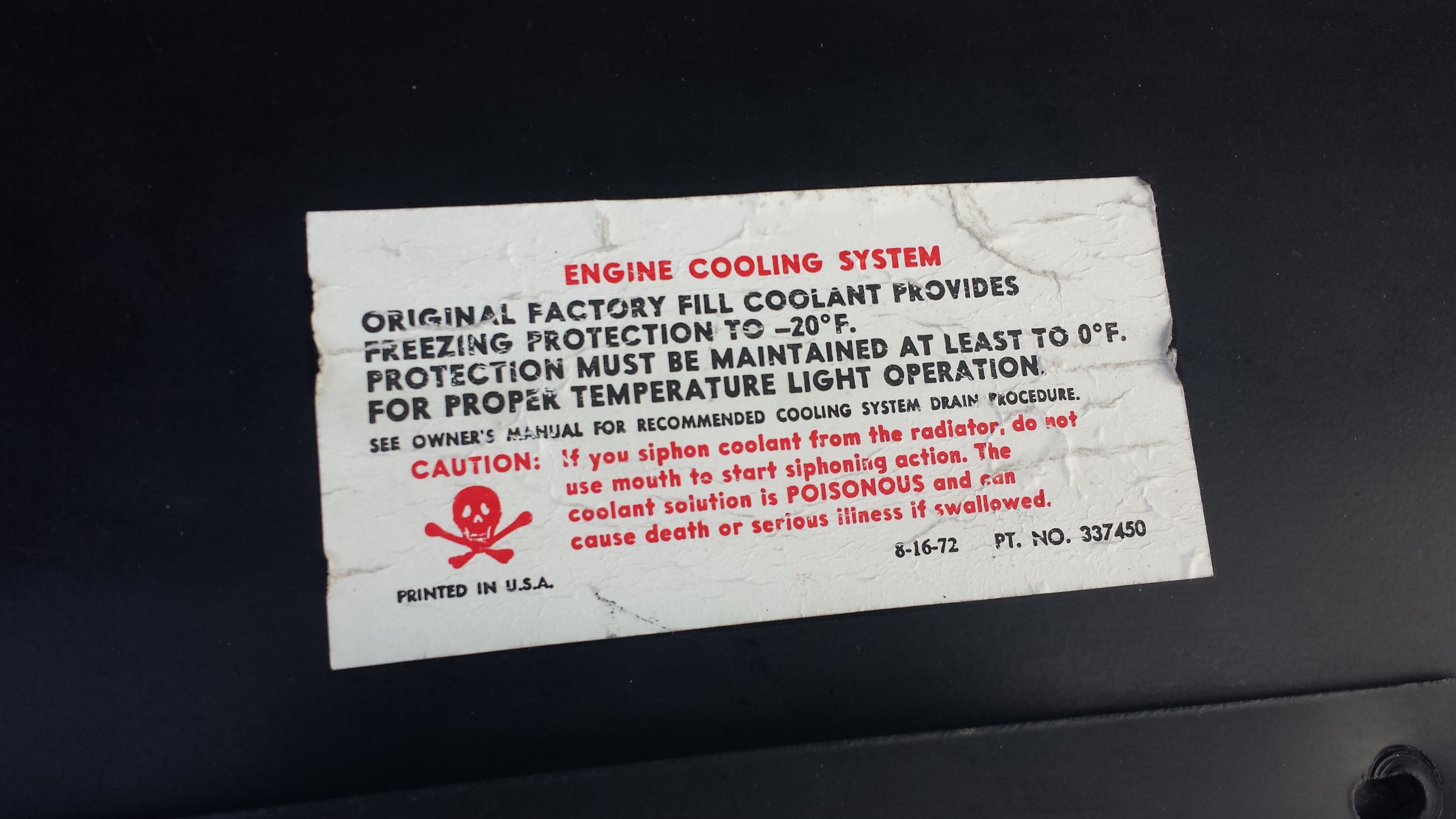
Don’t drink the Kool-aid from the Firebird’s radiator!
Wednesday June 11th Norwalk, OH to Crown Point, IN
The next day we headed out and what a great drive that was! No clunking, our stuck brake pad had been replaced, the drive was quiet and we could actually enjoy it! Today’s drive included a stop at Lane Automotive. We choose to skip it, much to my angst now. I was told by fellow Power Tourer’s that it was a great stop! I guess the lesson here is “Never skip a lunch stop!”
We arrived at Lake County Fairgrounds in Crown Point, IN around 3 pm. This was a very cool stop! The fairgrounds was a very cool setting, it wasn’t rows of cars, they were parked in between trees, around a lake etc. It made for a nice walk. There were a ton of great cars this day (just like every other day).
I met Bobby from Sons of Anarchy! (Not actually, but sure looks similar!)
How serendipitous that I had my Sturgis Motorcycle Rally shirt on from last year.
Bobby! (almost)
Actually Bobby from SOA
After checking in we started walking around the pond. This was where we met a ton of cool Hot Rodders!
I had been seeing these “Laid-Back” stickers popping up on everyone’s cars. Shane was putting one on his 1966 Ford with the 7.3 diesel earlier in the week when I met him, and a ton of other vehicles had them on also. I finally took the chance to stop and say to these guys. I talked with Chris Barker at that booth. They had a couple cool woodie wagons there and Batavus scooter. I studied abroad in Holland and this particular model was made in Holland so I am a bit more partial to it than most people.
Laid Back scooter/motorcycle. I studied abroad in Holland and this particular model was made in Holland so I am a bit more partial to it than most people. The brand is Batavus.
This car was a popular car at every stop. Didn’t get the guys name.
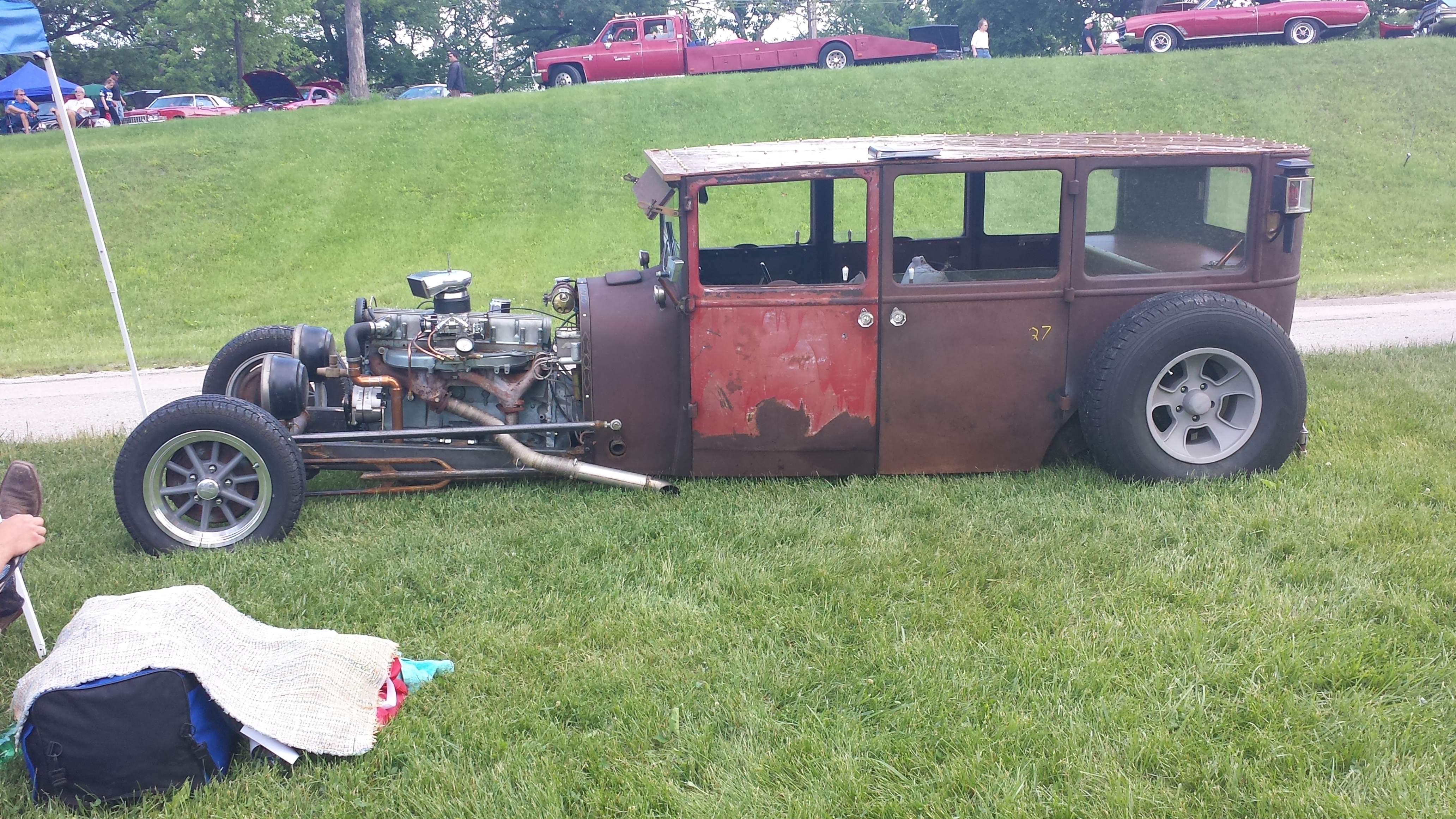
This was a very popular car at HRPT. It has a overhead cam Inline 6 cylinder Pontiac engine. Quite the unique power plant! The rest of the car was very unique also.
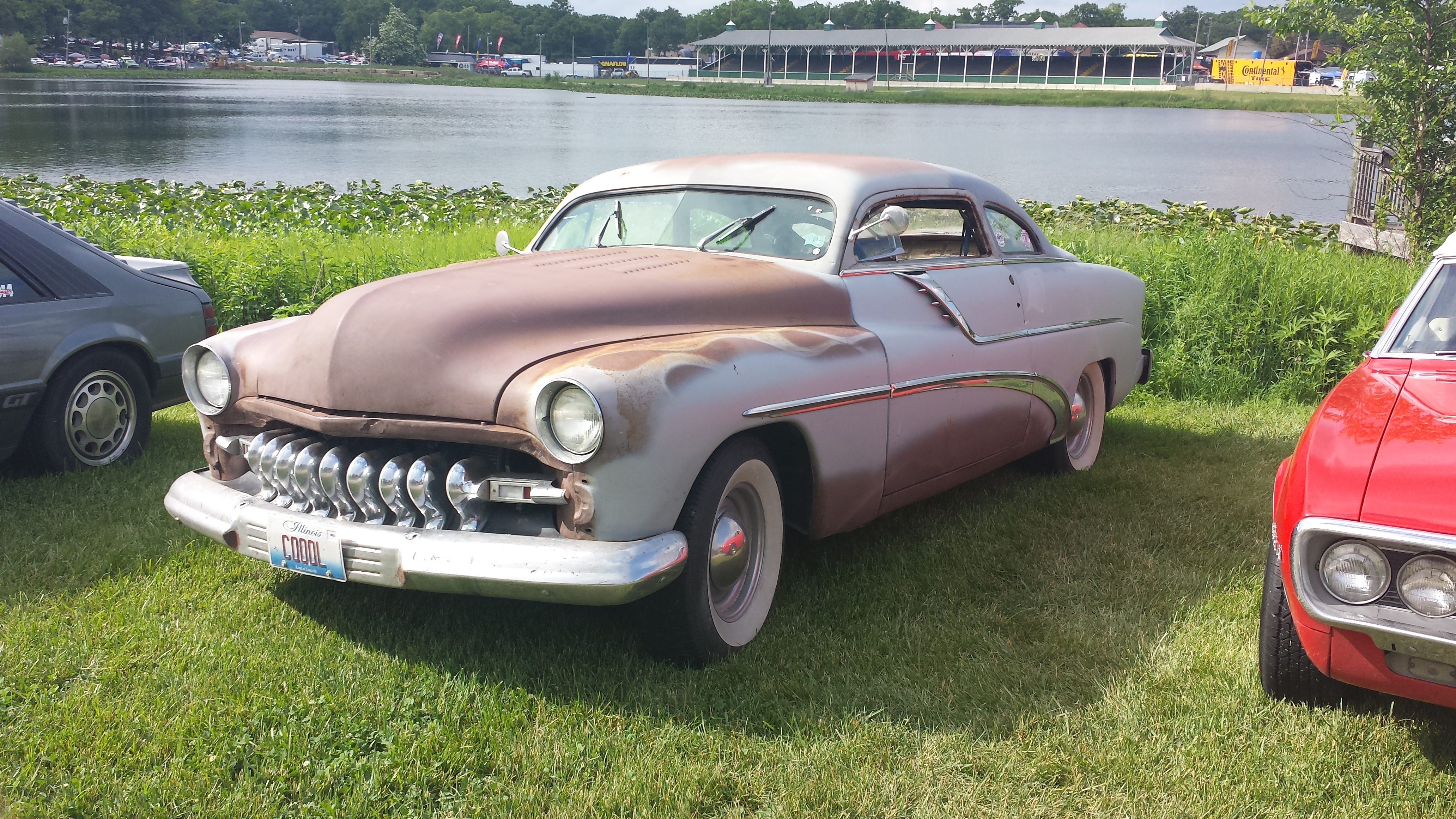
Here’s another vehicle I didn’t get much info on but I thought the rusty flames were pretty neat!
cool rust flames!
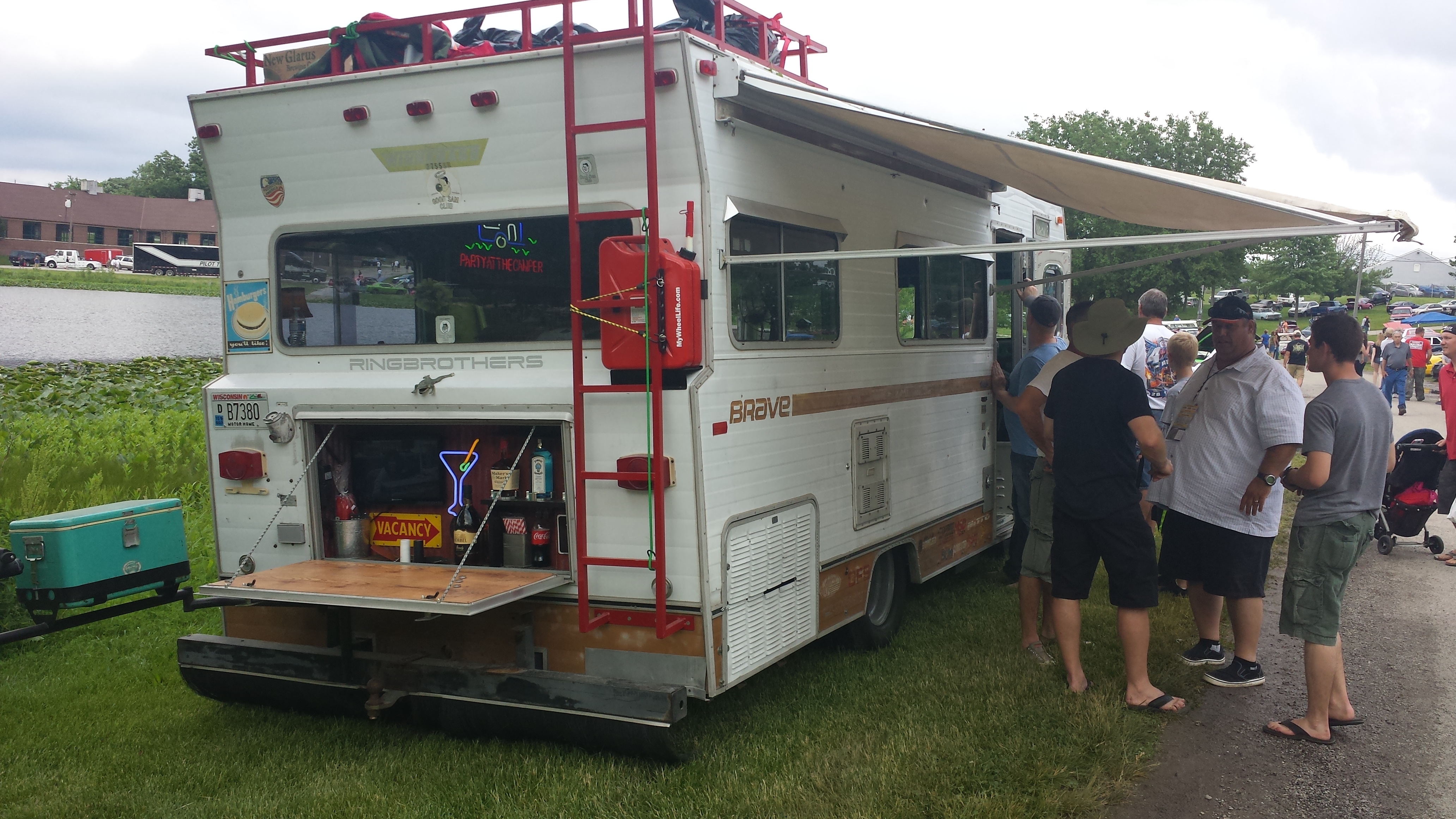
The next vehicle I stopped at was the Ring Brothers party camper. These guys build incredible cars. Check out this custom Pantera they recently finished. On the HRPT they were just having fun, I didn’t see any vehicles, besides the party camper, which was pretty awesome!
RingBrothers party camper. You see they let me brand their gas tank with a MyWheelLife.com decal. cool guys who build awesome vehicles! Check them out.
After them I walked past the dyno, which was at every stop on the power tour. It was a popular attraction every day.
Saleen Mustang on the traveling dyno
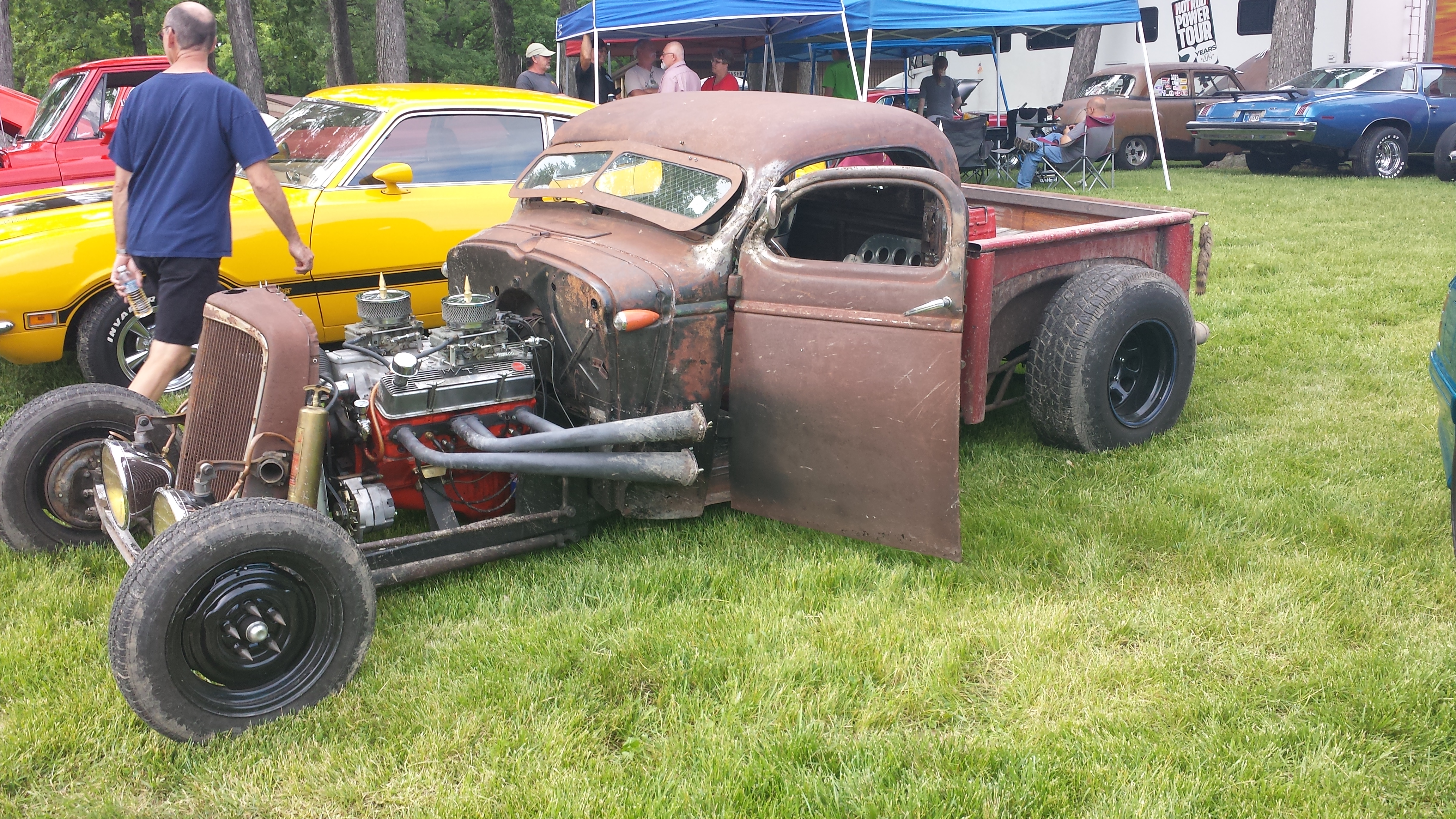
Overlooking the dyno I talked with Ryan of Rusted Knuckles Garage. I was unable to find his website but I did find his youtube channel. Check out the pictures of his truck below. He was running Buick GN turbos from a 3.8 V6 but he had 2 of them on his SBC V8. He was nice enough to let me sit in his cool truck. It was awesome but a bit tight for me! The truck is named “Hands Full” because it’s a handful to control all that power when you hit the gas!
Crazy twin turbo small block Chevrolet rat truck. The turbos were from a Buick Grand National.
The Hands Full truck was a pretty tight fit. That’s what happens when you channel a body over the frame.
Awesome front view of Hands Full!
After Ryan’s truck I ran into another rat. This one was built by Rich of the Hoosier Head Hunters. They were from pretty close by and had brought a few cars. Ryan’s was very cool. If you check out their FB page you can probably get in touch with Ryan. He said the truck was up for sale or trade if you are interested! https://www.facebook.com/HoosierHeadhunters
Rich from Hoosier HeadHunters car club from Cedar Lake, IN.
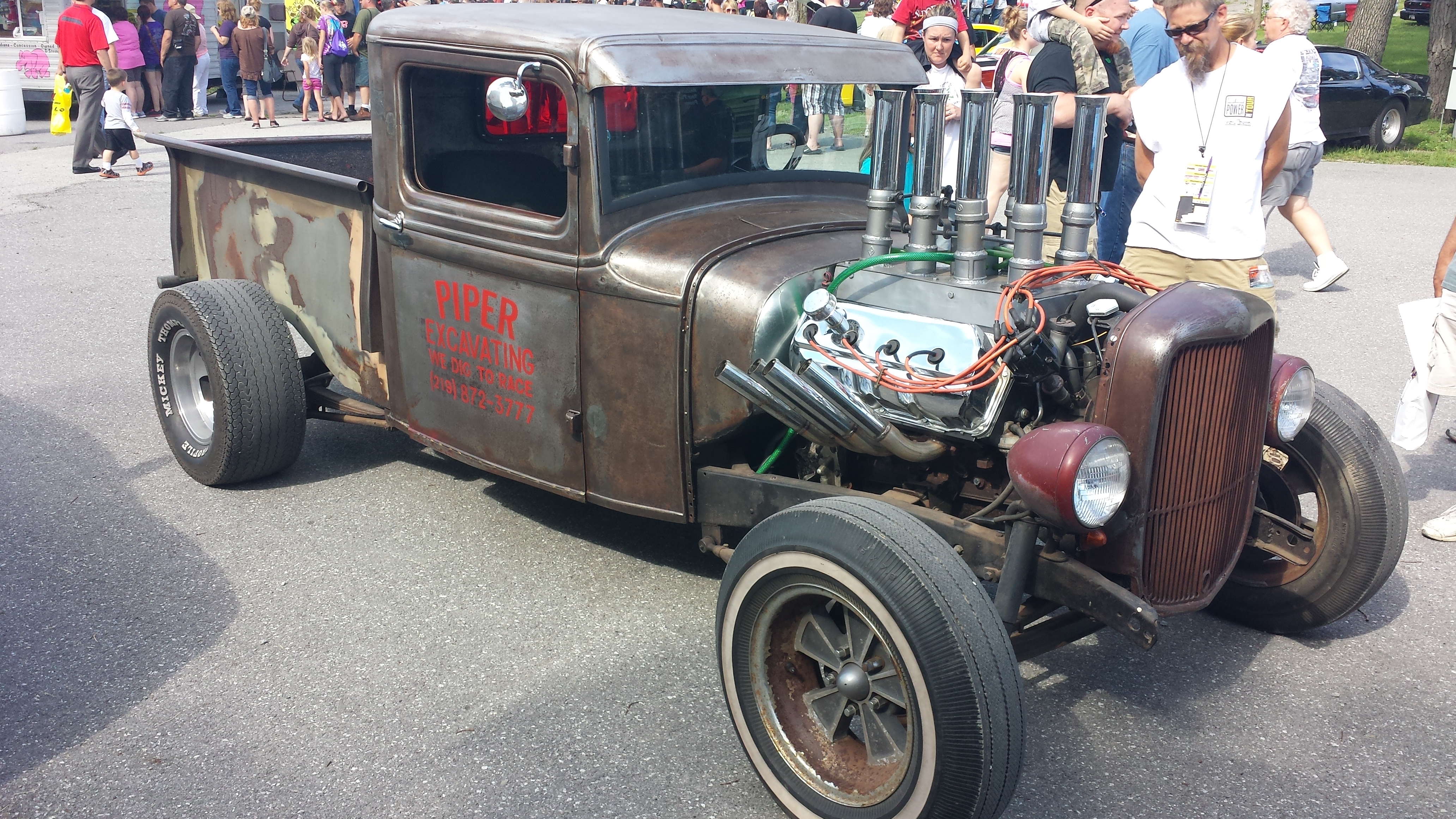
There was one more awesome rat truck I took pictures of that day. Are you starting to feel a trend here? Is there something in the water in Indiana? If there is I hope I got some!
Later that night we stayed at Red Roof Inn and there were a TON of hot rodders there! Here’s a few pictures.
Cool HRPT parking lot!
One more vehicle that wasn’t a rat! Quite far from it! This just shows the variability of HPRT vehicles which is what makes it so great!
Cool Lotus on HRPT!
What were your favorite parts of Tuesday/Wednesday of Power Tour 2014 (Norwalk, OH and Crown Point, IN)?
What were your favorite cars?
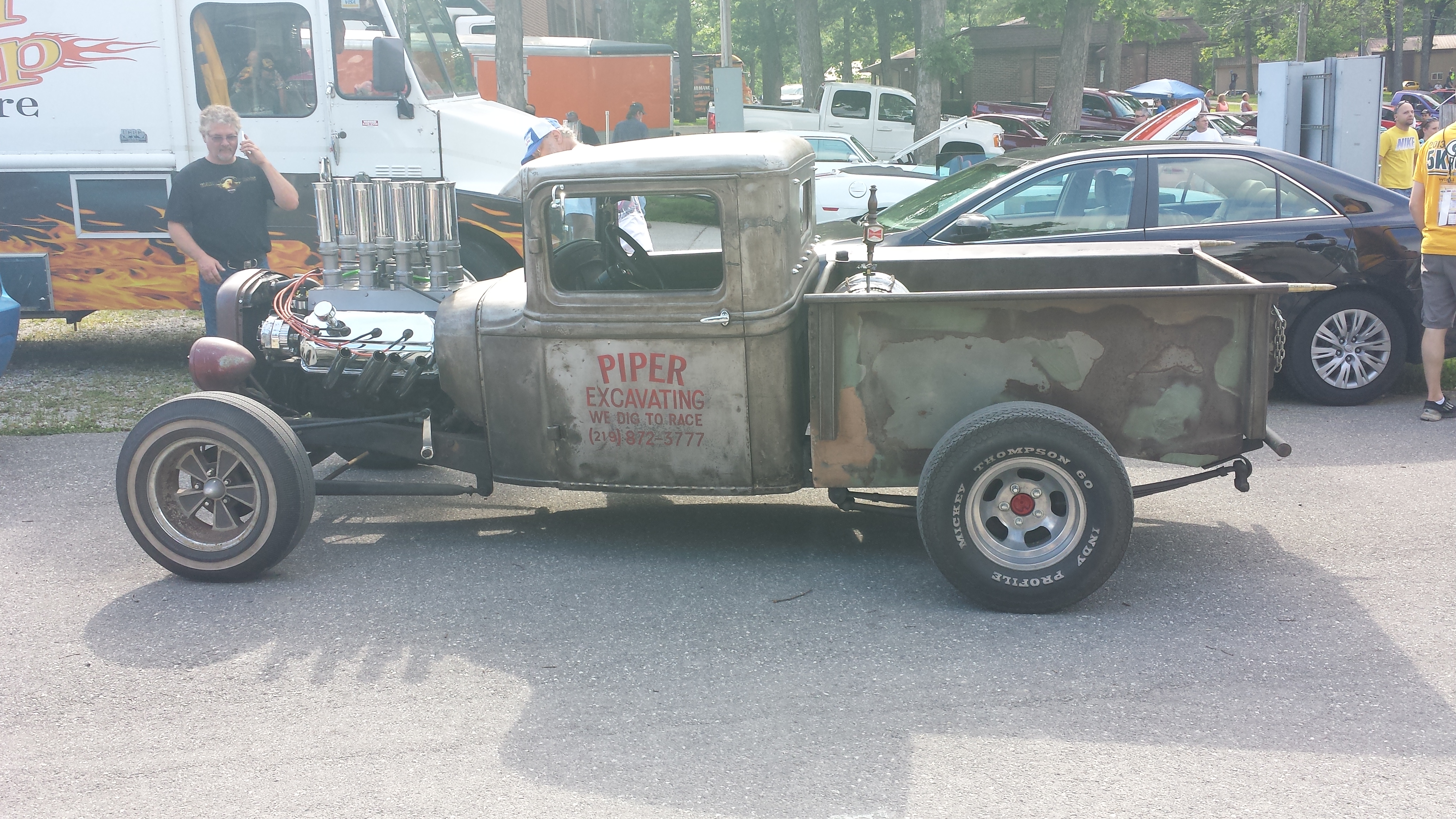
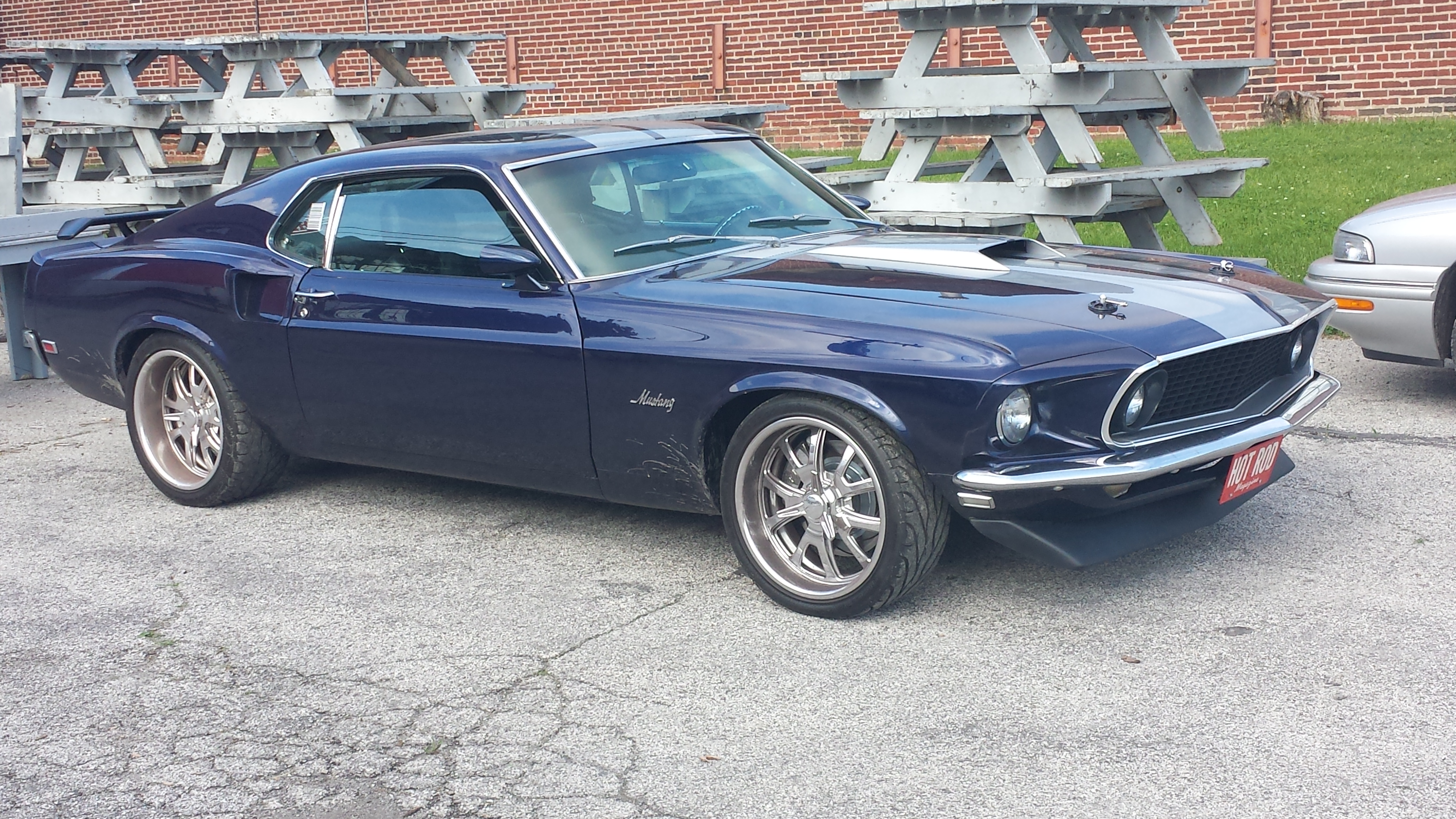
Very nice 1969 or 1970 Mustang (to show you all I’m not only about rat trucks!)
Crazy Holden Ute from Australia? El Camino anyone?
Quartermile: The short story
Cars, dirtbikes, motorcycles, trucks, they are made for having fun!
If you aren’t having fun you’re probably doing something wrong.
Off roading/mudding a truck, jeep, ATV can be fun too! (I have friends who do this, I haven’t, yet)
Sometimes the quartermile section can have something that is not mentioned in the full article. Sometimes the message strays from the title?
Who’s steering this ship? (Car?)
Strange
Why do I spend time working on cars? The reason is two fold. First I enjoy the satisfaction of taking something apart that is not working and restoring it to working order. Second, and really the part I enjoy more, is the fun of showing and driving my car. I prefer to have my car together and utilizing it than having it sit in the garage. Cars are art but part of their art is their performance. What good is a 800hp (insert super car model here) if it sits in your garage? I’d rather have a 1999 Honda Civic with a loud cannon, a huge wing and a short shifter and a cold air intake that I drive everyday.
The above brings me to the thesis of this post,The Illusion of Speed. Have you ever driven a geo metro, with a fallen off exhaust down a dirt road in 2nd gear at 30 mph? You feel like you are going 100 mph! Have you ever drag raced a 2007 Mustang GT a quarter mile in 14.22 seconds at 100 mph? That felt more like going 55mph down the road. Launching is probably the most fun part of drag racing. A 1987 Monte Carlo SS going 15.12 at 89 mph felt even slower…. My point here, besides I need a faster car, is that speed is relative. You don’t have to go 150 miles an hour to have a good time.
Motorcycles are a great toy to have for fun. They generally have great power to weight ratios which makes them speedy. The lightness makes them nimble, which is also fun. Although I can tell you from experience that swerving around inside your own lane is apparenlty “suspicious” enough for Johnny Law to pull you over and give you a ticket for a “hard to see” license plate. Motorcycles are also cheap. A 1970’s or 80’s Japanese motorcycle can be bought for anywhere between $500 and $1000. I personally have a 1981 Honda CM400C that I have turned into a bobber (with a little help from my brother). Stripped down, solo seat, no rear fender (yet, it’s in process). This is my around town bike. It is loud, I beat on the thing and I’m not worried if it blows up because I have so little money in it. If the engine blows up a replacement is CHEAP! And if you don’t want to replace an engine you could always Frankenstein a 600cc new rocket engine into it. I think that’d be an awesome project also. Did I mention how cheap old motorcycles are?
Another way to have fun is on a dirtbike. I have been dirtbiking since I my father bought my brother and I a Honda XR80 for Christmas around 2003. I upgraded to a (1993) CR125 around 2006, you don’t need the newest toys to have fun! That’s a 2 stroke for those unfamiliar with dirtbikes. This is the bike I still have today. The most fun I have had on a dirtbike (and perhaps one of the most fun things I’ve ever done) was the hare scramble I participated in last year.
Follow the link below and change to New Hartford, IA – September 15, 2013 race.
Apparently I finished 77/115. There are a ton of classes represented in there. I was sure I finished higher…
The appeal of the hare scramble is you get to ride for 1:30-2 hours. The time is great, compared to drag racing/autocross where you get to drive a total of between 11 seconds and 10 minutes in a whole day. You are riding changing terrain with a bunch of other riders. Also there is minimal damage done to your bike or your body (if you aren’t some of my friends, you know who you are 🙂 Overall if you want to have fun, I recommend a dirtbike.
Onto street cars. How do you have fun there? Like I mentioned earlier, I can find pleasure in simple things. A 1995 Honda Civic stock with 100 Hp, give it a tune, an exhaust, and air intake and cool rims and sticker it up and drive it like you stole it. The great thing is it’s probably pushing 140 hp as this point so you will likely not be able to speed even. But really, Honda Civics can be fun. Remember, no haters welcome here.
On the topic of air intakes. You might find it interesting how Ford worked to develop a “performance feel” for the Focus ST ““active sound symposer” in order to provide the car with a fitting aural soundtrack. The symposer is similar to a sound tube that’s been used in the past on cars like the Mustang in the sense that it pumps sound from engine into the interior, but the Focus ST system is more advanced. It’s attached directly to the intake manifold and pipes in a specific frequency range – 200 to 450 Hz – into the cabin” – Taken directly from Motor Trend, Read more: http://wot.motortrend.com/sounds-good-2013-ford-focus-st-to-feature-active-sound-tube-204803.html#ixzz32I3podvJ
How fun is that?!?!?!
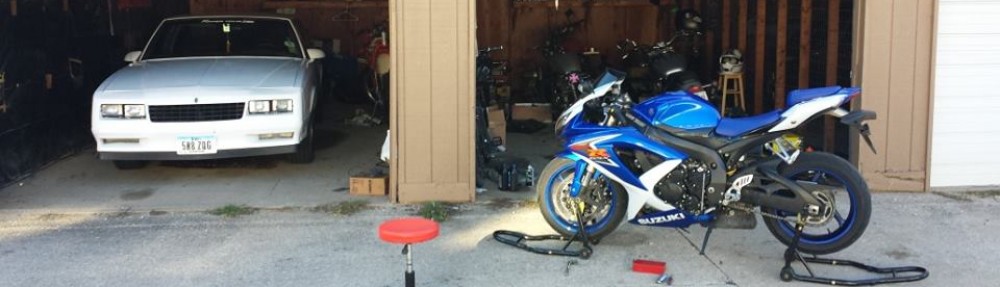
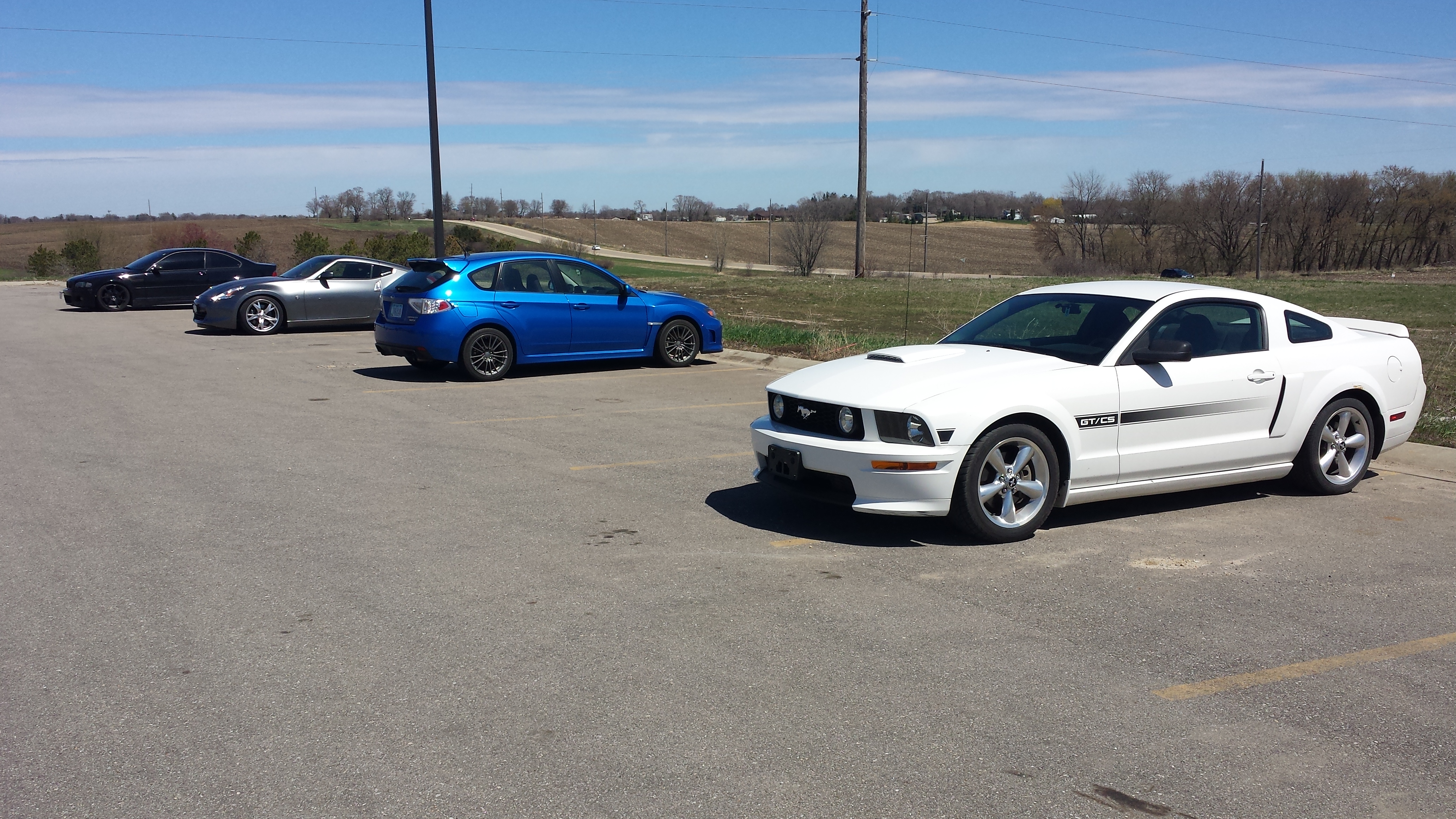
Of course my personal vehicles are American muscle cars, a 2007 Mustang GT and a 1987 Monte Carlo SS Aerocoupe. Lots of torque and hp. Unlike the Honda you can get in lots of trouble speed wise with these cars. The most fun I’ve had with a street car,on the street, has been Hot Rod Power Tour. It’s a humongous, week long, moving car show. Read more about Power Tour here: http://www.familyevents.com/event/229
I will be attending this year, trip goes from Charlotte, North Carolina to Wisconsin Dells, Wisconsin. I will definitely chronicle that in a later post.
Other great ways to have fun on a smaller scale are local car shows. Check out the events section of my site to find events local to the Cedar Valley.
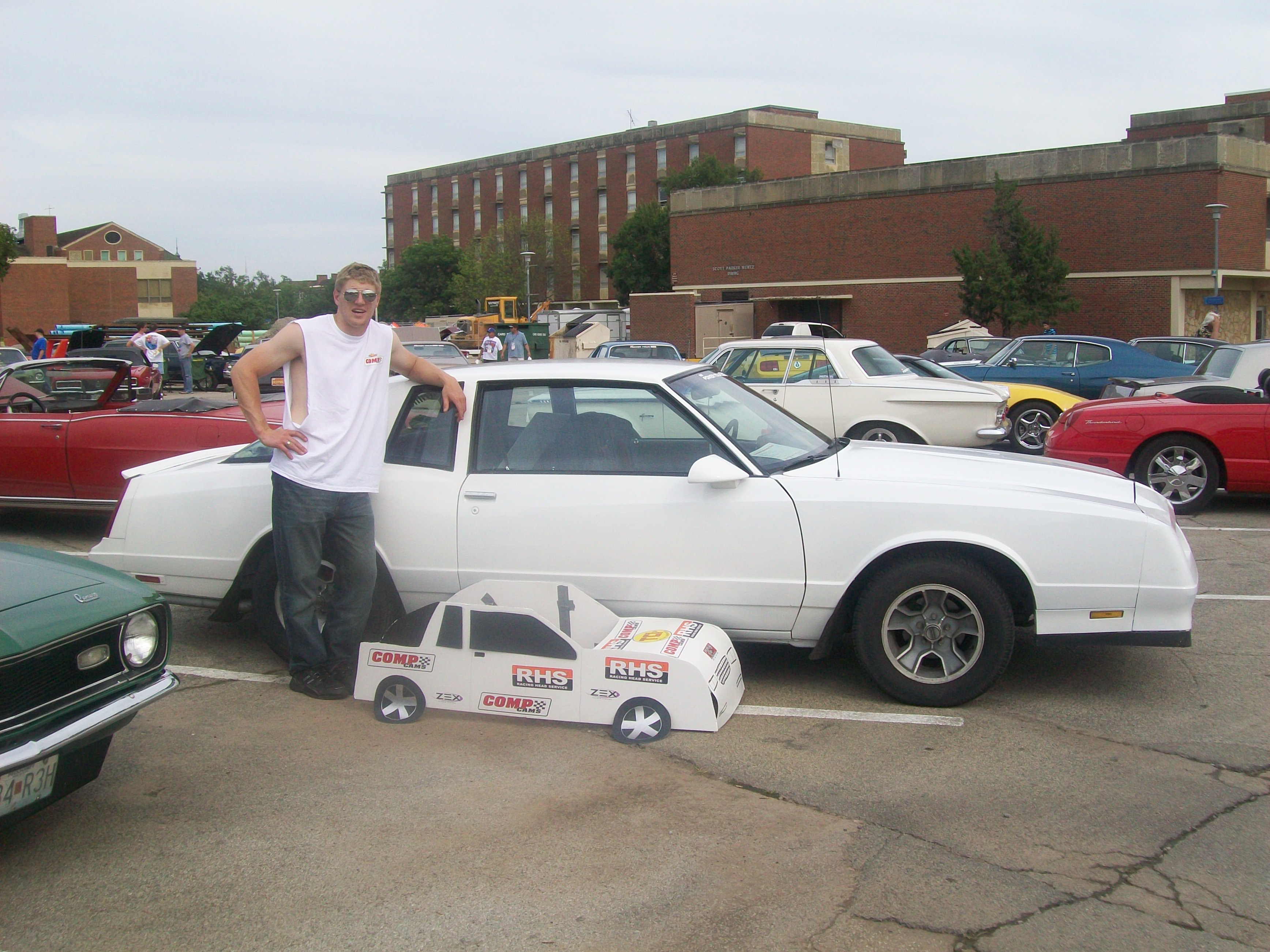
“Replica” Monte I made for a contest
One final way to have fun with your street car is to race it! On the track!
Drag racing and Autocross are 2 great ways that let you put the pedal to the floor without losing your license. You just might find that you aren’t as “bad” of a dude as you thought. There will be many great drivers and fast cars at both of these events. The great part of these events is learning from others who have been in your place. Everyone had a first trip to the race track. If you go alone you will be sure to find someone who will talk to you. Don’t worry if your car is slow or not a race car even! I have seen 1998 Buick Centuries at the drag strip and 1984 Mercedes station wagons at autocross events! It’s all for fun!
(Again, find links on the events page.)
What’s your favorite way to have fun with an engine and some wheels?
So I hope you are now overly anxious to get out and start participating!
Keep the wheel side down and enjoy the ride.
Hello world. My name is Axel Hoogland. My passions are speed, design and engineering. I am a gearhead, car guy, engineer, motorcycle rider, dirt bike rider/racer, amateur/aspiring car builder and hopeful entrepreneur. I don’t discriminate against any genre of cars. Classic muscle cars, super cars, trucks, vans, motorcycles, classic hot rods, rat rods, sleepers, odd ball builds, dirtbikes, monster trucks, rally cars, drift cars, if people are passionate about their vehicle I love ém all!
Growing up my father told me that I should shy away from being a mechanic as a full time job. He told me that cars were a good hobby but not a high paying career. There was some truth to that but obviously many people are able to make a career out of working on cars also. That being said, I am very grateful for the direction my father steered me in. I was able to attend a 4 year college and graduate with a mechanical engineering degree. This has allowed me to be exposed to the initial steps of what goes into designing engines and vehicles. I now have a greater appreciation of all the testing and design work that happens before any vehicle is released to market. I also have been fortunate to visit many manufacturers of various components. Heads, blocks, frames, tires, rims, shift knobs, dipstick tubes, they are all made by someone! I have learned that no one (company or individual) builds a car by themselves. Every company has thousands of suppliers for each part of the car.
I was grateful to be exposed to dirt track racing from my father at an early age. His love of racing consumed all his free time that wasn’t spent farming. Also growing up on the farm I was exposed to a lot of broken machinery. I have been fixing things from a young age. As I have grown older I have been able to work on projects that are more interesting, involved and fun oriented than broken farm machinery.
During college I was part of a (FSAE) Formula Society of automotive engineer’s team. This is a great team for young gearheads. The team designs and builds a Formula 1 style (scaled down with a 600cc or less motorcycle engine) race car and compete against many other young hard working college students from around the world.
Since graduating I have had difficulties, at times, finding gearhead activities. This summer I am hoping to take in as many gearhead activities as I can. I have already participated in my first SCCA autocross. That was a great time despite the torrential rain all day. There were about 40 cars there and the people were great fun to talk to. I also took my newest car drag racing this summer. I have been drag racing before but it is always fun, especially with a new car. I will try to share some stories from those adventures in future posts.
I have also found it difficult at times to get friends interested in car related activities. Often people these days are only interested in drinking, watching tv, playing video games or putting all of their pictures of them doing those activities on social media. I don’t want to sound like a troll here. Those are all fine activities and I enjoy them on occasion, but personally I get much more enjoyment from going out and working on a car, going to a car show or better yet driving!
Through My Wheel Life, I want to inspire those of you who have similar interests to get out of your house/apartment/local bar and start participating in the gearhead community.



























 MyWheelLife.com